

You might think choosing tinted film on car windows is just about picking the darkest shade available.
But do you know the real difference between cheap dyed plastic and premium Nano-Ceramic technology?
As a manufacturer with over 16 years of factory experience, I know that true quality isn’t just about looks—it’s about heat rejection, UV protection, and long-term durability.
In this guide, you’re going to learn exactly how to distinguish high-performance window film from the low-quality options that fade and bubble. We will break down the critical specs like VLT and TSER so you can make the smartest investment for your vehicle or your shop.
Let’s dive in.
Core Technologies: Types of Window Film Explained
When you are shopping for tinted film on car windows, it is easy to assume that darker simply means better. However, as an experienced automotive window film manufacturer, I can tell you that the real magic happens in the microscopic layers of the film. We utilize advanced German manufacturing equipment to produce distinct film structures, each designed for a specific purpose—from basic privacy to extreme heat rejection. Understanding the substrate technology is the first step in selecting the right product for your vehicle or your shop’s inventory.
Dyed Window Film (The Entry Level)
This is the foundational standard for automotive styling. Dyed window film relies on a layer of dye placed between the adhesive and the protective top coat.
- Primary Function: Aesthetics and privacy.
- Performance: It provides that classic “blacked-out” look and reduces glare, but it offers the lowest level of heat rejection compared to advanced films.
- Best For: Drivers on a budget who want to enhance the look of their vehicle without investing in high-end thermal protection.
Carbon Window Film (The Matte Performer)
Moving up the ladder, Carbon window film is engineered with carbon particles infused into the film itself. This technology solves many of the longevity issues found in cheaper dyed options.
- Durability: It resists fading and maintains a rich, matte black finish over time.
- Connectivity: Unlike old-school metallized films, carbon is non-conductive, meaning it causes zero interference with GPS, radio, or cell signals.
- Carbon vs Ceramic Tint: While carbon offers better heat rejection than dyed film, it sits just below ceramic in terms of total infrared blocking, making it a balanced mid-range choice.
Nano-Ceramic Film (The High-Performance Standard)
This is the flagship of modern tint technology. Nano-ceramic window tint utilizes non-conductive ceramic particles that are fine enough to be invisible to the naked eye but powerful enough to block massive amounts of solar energy.
- Heat Rejection: This is a true heat rejection car film. It targets Infrared (IR) light—the spectrum responsible for the burning sensation on your skin—blocking it significantly better than carbon or dyed films.
- Clarity: It provides exceptional optical clarity and UV protection without needing to be extremely dark.
- Value: For detailing shops, stocking wholesale window tint rolls of nano-ceramic is essential, as this is the product most customers request for maximum comfort.
Specialty Films (Chameleon & Reflective)
For those looking to stand out, we manufacture specialized decorative options that go beyond standard charcoal shades.
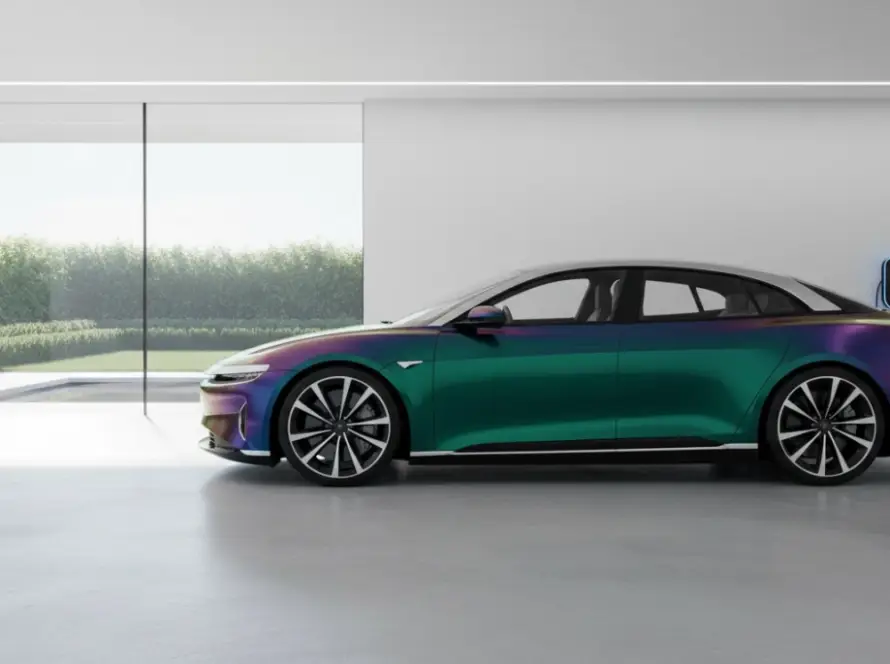
- Visual Impact: Our Chameleon windshield tint (available in variations like 2 mil Purple or Blue) shifts colors dynamically depending on the lighting and viewing angle.
- Functionality: Despite the unique look, these films still utilize high-quality PET substrates to ensure they block UV rays and offer decent heat rejection.
- Customization: As an OEM supplier, we can tweak these formulations to create distinct visual signatures for specific brands or markets.
Decoding the Specs: What Do the Numbers Mean?
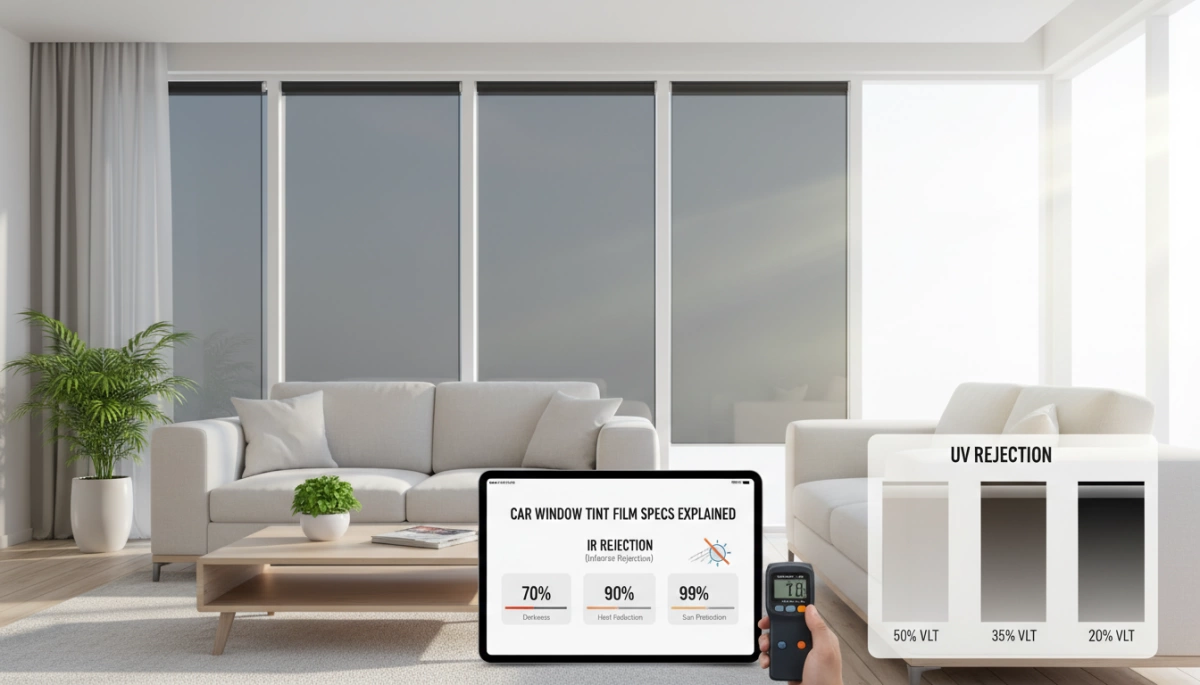
When selecting tinted film on car windows, the technical data sheet can look like a confusing mix of acronyms and percentages. As a manufacturer, we engineer our films to meet specific performance standards, and understanding these metrics is crucial for choosing the right product for your vehicle or shop. It is not just about how dark the glass looks; it is about how the material performs against the sun.
VLT (Visible Light Transmission)
Visible Light Transmission (VLT) measures the percentage of visible light that passes through the film and the glass. This is the primary specification used to categorize tint darkness.
- Lower %: Darker tint (e.g., 5% “limo tint” allows only 5% of light in).
- Higher %: Lighter tint (e.g., 70% is nearly clear).
- Application: We offer a full range of VLTs to balance privacy with visibility, ensuring drivers can see clearly at night while maintaining the desired aesthetic.
TSER (Total Solar Energy Rejected)
This is arguably the most important metric for overall performance. Total Solar Energy Rejected (TSER) calculates the total amount of solar energy (Visible Light + Infrared + Ultraviolet) that the film turns away from the car’s interior. A higher TSER number means the car stays cooler. While a standard dyed film might have a lower TSER, our high-performance Nano-ceramic window tint significantly boosts this number, blocking more heat without needing to be excessively dark.
IR (Infrared) Rejection
Infrared rays are responsible for the burning sensation you feel on your skin from direct sunlight. Infrared (IR) rejection film focuses specifically on blocking these heat-generating wavelengths.
- Standard Films: often block minimal IR.
- Ceramic Films: Can block up to 90%+ of IR rays.
- Benefit: High IR rejection allows for lighter films that still keep the cabin cool, perfect for windshields or drivers who want protection without the “blacked-out” look.
UV Rejection Capabilities
Ultraviolet (UV) radiation is the main cause of interior fading (cracked dashboards, bleached leather) and skin damage. Quality automotive films are designed to block 99% or more of harmful UV rays. Utilizing specialized heat and UV rejection solutions in our manufacturing process ensures that both the passengers and the vehicle’s interior materials are preserved against long-term sun exposure. Whether you choose a carbon or ceramic option, high UV blocking is a standard baseline for professional-grade film.
Legal Considerations: Navigating VLT Laws
The Importance of Compliance
When selecting tinted film on car windows, understanding local regulations is just as critical as choosing the right shade. The primary metric used by law enforcement is Visible Light Transmission (VLT), which measures the percentage of light that passes through the glass. A lower VLT percentage means a darker tint. For example, a 5% VLT is often referred to as “limo tint,” while 70% is very light. Installing film that is too dark for your region not only invites hefty fines but can also compromise safety by reducing nighttime visibility. We always recommend balancing style with legal adherence to avoid having to strip off high-quality film later.
Front vs. Rear Window Distinctions
Most window tint laws by state differentiate strictly between the front and rear of the vehicle.
- Windshield: Usually restricted to a non-reflective strip along the top 4 to 6 inches (the AS-1 line).
- Front Side Windows: typically require a higher VLT (allowing more light in) so drivers can be seen and can see out clearly.
- Rear Windows: SUVs and trucks often have more leniency here, allowing for darker privacy glass.
While standard charcoal or black tints are common, enthusiasts looking for a unique aesthetic with a 2mil purple car window tint or a distinct blue window tint kit need to be extra diligent. Highly reflective or colored films are often subject to stricter regulations than neutral tones.
Consulting Local Installers
Since regulations vary significantly across the US—what is legal in Florida might be illegal in New York—partnering with a professional is essential. Experienced shops that buy wholesale window tint rolls are typically well-versed in the specific codes for their jurisdiction. They can guide you toward a Nano-ceramic window tint setup that maximizes heat rejection and UV protection while keeping your vehicle street-legal. Don’t guess on the percentages; rely on certified installers to ensure your tinted film on car windows meets all compliance standards.
Manufacturing Excellence: What Makes a Film High Quality?
The Anatomy of Quality Film Layers
As an experienced automotive window film manufacturer, I can tell you that a premium tint is much more than a simple sheet of dyed plastic. It is a multi-layered engineering feat designed for endurance. We utilize high-clarity PET base layers that ensure distortion-free visibility. Sandwiched within these layers are UV inhibitors and, in our higher-end lines, nano-ceramic particles for heat rejection. Crucially, the exterior surface features a hard scratch-resistant tint coating. This protective shield is vital for preventing the unsightly streaks and hazing that occur from rolling windows up and down over the years.
Adhesive Technology and Heat-Formability
The difference between a factory-perfect finish and a bubbling nightmare often comes down to the adhesive. We engineer our films with advanced mounting adhesives that provide strong initial tack while allowing installers enough time to slide and position the film perfectly. For professional installers, heat-formability is non-negotiable. Our films are designed to shrink evenly under a heat gun, allowing them to mold seamlessly to the complex curves of modern rear windshields. As a trusted OEM window film supplier, we ensure our materials allow for bubble-free application, making the installer’s job easier and the final result cleaner.
Factory Quality Control and Testing
Consistency is the most critical factor when producing wholesale window tint rolls. Our manufacturing facility operates using German-imported equipment within strictly controlled dust-free production lines. Even a microscopic speck of dust can ruin a tint job, so cleanliness is paramount. We conduct rigorous testing on every batch, checking for VLT accuracy, adhesive stability, and durability against fading. Whether we are manufacturing standard carbon films or specialized chameleon car film, our standards remain rigid. Being a window tint film manufacturer in China with over 16 years of expertise means we deliver products that meet international quality benchmarks, ensuring you get the same performance roll after roll.
Installation Realities: Professional vs. DIY
Applying tinted film on car windows looks deceptively simple in videos, but achieving a factory-finish requires more than just a squeegee and a spray bottle. As an automotive window film manufacturer, we supply high-grade materials that demand precise handling. While our films feature advanced air-release adhesive technology for smoother application, the environment and technique play a massive role in the final outcome.
The Risk of DIY Application
Many enthusiasts attempt DIY tinting to save on the car window tinting cost, only to end up with the dreaded “purple bubble” look later on. The biggest enemy of a clean install is dust. Without a controlled environment, airborne particles get trapped between the glass and the film, creating permanent specks.
Additionally, modern vehicle windows have complex curves. Proper installation requires heat-shrinking the film to match the glass curvature perfectly. Without experience, DIYers often overheat the film, causing the scratch-resistant tint coating to fail or the material to crease. We often see wasted wholesale window tint rolls because the learning curve is steeper than expected.
The Professional Edge with Certified Installers
Professional shops invest in dust-free bays and precision cutting plotters to ensure the film fits within a fraction of an inch of the window edge. They understand how to handle different substrates, from standard dyed films to thicker nano-ceramic window tint.
A certified installer knows how to manipulate the film during the heat-forming process without damaging the optical clarity. This expertise ensures that the heat rejection car film performs exactly as specified in our factory data. Just like with car protection film installation, professional application guarantees that the material bonds correctly for maximum durability.
Post-Installation Maintenance Tips
Once your tinted film on car windows is installed, proper care ensures it lasts for years without peeling or fading.
- Wait to Roll Down: Keep windows up for at least 3 to 5 days to allow the adhesive to cure completely.
- Ammonia-Free Cleaners: Never use cleaners containing ammonia (like standard blue glass cleaner), as they can eat away at the film’s adhesive and color layers.
- Soft Cloths Only: Use microfiber towels to prevent micro-scratches on the surface.
- Bubble Watch: Small water bubbles may appear immediately after installation; these usually evaporate through the breathable material within a few weeks.
Frequently Asked Questions About Tinted Film
How long does ceramic tint last?
Nano-ceramic window tint is engineered for longevity. Unlike entry-level dyed films that may fade or turn purple over time, high-quality ceramic options utilize advanced PET substrates designed to resist discoloration, bubbling, and cracking. When you choose premium window tint films manufactured with strict quality controls, the film often lasts for the lifetime of the vehicle.
Does window tint affect GPS signals?
This is a valid concern with older metallic films, but modern technology has solved it. Both carbon and ceramic films are non-conductive and metal-free. This means they provide superior protection without interfering with:
- GPS navigation systems
- Cellular data and phone reception
- Satellite radio signals
- Keyless entry fobs
Can I wash my car immediately after tinting?
We recommend waiting before cleaning the interior glass. The adhesive needs time to cure and bond securely to the window.
- Wait Time: Allow 3 to 5 days before cleaning the inside of the windows.
- Rolling Windows: Keep windows rolled up for at least 3 to 5 days to prevent peeling or shifting.
- Cleaning Agents: Once cured, use ammonia-free cleaners and soft microfiber cloths to avoid damaging the film surface.
Is darker tint always better for heat rejection?
Not necessarily. While a lower Visible Light Transmission (VLT) reduces glare, darkness alone does not determine heat control. A lighter Infrared (IR) rejection film made with nano-ceramic technology can block significantly more heat than a dark, standard dyed film. To maximize comfort, focus on the Total Solar Energy Rejected (TSER) and IR ratings rather than just the shade of the tint.


 English
  Portuguese
  Spanish
  German
  French
  Hindi
Hindi