

The Evolution of Tint Technology: From Dye to Nano-Tech
Finding the best car window tint film isn’t just about picking a shade of black; it is about understanding the construction of the film itself. With over 16 years of manufacturing experience, we have seen the industry shift from basic aesthetics to high-performance solar control. Here is how the technology stacks up.
Dyed Film (The Entry Level)
If you are strictly looking for privacy or a specific look on a budget, dyed film is the starting point. This is the most basic technology, relying on a layer of dye absorbed into the polyester sheet to block light.
- Pros: Most affordable option; provides immediate glare reduction and privacy.
- Cons: Offers minimal heat rejection. Over time, lower-quality dyed films are notorious for fading or turning purple.
- Best For: Drivers who want the “limo tint” look without paying for high-end heat rejection performance.
Metallized Film and Signal Interference
For a long time, the industry used tiny metallic particles to reflect heat away from the vehicle. While effective at lowering cabin temperatures, metallized films come with a major drawback for modern drivers: Signal Interference.
The metal content in these films acts like a Faraday cage, frequently disrupting:
- GPS navigation signals.
- Cellular reception (4G/5G).
- Tire Pressure Monitoring Systems (TPMS).
- Keyless entry fobs.
Because of these connectivity issues, we generally advise against metallized options for newer vehicles packed with tech.
Carbon Film (The Middle Ground)
Carbon vs. Ceramic tint is a common debate, but Carbon stands firmly as the reliable middle ground. By infusing the film with carbon particles rather than dye or metal, we achieve a distinct matte-black finish that is highly resistant to fading.
- Performance: significantly better heat rejection than dyed film.
- Connectivity: 100% signal-friendly (no metal).
- Durability: Strong color stability means it won’t turn purple like cheap dyed alternatives.
Nano-Ceramic Film (The Gold Standard)
If you want the absolute best car window tint film available in 2026, Nano-ceramic window tint is the answer. This technology uses non-conductive ceramic particles that are fine enough to be optically clear but powerful enough to block massive amounts of infrared heat.
This is our flagship solution for a reason:
- Maximum Heat Rejection: Blocks the highest percentage of solar heat (Infrared) without needing to be extremely dark.
- Zero Interference: Like carbon, it allows all electronic signals to pass through freely.
- Visibility: Engineered for 99%+ optical clarity, ensuring safety and visibility even at night.
For drivers seeking true performance—keeping the car cool and protecting the interior from UV damage—Nano-Ceramic is the undisputed champion.
Key Metrics: How to Read the Specs Like a Pro
When you are shopping for the best car window tint film, it is easy to get lost in marketing buzzwords. As a manufacturer, I look strictly at the data sheets. To get real performance, you need to ignore the fancy packaging and look at four specific numbers. These metrics determine whether you are buying actual heat protection or just a colored sticker.
TSER (Total Solar Energy Rejected)
This is the single most important number on a spec sheet. TSER measures the total amount of solar energy (Visible Light + Infrared + Ultraviolet) that the film blocks. Many brands only advertise their Infrared (IR) numbers because they look higher, but TSER tells the whole truth. A film with a high TSER rating provides the most comprehensive heat and UV rejection for your vehicle’s interior.
- Entry-Level (Dyed): ~30% TSER
- Mid-Range (Carbon): ~40-50% TSER
- Top-Tier (Nano-Ceramic): ~60-70%+ TSER
IRR (Infrared Rejection)
Infrared rays carry the heat you actually feel burning your skin. If you want a cooler cabin, you need high IRR. Our Nano-Ceramic films are engineered specifically to target this spectrum, often blocking over 90% of IR heat. This is why a lighter ceramic tint can often block more heat than a pitch-black dyed tint.
VLT (Visible Light Transmission)
VLT refers to how much light passes through the glass. A lower number means a darker tint (e.g., 5% is “Limo Tint,” while 70% is nearly clear). Choosing the right VLT is a balance between privacy, aesthetics, and local laws. Before committing to a shade, you should understand how much to tint car windows to stay legal in your state while achieving the look you want.
UV Rejection and Health Benefits
Standard glass blocks UVB but lets UVA rays pass through, which causes long-term skin damage and fades your dashboard. High-quality automotive films, regardless of how dark they are, should offer 99% UV Rejection. At Carlise, we formulate our adhesives and layers to act as a permanent sunscreen for both you and your car’s interior materials.
| Metric | What It Measures | Why It Matters |
|---|---|---|
| TSER | Total heat blocked | The most accurate measure of overall cooling performance. |
| IRR | Infrared heat blocked | Stops the “burning” sensation on your skin. |
| VLT | Light allowed in | Determines darkness, privacy, and visibility. |
| UVR | UV rays blocked | Prevents skin cancer and interior fading (should be 99%). |
Why Nano-Ceramic is the “Best” Choice for 2026 Vehicles
As we analyze the trajectory of automotive protection and projections for 2026 vehicle trends, Nano-Ceramic film stands alone as the superior choice. It is no longer just about darkening windows for style; it is about advanced thermal management and material science that keeps pace with modern automotive engineering.
The EV Factor and Battery Savings
For electric vehicle owners, heat rejection is a legitimate range extender. High-performance window tint with high Infrared Rejection (IRR) rates blocks solar energy before it penetrates the glass and heats up the cabin. This significantly reduces the load on the climate control system. In an EV, less AC usage directly translates to preserved battery life and increased driving range. We engineer our ceramic films to maximize this heat reduction for EVs without causing signal interference with onboard electronics.
Clarity and Safety at Night
The best car window tint film provides protection without compromising visibility. Unlike older dyed films that rely on heavy pigmentation to block light, nano-ceramic technology filters out heat-generating IR rays while maintaining excellent Visible Light Transmission (VLT). This allows drivers to choose a lighter shade that blocks massive amounts of heat, ensuring safety and optical clarity are not sacrificed during night driving.
Durability and Lifetime Warranty
We manufacture our films using stable, high-grade materials designed to resist fading, bubbling, and peeling. Standard dyed films often degrade and turn purple over a few years due to harsh UV exposure. In contrast, our nano-ceramic construction ensures color stability and structural integrity. While the initial investment is higher than dyed options, the longevity of a lifetime warranty tint quality product eliminates the cost and hassle of removal and re-installation down the road.
The “Brand Tax” vs. Factory Direct: Where the Real Value Lies
The Myth of Big Brand Names
In the United States, we are conditioned to believe that the most expensive option is automatically the best car window tint film. However, a significant portion of that premium price tag isn’t paying for better heat rejection or clarity—it’s paying for massive marketing budgets, sponsorships, and distribution layers. This is what we call the “Brand Tax.” You end up paying for the logo on the box rather than the technology inside the film.
The Reality of Outsourced Manufacturing
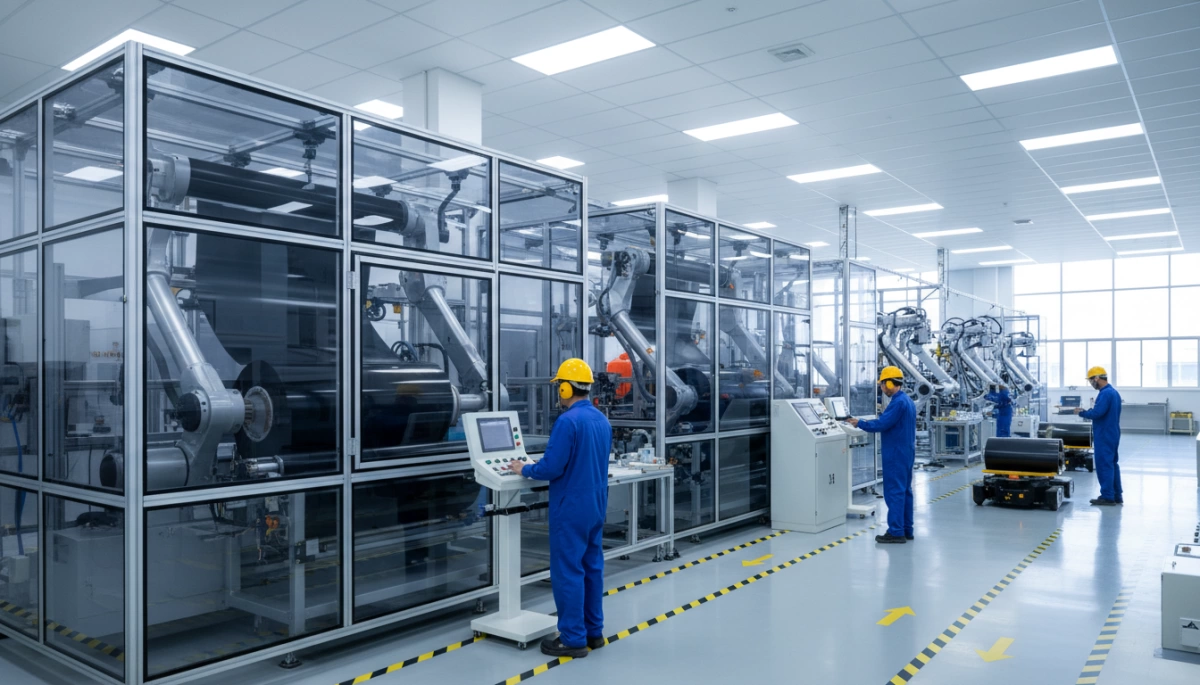
Here is the industry secret: many well-known “American” tint brands do not manufacture their own products. Instead, they rely on outsourced manufacturing, purchasing white-label rolls from factories, rebranding them, and marking up the price significantly. This means you might be buying the exact same high-performance window tint available elsewhere, just at double the cost because of the packaging. Understanding what to look for when choosing a reliable film factory is crucial to seeing past the marketing hype.
The CarlisePPF Advantage: Integrated Manufacturing
We operate differently. As a dedicated automotive window film manufacturer with over 16 years of experience, Carlise controls the entire production process. From sourcing high-grade stable materials to the final coating, we handle it all in-house. This integrated manufacturing ensures that our Nano Ceramic and Carbon films meet flagship-level specifications for optical clarity and durability without the inconsistency that comes from third-party sourcing.
Cost-Effectiveness of Factory-Direct
By removing the middlemen, we provide factory direct window film that competes with top-tier US brands at a fraction of the price. Whether you are a distributor looking for OEM window tint services or a shop owner seeking competitive factory pricing, the value proposition is simple: you get premium specs—like 99% UV rejection and high IR blocking—without the inflated overhead. This allows installers to increase their margins while still offering customers a superior product.
Installation Matters: The Other Half of the Equation
Even the best car window tint film is only as good as the hands applying it. As an automotive window film manufacturer, we understand that the chemical makeup of the film dictates how easy it is to install. If the material fights the installer, you end up with bubbles, creases, or peeling edges down the road. We engineer our films to work with the technician, ensuring the final result looks like factory glass rather than an aftermarket add-on.
Shrinkability and Handling for Installers
For professional shops, time is money, and material waste cuts into profits. Our films are designed with optimal heat-shrink capabilities, specifically for complex curves found on modern rear windshields.
- Predictable Shrinking: The film conforms smoothly to curved glass when heated, without “ghosting” or snapping back.
- Forgiving Adhesive: We use a mounting solution that allows for easy repositioning before the final squeegee pass, reducing the risk of handling marks.
- Anti-Static Properties: Our liners are designed to minimize static, which helps keep dust out during the critical peeling stage.
The “Micro-Edge” Standard
A top-tier install is defined by the gap at the top of the roll-down window. We manufacture our films to cut cleanly without snagging or leaving jagged edges. This precision allows skilled installers to achieve a “micro-edge” or shaved edge finish.
- Seamless Look: Leaves virtually no visible gap between the glass edge and the film.
- Factory Finish: Mimics the appearance of colored glass rather than a film overlay.
- Durability: A clean cut reduces the chance of the film catching on the window seal and peeling over time.
When you choose a high-performance film, you aren’t just paying for heat rejection; you are paying for a material structure that makes a flawless, invisible installation possible.
Frequently Asked Questions (FAQ)
Does ceramic tint really make a difference in heat?
Absolutely. When looking for the best car window tint film for temperature control, nano-ceramic window tint is the undisputed leader. Unlike standard dyed films that only block visible light to create shade, ceramic particles are engineered to block Infrared (IR) rays, which are responsible for the burning sensation you feel from the sun.
- Dyed Film: Absorbs heat, eventually radiating it into the car.
- Ceramic Film: Rejects heat at the glass surface.
If you want heat reduction for EVs or just a cooler daily commute, the difference in Infrared rejection (IRR) rates between ceramic and standard film is massive.
Will window tint affect my 5G or GPS signal?
Not if you choose the right material. Old-school metallized films were notorious for blocking radio frequencies, but modern technology has solved this. Our Carbon and Ceramic lines are classified as signal interference free tint. Because they use non-conductive nano-particles instead of metal layers, they allow 100% connectivity for:
- GPS Navigation
- 5G/LTE Cellular Data
- Keyless Entry Fobs
- Tire Pressure Monitoring Systems (TPMS)
How long should high-quality tint last?
A high-performance window tint is an investment that should last the life of your vehicle. Cheap films turn purple and bubble because the dye breaks down under UV exposure. We manufacture our films using stable, high-density materials designed to resist fading.
Generally, you can expect:
- Dyed Films: 3–5 years (depending on sun exposure).
- Nano-Ceramic: Often backed by a lifetime warranty tint guarantee against fading or peeling.
Even our specialty aesthetic options, such as the 2mil Blue Chameleon window tint kit, are built with durability in mind, ensuring you don’t have to sacrifice longevity for style.

 English
  Portuguese
  Spanish
  German
  French
  Hindi
Hindi