

Beyond the Tint: Architectural Ceramic Window Film Performance & Reviews
When we talk about upgrading building glass, most people stop at aesthetics. But at Carlise, we know that modern glazing needs to do much more than just look good. If you are searching for architectural ceramic window film product info and reviews, you are likely trying to solve a specific problem—whether it’s battling intense solar heat, protecting interiors from fading, or reinforcing glass for safety—without sacrificing your view.
Our architectural films represent a shift from simple shading to high-performance energy-efficient glazing retrofits. We utilize advanced nano-ceramic technology to deliver results that standard dyed or metallic films simply cannot match. By integrating ceramic materials, we achieve high heat rejection without the “mirror look” or signal interference common with older technologies.
Here is what defines our performance-driven approach:
- Smart Heat Insulation: Our films significantly reduce indoor temperatures, lowering the load on your air conditioning and cutting energy costs.
- Uncompromised Clarity: We prioritize high definition and low reflection, ensuring you maintain a natural view of the outside world while gaining privacy.
- Total UV Defense: Blocking up to 99% of harmful UV rays is standard for us, which is critical for preventing skin damage and slowing the aging of expensive furniture and flooring.
- Enhanced Safety: Beyond climate control, our films act as an explosion-proof layer, holding glass shards together upon impact to prevent secondary injuries.
Whether for a residential villa or a commercial storefront, the goal is the same: creating a cooler, safer, and more sustainable environment through intelligent material science.
What Sets Nano-Ceramic Technology Apart?
When we analyze architectural ceramic window film product info and reviews, the conversation inevitably turns to the underlying science. Unlike traditional films that rely on dark dyes or reflective metals, our approach utilizes nano-ceramic technology. We embed non-conductive ceramic nanoparticles directly into the film layers. These microscopic particles are engineered to be spectrally selective, meaning they target and reject infrared heat (the heat you feel) while allowing visible light to pass through. This results in a film that keeps interiors cool without creating a dark, gloomy atmosphere.
The Science Behind Non-Conductive Nanoparticles
The real game-changer here is the material stability. Old-school dyed films are notorious for fading or turning purple over time as the sun breaks down the pigments. Metallic films, while effective at heat rejection, often act like mirrors and are prone to corrosion, especially in coastal US environments with salty air.
Nano-ceramic films solve these legacy issues completely:
- No Fading: Ceramic is inorganic and stable, ensuring the color remains true for the life of the film.
- No Corrosion: Since there are no metal layers, there is no risk of oxidation or edge-rusting.
- High Clarity: The film provides high-definition views with low reflection, maintaining the natural look of your glass.
Solving the Signal Interference Problem
One of the biggest complaints in commercial and residential reviews of metallic films is connectivity issues. Metal layers act like a Faraday cage, blocking radio frequencies. In a modern connected world, this is a dealbreaker. Our architectural ceramic window film is completely non-conductive. This makes it 5G/Wi-Fi friendly, ensuring that cell signals, GPS, and internet connectivity pass through your windows unrestricted. You get maximum heat rejection without sacrificing your ability to make a call or stream data.
Durability Factors and Scratch-Resistant Coatings
We know that window film is an investment, so longevity is non-negotiable. Beyond the stability of the ceramic material itself, we apply a specialized anti-scratch coating to the exterior layer. This hard coat protects the film from everyday wear and tear, cleaning abrasions, and accidental contact. Whether installed in a high-traffic commercial storefront or a private residence, this added layer of protection ensures the film retains its optical clarity and performance metrics for years, reducing the need for premature replacement.
Decoding the Specs: A Buyer’s Guide to Product Info
Navigating architectural ceramic window film product info and reviews requires understanding the metrics that actually impact your comfort and wallet. We don’t just sell film; we provide a shield for your building, and knowing the difference between the numbers ensures you get the performance you expect.
Understanding Visible Light Transmission (VLT)
Visible Light Transmission (VLT) is the percentage of visible light that passes through the glass. It is the primary factor in determining how bright or dark your room will look after installation.
- High VLT (e.g., 70%): Maintains natural optical clarity and is virtually invisible, perfect for showrooms or homes where you want to preserve the view.
- Low VLT (e.g., 15-30%): Provides significant glare reduction solutions and increased privacy, making it harder for outsiders to see in during the day.
Infrared Rejection (IRR) vs. Total Solar Energy Rejection (TSER)
This is where most confusion happens. Infrared Rejection (IRR) measures how well the film blocks the specific wavelength of energy that you feel as heat on your skin. While high IRR numbers are great, they don’t tell the whole story.
Total Solar Energy Rejection (TSER) is the more comprehensive metric for an energy-efficient glazing retrofit. TSER calculates the total amount of solar energy (UV + Visible Light + Infrared) turned away from your glass. For genuine energy savings and reduced cooling costs, always prioritize TSER over just IRR. Our films are engineered with advanced heat and UV rejection capabilities to ensure the heat load on your HVAC system is significantly reduced.
UV Blocking for Health and Interiors
Standard glass lets in damaging rays that ruin interiors over time. Our UV blocking window film rejects up to 99% of ultraviolet radiation. This specification is non-negotiable for two reasons:
- Health: It protects occupants from skin damage similar to SPF.
- Asset Preservation: It provides critical fade protection for interiors, stopping your hardwood floors, carpets, and furniture from bleaching out due to sun exposure.
Real-World Reviews and Performance Analysis
When analyzing architectural ceramic window film product info and reviews, the feedback consistently points to one major advantage: balance. Unlike traditional dyed tints that rely on darkening the glass to block the sun, our nano-ceramic technology focuses on performance without compromising the view.
Heat Reduction Without the Cave Effect
The standout feature for most users is the ability to reject heat while keeping the room bright. This is where spectrally selective film shines. It targets the infrared spectrum—the heat you feel—while allowing a high percentage of visible light to pass through. You do not have to live in the dark to stay cool.
ROI and Energy Efficiency
For facility managers and homeowners, the decision often comes down to the numbers. By significantly lowering indoor temperatures, our architectural energy-saving protection services reduce the load on air conditioning systems.
- Lower Utility Bills: Reduced HVAC runtime leads to direct cost savings.
- Equipment Longevity: Less strain on cooling units means fewer repairs.
- Commercial Building Energy Savings: For large glass facades, the payback period accelerates due to the sheer volume of heat rejection.
Optical Clarity and Glare Control
A frequent point in performance analysis is the absence of “low-angle haze,” a milkiness found in lower-quality materials. We prioritize high-definition clarity to ensure the glass looks natural from every angle. Additionally, effective glare reduction solutions are essential for modern spaces. Our films cut down the harsh brightness that washes out TV screens and monitors, ensuring visual comfort without blocking the outside scenery.
Comparing Top Architectural Film Solutions
When selecting from our architectural window film solutions, it is essential to match the specific film series to the building’s exposure and usage. Not all films perform the same tasks; some are strictly for heat rejection, while others prioritize physical security or glare reduction. Understanding the nuances between these product lines ensures you get the maximum return on investment for your property.
Solar Control Series for High-Rise and Residential Applications
Our Solar Control Series is the workhorse for energy-efficient glazing retrofit projects. Designed specifically for residential homes and commercial high-rises, these films utilize advanced nano-ceramic technology to target the infrared spectrum.
- Heat Rejection: These films offer high Total Solar Energy Rejection (TSER), significantly lowering indoor temperatures without relying on the dark, mirrored look of older tints.
- Aesthetics: They maintain the natural appearance of the glass, which is vital for homeowners’ associations (HOAs) and commercial buildings with strict facade requirements.
- Fade Protection: By blocking up to 99% of UV rays, this series actively protects interior furnishings, hardwood floors, and artwork from premature fading.
Safety and Security Combo Films
For locations requiring fortified protection, we offer films that combine shatter resistance with thermal performance. These are not just standard tints; they are engineered with a thicker, multi-layer construction that serves a dual purpose.
- Impact Protection: In the event of accidental breakage, severe weather, or attempted forced entry, the film holds the glass shards together. This prevents dangerous flying debris, which is a primary cause of injury during window failure.
- Thermal Efficiency: You do not have to sacrifice comfort for safety. These films still incorporate ceramic particles to provide substantial infrared rejection (IRR), keeping the interior cool while reinforcing the building envelope.
Dual-Reflective vs. Ceramic: Making the Right Choice
A frequent decision point for building managers is the choice between Dual-reflective vs. Ceramic technologies.
- Dual-Reflective: Traditionally used for maximum glare reduction, these films can sometimes create an internal mirror effect at night, making it difficult to see outside.
- Ceramic Advantage: Our architectural ceramic films solve this issue. They are spectrally selective, meaning they target heat-producing wavelengths while allowing visible light to pass through. This results in a non-reflective window tint that preserves your view day and night. Furthermore, unlike metallic films, ceramic options are signal interference (5G/Wi-Fi friendly), ensuring no disruption to mobile connectivity inside the building.
Why Professionals Prefer Specific Adhesive Technologies
The difference between a film that lasts five years and one that lasts twenty often comes down to the mounting adhesive. We utilize high-grade, pressure-sensitive adhesives that professionals trust for their optical clarity and longevity.
- Curing and Clarity: These adhesives bond firmly to the glass, curing without distortion or haziness.
- Durability: The adhesive layer works in tandem with our anti-scratch coatings to prevent bubbling, peeling, or delamination, ensuring the architectural glass coating performs as specified for the long haul.
Installation and Maintenance Best Practices
Professional Installation vs. DIY Risks
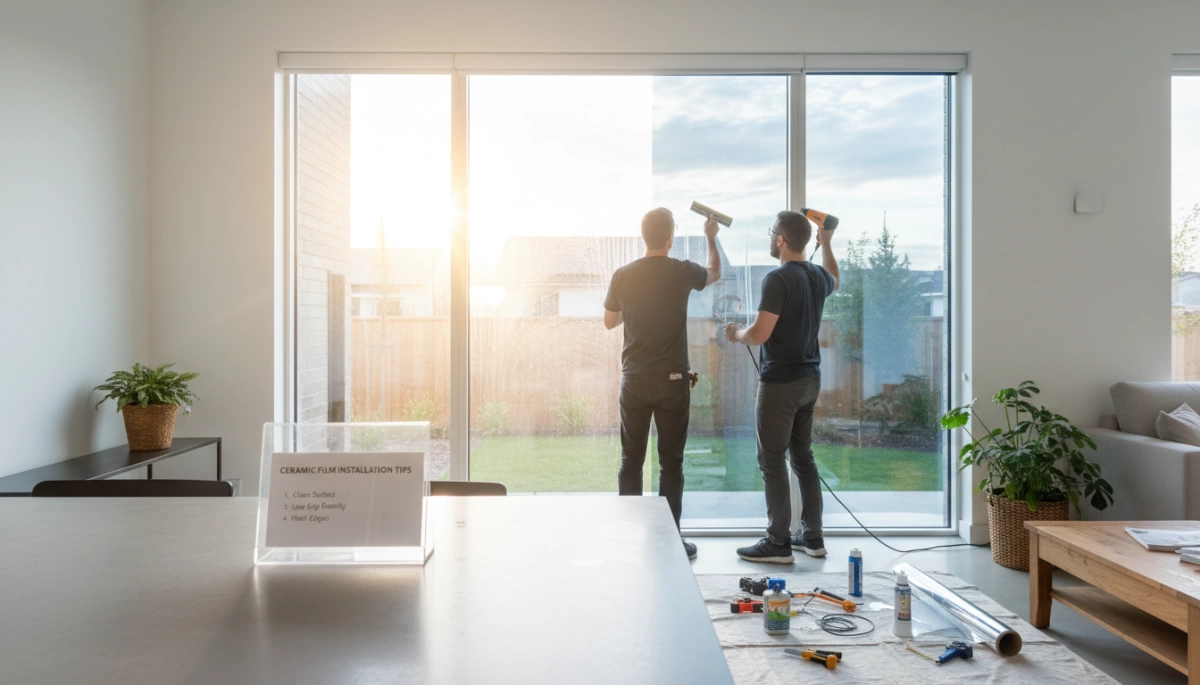
When investing in high-quality architectural glass coating, I always advise against taking the DIY route. Nano-ceramic films are sophisticated materials that require precise handling. Unlike basic dyed sheets, these multi-layer films are sensitive to contamination during application. A professional installer ensures the glass is surgically clean, preventing dust specs that create permanent bubbles.
Attempting to install these films yourself often leads to material waste and compromised performance. Professional technicians understand how to handle the specific adhesive technologies used in our products, ensuring the film bonds securely to the glass without peeling or lifting at the edges. Whether you are applying a standard ceramic layer or a specialized commercial window tint golden film, expert application is the only way to guarantee the rated specifications for heat rejection and safety are actually met.
Managing Expectations: Curing Time
After installation, patience is required. High-performance ceramic films, especially those with added safety thickness, do not dry instantly. You need to account for curing time.
- Moisture Evaporation: It is normal to see small water pockets or a slight haze for a few days (or even weeks in colder climates) as the mounting solution evaporates through the film.
- Adhesive Bonding: The film needs this time to fully anchor to the window surface.
- Hands Off: Do not try to push these water bubbles out yourself after the installer has left, as this can distort the optical clarity.
Cleaning Protocols for Longevity
To maintain the UV blocking window film capabilities and the integrity of the scratch-resistant coating, proper maintenance is non-negotiable.
- Wait to Clean: Do not clean the windows for at least 30 days after installation to allow full curing.
- Avoid Ammonia: Never use ammonia-based cleaners (like standard blue glass sprays), as they can break down the film’s hard coat and adhesive over time.
- Soft Materials Only: Use a soft microfiber cloth or a clean rubber squeegee with mild soapy water. Abrasive sponges or paper towels can leave micro-scratches that degrade the view.
Following these simple rules ensures your investment continues to provide energy savings and interior protection for years to come.
FAQ: Common Questions About Architectural Ceramic Film
Does ceramic window film work at night?
Absolutely. Nano-ceramic technology isn’t dependent on sunlight to function; it acts as a continuous thermal barrier. While it does its heavy lifting by blocking solar heat gain during the day, it also helps insulate your glass at night, reducing heat loss in colder climates. Unlike highly reflective options, such as some mirror tint for house windows, ceramic films typically have low interior reflectivity. This means you won’t deal with that annoying “mirror effect” when looking out your windows after dark, preserving your evening views.
How long does architectural ceramic film last?
We engineer our films for the long haul. Because ceramic particles are non-organic and chemically stable, they don’t break down, fade, or turn purple like traditional dyed films. Combined with a durable anti-scratch coating, these films are built to withstand cleaning and daily exposure for years. You are investing in a permanent upgrade to your building’s envelope, not a temporary fix.
Will installing ceramic tint void my existing window warranty?
This is a valid concern for many homeowners. High-quality architectural glass coating is designed to be safe for dual-pane and tempered glass units. Our ceramic films are engineered to minimize thermal stress absorption, which is the primary cause of glass failure with improper tinting. Furthermore, the film actually adds a layer of safety; its explosion-proof properties hold glass shards together if an impact occurs, adding security rather than risk.
Is the price premium worth it compared to standard metallic tint?
If you value connectivity and clarity, the answer is yes. Standard metallic films can block heat effectively, but they often interfere with 5G, Wi-Fi, and cell signals—a major issue for modern homes and offices. Architectural ceramic window film provides superior Total Solar Energy Rejection (TSER) without blocking signals or corroding over time, making it a smarter long-term investment for commercial building energy savings and residential comfort.

 English
  Portuguese
  Spanish
  German
  French
  Hindi
Hindi