

What Is Car PPF and Why Invest in Proper Installation?
Is there anything worse than hearing that sharp crack of a stone hitting your hood just days after driving a new car off the lot? I’ve been there, and I know exactly why you are looking into car PPF installation. You aren’t just looking for a sticker; you are looking for peace of mind. Paint Protection Film (PPF), often called a “clear bra,” is the only physical barrier standing between your factory paint and the road’s debris.
But not all films are created equal. When we talk about high-quality protection, we are talking about a sophisticated sandwich of materials designed for abuse.
The Science Behind the Shield: TPU and Self-Healing
At the heart of any premium paint protection film application is Thermoplastic Polyurethane (TPU). Unlike the cheaper PVC films of the past that yellowed and cracked, modern TPU car film installation relies on high-grade aliphatic TPU. Here is the breakdown of what you are actually paying for:
- The Core (TPU Base): This is the muscle. It provides the impact resistance that bounces rocks off without chipping the paint underneath.
- Self-Healing Top Coat: This is the magic. We use elastomeric polymers that revert to their natural shape when exposed to heat. Swirl marks from washing or light scratches literally disappear under the sun or warm water. This is PPF self-healing technology at its finest.
- The Adhesive Layer: It needs to stick aggressively but remove cleanly years down the line without damaging your OEM paint.
PPF vs. Ceramic Coatings vs. Vinyl Wraps
I get asked this constantly: “Why do I need PPF if I have a ceramic coating?” or “Can’t I just wrap it in vinyl?”
Let’s be clear—they serve completely different purposes. Mixing them up leads to disappointed expectations.
| Feature | Paint Protection Film (PPF) | Ceramic Coating | Vinyl Wrap |
|---|---|---|---|
| Primary Function | Impact Protection (Rock chips, scratches) | Chemical Resistance (UV, bird bombs, ease of cleaning) | Aesthetics (Color change, style) |
| Thickness | Thick (6–10 mils typically) | Microscopic (Liquid polymer) | Thin (2–4 mils) |
| Self-Healing | Yes (Top-tier hydrophobic PPF top coat) | No | Generally No |
| Impact Resistance | High | None | Low |
If you want your car to look glossy and wash easily, get a ceramic coating. If you want to change the color, get a vinyl wrap. But if you want to drive on the highway without fear of rock chips, car PPF installation is the only real solution.
Addressing the Elephant in the Room: Seams and Longevity
Many enthusiasts hesitate because they worry about seeing lines or the film turning yellow. Let’s address that head-on.
- Visibility: With a clear bra installation guide followed by a pro, seams are tucked around edges wherever possible. On a white car, dirty edges can be visible over time if not maintained, but on darker colors, a quality install is virtually invisible.
- Yellowing: This was a massive issue ten years ago. Today, our premium aliphatic TPU materials are UV-stable. They don’t yellow like the old aromatic urethanes did.
- Performance Impact: Does it look like orange peel? High-quality films actually enhance gloss. If the paint underneath is corrected properly before the vehicle surface preparation for PPF, the film acts like a magnifying glass for that shine.
Investing in proper installation isn’t an expense; it’s preservation. You are freezing the condition of your paint in time.
Would you like me to detail the specific thickness options and finishes available for your vehicle next?
Choosing the Right Material for Car PPF Installation
When planning a car PPF installation, the specifications of the film you choose dictate the longevity and look of the final result. We aren’t just talking about a clear sticker; we are talking about engineered armor for vehicle paint. You generally have two main factors to consider: thickness and finish.
- Film Thickness (mils): Most professional-grade films range from 6 to 10 mil. The industry standard sits right around 7.5 to 8 mil. This provides the perfect balance of impact resistance against rock chips while remaining flexible enough to wrap around bumper edges.
- Surface Finish:
- Gloss: Designed to be invisible, enhancing the factory shine.
- Matte/Satin: Transforms glossy paint into a sleek, “frozen” look without a permanent repaint.
Premium Aliphatic TPU Features
We strictly recommend and utilize premium Aliphatic TPU (Thermoplastic Polyurethane) rather than cheaper PVC or TPH alternatives. Aliphatic TPU is the gold standard because it is chemically stable and resists yellowing from UV exposure.
Key performance features include:
- High Stretchability: The film conforms to complex curves and deep recesses without “fingering” or lifting.
- Hydrophobic Properties: A quality top coat ensures water beads up and rolls off, making the car significantly easier to wash. Our 7.5mil hydrophobic clear PPF wrap is engineered to repel road grime and maintain that showroom clarity for years.
Installer-Friendly Attributes
For the shop owners and installers reading this, the adhesive technology is just as vital as the TPU itself. A great film features repositionable adhesive. This allows you to slide the material into the perfect position before tacking it down. Equally important is clean removal; when it’s time to replace the film five or ten years later, it must come off without leaving aggressive glue residue on the clear coat.
OEM/ODM and Wholesale Options
For distributors and private label brands, we know that customization is key to standing out in the US market. We offer extensive OEM/ODM services and wholesale TPU PPF rolls tailored to your specifications. Whether you need specific dimensions, custom backing paper with your logo, or unique box packaging, we handle the manufacturing process with strict quality control.
If you are looking to scale your business with * Film Thickness (mils): Most professional-grade films range from 6 to 10 mil. The industry standard sits right around 7.5 to 8 mil. This provides the perfect balance of impact resistance against rock chips while remaining flexible enough to wrap around bumper edges.
- Surface Finish:
- Gloss: Designed to be invisible, enhancing the factory shine.
- Matte/Satin: Transforms glossy paint into a sleek, “frozen” look without a permanent repaint.
Premium Aliphatic TPU Features
We strictly recommend and utilize premium Aliphatic TPU (Thermoplastic Polyurethane) rather than cheaper PVC or TPH alternatives. Aliphatic TPU is the gold standard because it is chemically stable and resists yellowing from UV exposure.
Key performance features include:
- High Stretchability: The film conforms to complex curves and deep recesses without “fingering” or lifting.
- Hydrophobic Properties: A quality top coat ensures water beads up and rolls off, making the car significantly easier to wash. Our 7.5mil hydrophobic clear PPF wrap is engineered to repel road grime and maintain that showroom clarity for years.
Installer-Friendly Attributes
For the shop owners and installers reading this, the adhesive technology is just as vital as the TPU itself. A great film features repositionable adhesive. This allows you to slide the material into the perfect position before tacking it down. Equally important is clean removal; when it’s time to replace the film five or ten years later, it must come off without leaving aggressive glue residue on the clear coat.
OEM/ODM and Wholesale Options
For distributors and private label brands, we know that customization is key to standing out in the US market. We offer extensive OEM/ODM services and wholesale TPU PPF rolls tailored to your specifications. Whether you need specific dimensions, custom backing paper with your logo, or unique box packaging, we handle the manufacturing process with strict quality control.
If you are looking to scale your business with factory-direct pricing, explore our options for [custom brand TPU film supply](https://www.carlisepp* Film Thickness (mils): Most professional-grade films range from 6 to 10 mil. The industry standard sits right around 7.5 to 8 mil. This provides the perfect balance of impact resistance against rock chips while remaining flexible enough to wrap around bumper edges.
- Surface Finish:
- Gloss: Designed to be invisible, enhancing the factory shine.
- Matte/Satin: Transforms glossy paint into a sleek, “frozen” look without a permanent repaint.
Premium Aliphatic TPU Features
We strictly recommend and utilize premium Aliphatic TPU (Thermoplastic Polyurethane) rather than cheaper PVC or TPH alternatives. Aliphatic TPU is the gold standard because it is chemically stable and resists yellowing from UV exposure.
Key performance features include:
- High Stretchability: The film conforms to complex curves and deep recesses without “fingering” or lifting.
- Hydrophobic Properties: A quality top coat ensures water beads up and rolls off, making the car significantly easier to wash. Our 7.5mil hydrophobic clear PPF wrap is engineered to repel road grime and maintain that showroom clarity for years.
Installer-Friendly Attributes
For the shop owners and installers reading this, the adhesive technology is just as vital as the TPU itself. A great film features repositionable adhesive. This allows you to slide the material into the perfect position before tacking it down. Equally important is clean removal; when it’s time to replace the film five or ten years later, it must come off without leaving aggressive glue residue on the clear coat.
OEM/ODM and Wholesale Options
For distributors and private label brands, we know that customization is key to standing out in the US market. We offer extensive OEM/ODM services and wholesale TPU PPF rolls tailored to your specifications. Whether you need specific dimensions, custom backing paper with your logo, or unique box packaging, we handle the manufacturing process with strict quality control.
If you are looking to scale your business with factory-direct pricing, explore our options for custom brand TPU film supply to get the exact product specs your market demands.
of Key Material Specs:
| Feature | Standard Spec | Benefit |
|---|---|---|
| Material Base | Aliphatic TPU | Non-yellowing, self-healing |
| Thickness | 7.5 – 8 Mil | Optimal impact protection |
| Adhesive | Low-tack Acrylic | Repositionable, clean removal |
| Top Coat | Hydrophobic | Easy cleaning, stain resistance |
Would you like me to outline the specific tools required for a professional installation setup next?
Professional vs. DIY PPF Installation: Which Is Right for You?
When considering car ppf installation, the biggest debate is always between saving money and ensuring quality. I’ve seen enthusiasts attempt DIY jobs with mixed results, and I’ve supplied professional PPF installers who turn out masterpieces. The choice ultimately depends on your skill level, patience, and budget.
Weighing the Pros and Cons
Taking on a DIY paint protection film project cuts out labor fees, which are a huge chunk of the total price. However, the learning curve is steep. You risk wasting expensive material if you mishandle the squeegee or stretch the film too far. Before committing to a DIY kit, it is smart to understand the factors that influence PPF pricing to see if the potential savings outweigh the risks of a botched job.
Here is the reality of the trade-off:
- DIY: High potential for cost savings, but high risk of imperfections (dust, misalignment).
- Professional: Higher upfront investment, but guarantees a clear bra installation guide standard finish and usually comes with a warranty.
The Professional Advantage
Certified installers have a massive advantage: environment. Pros work in dust-free booths with specialized lighting that highlights every imperfection on the paint before the film goes on.
They also use precision plotting software. Instead of cutting film on the car (and risking paint damage), they print pre-cut templates. For businesses, sourcing high-quality wholesale paint protection film that is compatible with these plotters is essential for efficiency.
Red Flags of Poor Installs
whether you are inspecting a shop’s work or your own DIY attempt, look out for these failures:
- Silvering: Marks caused by overstretching the adhesive layer.
- Lifting Edges: Resulting from poor surface prep or insufficient drying time.
- Bubbles and Contaminants: Dust trapped under the film.
If you find yourself constantly searching for a PPF bubbles and wrinkles fix, the installation likely failed at the prep stage.
Timeline Expectations
Quality takes time. A rushed job is a bad job.
- Partial/Full Front: Expect 1–2 days, allowing for curing time.
- Full Body Coverage: Expect 4–7 days for disassembly, application, and reassembly.
For our partners using our OEM/ODM services, we focus on providing film with installer-friendly attributes—like repositionable adhesive—to help speed up this workflow without sacrificing quality. If you are budgeting for a shop to do this, make sure you know the breakdown of car PPF costs so you aren’t caught off guard by the labor hours involved.
Would you like me to detail the “Step-by-Step Professional PPF Installation Process” next?
Step-by-Step Professional Car PPF Installation Process
Achieving a flawless finish isn’t just about slapping a sticker on a bumper; it is a meticulous procedure that demands patience and precision. As suppliers, we know that even the highest quality film will fail if the underlying steps are rushed. Here is how we approach a professional car PPF installation to ensure the film bonds correctly and looks invisible.
Vehicle Surface Preparation for PPF
The most critical stage happens before the film even touches the car. You cannot hide imperfections under PPF; the film will actually lock them in.
- Decontamination Wash: We start with a heavy strip wash to remove existing waxes or sealants.
- Clay Bar Treatment: This pulls embedded contaminants (like rail dust or tar) out of the clear coat ensuring a smooth surface.
- Paint Correction: If there are swirl marks or scratches, we compound and polish the paint.
- IPA Wipe: A final wipe-down with Isopropyl Alcohol removes any polishing oils, ensuring the adhesive bonds directly to the paint.
Environment and Pattern Design
You need a controlled environment. We recommend a dust-free “clean room” kept between 70°F and 75°F. If it’s too cold, the TPU stiffens; too hot, and the adhesive activates too fast. Proper lighting is also non-negotiable to spot minute debris.
For the film itself, we decide between bulk plotting (cutting by hand on the car) and digital templates. Using pre-cut software compatibility allows us to print precise patterns that fit specific makes and models, reducing the need to take a knife near the factory paint.
Application and Edge Wrapping Techniques
Once the car is prepped, we move to the wet application.
- Slip Solution Application: We spray the panel and the film with an installation gel vs slip solution mix. This allows us to slide the film into the perfect position without it sticking immediately.
- Squeegeeing: Starting from the center, we squeegee out the fluid and air bubbles using overlapping strokes. This activates the pressure-sensitive adhesive.
- Stretching: For curved areas like bumpers or mirrors, we gently stretch the aliphatic TPU. High-quality paint protection film creates a uniform stretch without distorting the texture.
- Edge Wrapping: To make the install invisible, we extend the film slightly past the panel edge and wrap it around the back. This protects the edges from lifting and prevents dirt lines from forming.
Finishing Touches and Curing Period
After the film is down, we go over the edges with a heat gun. This “post-heating” process seals the edges and relaxes the film, ensuring it remembers its new shape. ly, we trim any excess material. The vehicle needs to sit for a curing period of at least 24 to 48 hours before being driven, and we strictly advise against washing the car for the first 7 days to allow the adhesive to fully cure.
Essential Tools and Solutions for Flawless Results
You can buy the highest quality film on the market, but without the right gear, a car ppf installation is destined to fail. Precision is the name of the game here. Whether we are supplying a high-volume shop or a dedicated enthusiast, we always emphasize that your toolkit dictates the finish.
Must-Have Tools for the Trade
To achieve that invisible “painted-on” look, you need a specific set of instruments. Improvising with household items usually leads to scratches or poor adhesion.
- Squeegees: You need a mix of durometers (hardness). Use a soft, flexible squeegee for following body lines and a harder turbo squeegee for extracting water.
- Heat Guns: Unlike a torch, a heat gun provides controlled temperature to soften the TPU for stretching and to lock in edge wrapping techniques during the post-heat process.
- Precision Knives: We recommend stainless steel snap-off blades with a 30-degree angle. A dull blade is your worst enemy; snap the tip frequently to ensure clean cuts without heavy pressure.
- Clay Bars & Prep Mitts: Essential for removing embedded contaminants before the film ever touches the paint.
Installation Gel vs Slip Solution
Understanding the chemistry of your mounting fluids is critical for maneuvering the film.
- Slip Solution: typically a mix of baby shampoo and water (or a proprietary surfactant). It allows the film to “float” over large panels like hoods so you can align it perfectly.
- Installation Gels: These are thicker and tackier. We prefer gels for vertical surfaces or complex curves where you don’t want the film sliding down immediately.
When installing distinct fashion films, such as purple paint protection film, using the correct gel consistency ensures the adhesive bonds evenly without leaving distortion marks or “silvering” behind the colored layer.
Tips for Bubble-Free Finishes
Bubbles and lift lines are the most common complaints in car ppf installation. Here is how to keep the finish glass-smooth on difficult areas like bumpers:
- Overlap Your Strokes: When squeegeeing, overlap your previous stroke by 50%. This ensures no pockets of solution are left behind.
- Work Center-Out: Always start from the middle of the panel and push fluid toward the nearest edge.
- Watch the “Fingers”: If tension creates wrinkles (fingers), use heat to relax the TPU before squeegeeing them down. Don’t force them flat cold, or they will pop back up later.
- Lighting: Use a portable work light to inspect the panel from different angles. Bubbles often hide in plain sight until the car is out in the sun.
Would you like me to detail the specific preparation steps required before using these tools?
Common Mistakes to Avoid During Car PPF Installation
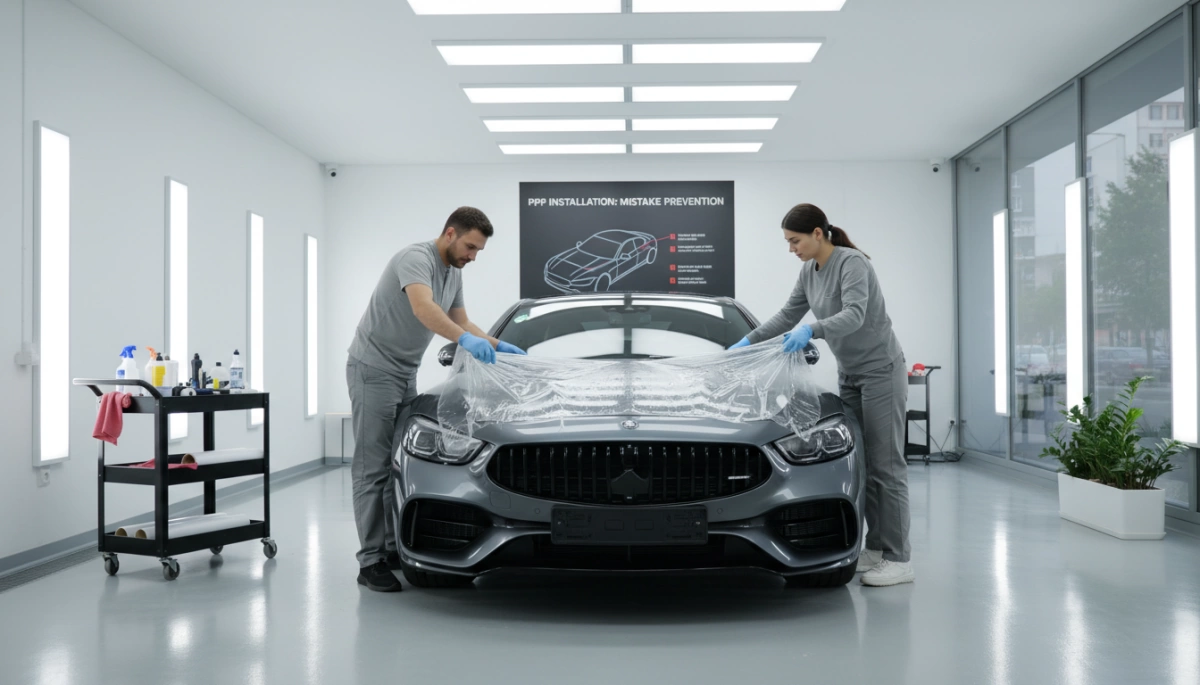
Even the highest quality film can fail if the application process is flawed. Whether you are running a shop or managing a fleet, understanding where car PPF installation usually goes wrong is critical for reducing waste and ensuring customer satisfaction. Most failures don’t happen because of the material; they happen because of rushing the fundamentals.
Inadequate Surface Prep and Trapped Contaminants
Skipping steps during vehicle surface preparation for PPF is the number one cause of installation failure. You cannot just wash the car and start laying film. If you leave behind tar, wax, or microscopic dust, the adhesive won’t bond correctly, and you will see every single speck under the clear film.
- The Fix: Always use a clay bar to remove embedded contaminants and finish with a thorough Isopropyl Alcohol (IPA) wipe to degrease the panel.
Over-Stretching and Overheating
While premium materials like our TPU car wrap film offer incredible elasticity, they have limits. Over-stretching the film thins out the protective layer and distorts the texture, leading to “silvering” (where the adhesive separates from the film). Similarly, using too much heat to force the film around a curve can damage the self-healing top coat, leaving permanent gloss marks or hazy spots.
Rushing the Squeegee Process
Inconsistent squeegee pressure is the main culprit behind moisture bubbles and lifting edges. If you don’t use overlapping strokes with the right amount of pressure, you leave slip solution trapped between the paint and the film. Over time, these water pockets turn into air blisters that look terrible and are difficult to fix.
Prevention Strategies for Flawless Results
To minimize PPF bubbles and wrinkles fix requests later, follow these rules:
- Lighting is King: Use specialized LED inspection lights to spot dust before the film goes down.
- Watch the Edges: Ensure all edges are completely dry and alcohol-flushed before wrapping them to prevent lifting.
- Slip Solution Balance: Too much soap causes the film to slide too much; too little causes it to grab instantly. Find the right ratio for your specific humidity levels.
Next Step: Are you looking to stock up on installer-friendly rolls that minimize these common risks? I can provide a quote for our forgiving, high-elasticity TPU bulk rolls.
Post-Installation Care and Maintenance
Once the installation is complete, the job isn’t quite finished. Real longevity comes down to how you treat the film in those first crucial days and the months that follow. I always tell my clients that protecting the investment is just as important as the initial application. Following proper post-PPF car care tips ensures the adhesive bonds correctly and the finish stays showroom-fresh.
Essential Curing and Washing Guidelines
For the first 7 days, patience is key. The adhesive needs time to fully bond to the clear coat and outgas any remaining moisture.
- Wait to wash: do not wash the vehicle for at least a week. High-pressure water can lift edges before they have sealed.
- Ignore the bubbles: You might see small water bubbles; these usually evaporate through the breathable TPU pores naturally.
- pH-Neutral Soap: Once cured, use the two-bucket hand wash method with pH-neutral soaps. Harsh chemicals can dull the finish, especially on specialized films like TPU chameleon PPF wraps.
Maximizing PPF Self-Healing Technology
The magic of top-tier aliphatic TPU is the self-healing top coat. If you spot fine swirl marks or light scratches from daily driving, don’t panic.
- Solar Activation: Park the car in direct sunlight for 20-30 minutes. The heat allows the polymer to reflow and close up scratches.
- Hot Water Method: Pouring hot (not boiling) water over the affected panel can also instantly trigger the healing properties.
ly, understand your PPF warranty and durability terms. Most reputable manufacturers cover against yellowing, cracking, and delamination, provided you haven’t used prohibited solvents or abrasive polishes on the surface.
Coverage Options and Real-World Protection Levels
When planning a car PPF installation, one size definitely does not fit all. The amount of film applied depends entirely on how the vehicle is driven and the owner’s tolerance for risk. As a supplier, I see distinct trends in the US market ranging from basic impact zones to comprehensive aesthetic preservation.
If you are still analyzing the fundamentals of the material itself, understanding what PPF is for cars clarifies why selecting the right coverage area is just as important as the film quality.
Common Protection Packages
Most professional installers and dealerships structure their offerings into three main tiers. Whether you are cutting from bulk rolls for distributors or using pre-cut software, these are the standard configurations:
| Package Level | Areas Covered | Protection Focus |
|---|---|---|
| Partial Front | Bumper, headlights, mirrors, 1/3 of hood & fenders. | Basic Road Debris: Protects high-impact zones from direct stone chips. Note: Leaves a visible line across the hood. |
| Full Front | Entire hood, bumper, full fenders, mirrors, headlights. | Seamless Aesthetics: No visible lines on the hood. Essential for preventing “road rash” on highway drives. |
| Full Body | Every painted exterior surface. | Complete Armor: Protects against scratches, swirls, environmental fallout, and vandalism anywhere on the car. |
Recommendations for Daily Drivers vs. Enthusiasts
Choosing the right package often comes down to the vehicle’s purpose:
- The Daily Commuter: For a standard lease or a daily driver, a Partial Front or Full Front is usually sufficient. The goal here is to stop rock chips on the highway. We often supply wholesale paint protection film to shops specifically targeting this high-volume segment because it offers the best ROI for the vehicle owner.
- The Track Car / Exotic: For high-performance vehicles, Full body PPF coverage is the only logical choice. Track debris hits side skirts and rear wheel arches just as hard as the front bumper.
- The “Garage Queen”: Enthusiasts looking to preserve factory paint for resale value should opt for at least a Full Front to prevent permanent pitting.
For shops, keeping stock of wholesale TPU PPF rolls in varying widths (up to 60″ or 72″ for seamless hood installs) is critical to accommodating these different car ppf installation requests without delay.


 English
  Portuguese
  Spanish
  German
  French
  Hindi
Hindi