

Reducing Operational Costs: The Energy Efficiency Equation
Is your building leaking money through its glass? For most facility managers and building owners, energy consumption is the single largest variable operating expense. The reality is that untreated glass is the weak link in your building envelope efficiency. When we talk about commercial architectural window film, we aren’t just talking about aesthetics; we are talking about a critical engineering solution to stop solar heat gain before it wrecks your utility budget.
HVAC Load Reduction
The concept is simple but the impact is massive. When sunlight hits standard commercial glass, a significant amount of heat radiates inside. This forces your cooling system to work overtime to maintain a comfortable baseline temperature. This constant struggle creates excessive wear and tear on your mechanical systems.
By installing high-performance window film, we effectively insulate the glass. This reduces the workload on your HVAC units, allowing them to run more efficiently and cycle less frequently. We are essentially upgrading the insulation value of your existing windows without the massive capital expense of replacing the glass.
The Data: Total Solar Energy Rejected (TSER)
To understand performance, you have to look at the Total Solar Energy Rejected (TSER). This is the metric that separates professional-grade films from basic tints. TSER measures the film’s ability to reject three types of energy:
- Visible Light: The brightness you see.
- Infrared Light: The heat you feel.
- Ultraviolet Light: The invisible rays that cause fading.
Our CarlisePPF architectural films are engineered with high IR rejection technology. By blocking a significant percentage of solar energy, we stabilize internal temperatures. This means your perimeter offices don’t turn into saunas in the afternoon, and your central thermostat gets a true reading of the building’s climate.
ROI and Sustainability Goals
This is where the math makes sense. Because commercial architectural window film drastically cuts down on cooling loads, the return on investment is often faster than other retrofit projects. Many of our clients see the energy savings pay for the installation within 3–5 years.
Beyond the financial wins, there is the environmental impact. Lowering your energy consumption directly contributes to reducing your building’s carbon footprint. For developers and owners aiming for green building standards, these efficiency gains can often contribute towards LEED certification credits. It is a practical step toward carbon neutrality that pays you back.
Elevating Tenant Comfort and Productivity
When we manage commercial properties, tenant retention is the name of the game. Nothing drives a tenant out faster than an uncomfortable work environment. Installing commercial architectural window film is one of the most effective ways to stabilize your building’s interior environment and keep occupants happy.
Solving the Glare Problem
Uncontrolled sunlight is a productivity killer. When natural light washes out computer screens, employees suffer from eye strain and fatigue, leading to a noticeable drop in output. We implement glare reduction solutions that filter out the harsh intensity of the sun while still allowing natural light to enter. This acts like high-definition sunglasses for your building, ensuring your team can work comfortably near windows without squinting or being forced to close the blinds completely.
Eliminating Hot Spots and Imbalances
A common complaint in multi-story buildings is office temperature imbalances. Often, south-facing offices become sweltering “hot spots” during the afternoon, while the rest of the floor remains freezing. This forces your HVAC system to fight against itself. Our film rejects solar energy right at the glass surface, equalizing temperatures across the entire floor plan. This ensures every square foot of your leased space remains usable and comfortable, regardless of the time of day.
Preserving the View with Modern Tech
Gone are the days when heat rejection meant turning your building into a giant mirror. We utilize advanced nano-ceramic window tint technology rather than old-school reflective films.
- Old Way: Highly reflective, metalized films that distort views and darken rooms.
- New Way: Nano-ceramic films that block heat invisibly.
This modern approach provides superior thermal performance without compromising the view. You get high-definition clarity looking out, maintaining the aesthetic appeal of your architecture while blocking the invisible heat that drives up costs.
Why Technology Matters: Nano-Ceramic vs. Traditional Film
When we look at upgrading a building’s envelope efficiency, the type of film we choose makes all the difference. In the past, options were limited, but material science has evolved significantly. Understanding the difference between old-school technology and modern commercial architectural window film ensures you aren’t investing in a solution that creates new problems down the road.
The Drawbacks of Dyed and Metalized Films
We have all seen buildings with windows that look purple, bubbly, or hazy. That is the result of traditional dyed films breaking down under solar exposure. While they might be cheap upfront, they degrade quickly, ruining the building’s aesthetic.
Then there are metalized films. While they are better at heat rejection than dyed versions, they come with a major hidden cost: interference. Because they contain microscopic layers of metal, they act like a Faraday cage, blocking radio frequencies. In a modern office environment, this is a dealbreaker. Metalized films can disrupt cell reception, Wi-Fi signals, and GPS connectivity, frustrating tenants and hampering business operations.
The CarlisePPF Advantage: Advanced Nano-Ceramic Technology
We engineer our films using advanced nano-ceramic window tint technology to solve these legacy issues. By replacing metal particles with non-conductive ceramic nanoparticles, we deliver superior performance without the downsides.
Here is why our nano-ceramic construction is the standard for modern commercial projects:
- Signal-Friendly Window Film: Since our films are 100% metal-free, they allow 5G, Wi-Fi, and radio signals to pass through effortlessly. Your tenants stay connected without interruption.
- Permanent Color Stability: We guarantee our films won’t fade to purple. The ceramic composition is inorganic and stable, ensuring the exterior of your building maintains a uniform, professional look for years.
- Superior Optical Clarity: Unlike darker dyed films that make interiors feel gloomy, our ceramic films provide high-definition visibility. You get excellent heat rejection while maintaining a bright, natural view looking out.
- Durability: Our films feature a hard-coated, scratch-resistant glass coating that withstands standard cleaning and maintenance, ensuring the investment lasts.
Asset Protection: UV Rejection and Safety Glazing
The “Sunscreen” for Your Building Envelope
Think of our film as industrial-strength sunscreen for your property. Just as UV exposure damages skin, it wreaks havoc on building interiors. Our commercial architectural window film is engineered to block up to 99% of harmful UV rays. This isn’t just about temperature control; it is about stopping the invisible damage that occurs every single day the sun shines. By filtering out these damaging rays at the glass surface, we help maintain the integrity of your building’s interior environment.
UV Fading Prevention for Interiors
UV rays are the primary culprit behind the rapid aging of interior assets. If you manage a retail space, hotel, or office with high-end furnishings, you know that replacing sun-bleached flooring, merchandise, or artwork is a massive operational cost.
- Merchandise Protection: Keeps retail stock from fading on the shelf.
- Furnishing Longevity: Extends the life of carpets, wood floors, and upholstery.
- Art Preservation: Protects decorative elements from irreversible solar damage.
By installing UV fading protection, you preserve the vibrant colors of your interior investments without needing to block out natural light with heavy drapes or blinds.
Safety and Security Glazing
Beyond solar control, there is a critical safety element to consider. Standard commercial glass can shatter into dangerous shards upon impact—whether from severe weather, accidental collisions, or forced entry attempts. Our films function as architectural energy-saving protection that doubles as a safety shield. The film holds glass fragments together in the frame if a break occurs, preventing dangerous debris from scattering. This simple retrofit adds a necessary layer of liability protection, keeping your tenants and employees safe while reinforcing the building’s perimeter.
Commercial Glass Retrofit and Durability
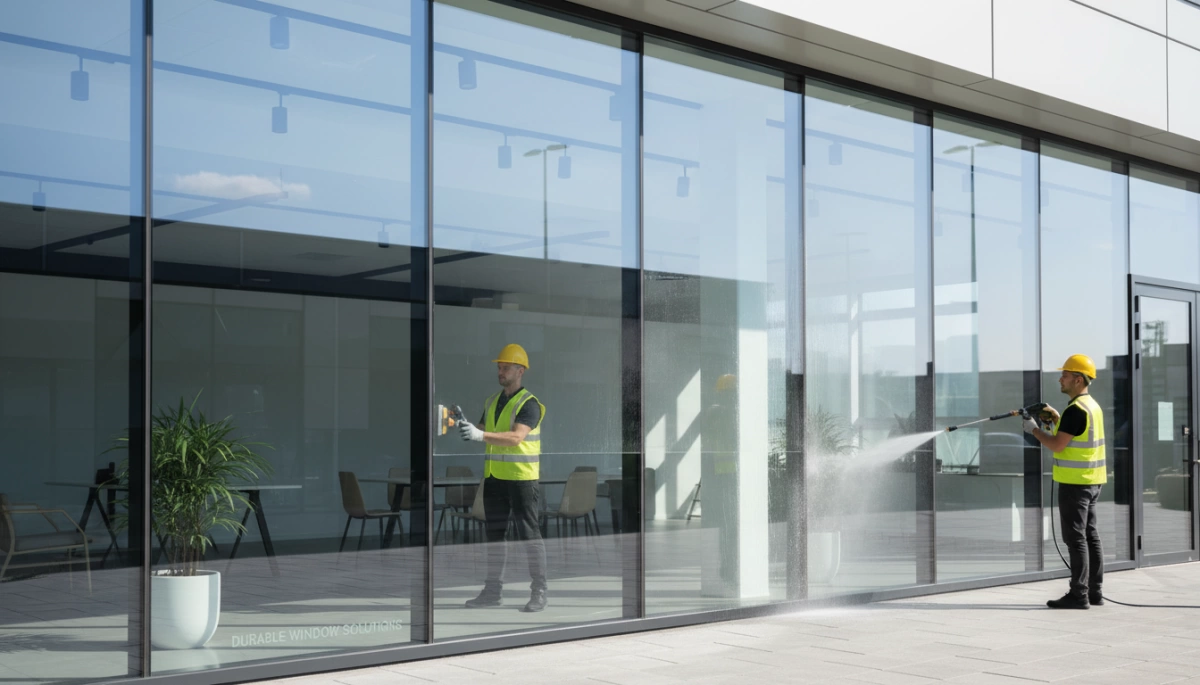
Upgrading your building’s efficiency shouldn’t mean shutting down your business. We understand that time is money, which is why our installation process is designed to be completely non-intrusive. We perform a commercial glass retrofit directly onto your existing glazing, avoiding the noise, debris, and structural disruption associated with full window replacement. Your tenants and employees can continue their daily tasks without interruption while we enhance your building envelope.
Long-Term Performance and Protection
We engineer our films to last. Unlike temporary fixes, our commercial-grade films feature a specialized scratch-resistant glass coating that withstands routine cleaning and accidental contact. This hard-coat technology ensures the film maintains its optical clarity and structural bond for years, effectively becoming a permanent part of your glass.
What you can expect from our installation:
- Zero Downtime: Fast application with no operational stoppage.
- Maintenance-Free: Clean your windows as usual after the curing period.
- Extended Lifespan: Durable multi-layer construction resists peeling and bubbling.
Through our CarlisePPF institutional glass coating solutions, we have successfully transformed office complexes and retail spaces, delivering immediate visual upgrades and lasting protection without the headache of major construction.
Choosing the Right Shade (VLT) for Your Commercial Architectural Window Film
Selecting the correct film for a commercial property isn’t just about aesthetics; it is a calculation of performance versus visibility. The most critical specification we analyze during this process is Visible Light Transmission (VLT). This metric indicates the percentage of visible light that passes through the glazing system.
- Low VLT (Darker Films): These are ideal for areas requiring maximum glare reduction solutions, such as media rooms or offices with direct sun exposure on screens.
- High VLT (Lighter Films): These maintain the building’s natural look and optical clarity, allowing ample daylight while still rejecting heat and UV rays.
Customizing for Building Orientation
A strategic commercial glass retrofit often involves using different film specifications for different sides of the building. The sun’s impact varies significantly based on orientation, meaning a uniform approach is rarely the most efficient.
- South and West Facades: These exposures endure the highest solar heat gain. We typically recommend films with lower VLT and higher Total Solar Energy Rejected (TSER) capabilities to drastically lower cooling loads.
- North and East Facades: These sides generally receive indirect light. A higher VLT film is preferable here to preserve natural illumination and reduce the need for artificial lighting, maintaining a balanced building envelope efficiency.
The Importance of a Professional Site Audit
You cannot rely on guesswork when retrofitting commercial glass. Factors like existing glass type (annealed, tempered, or Low-E) and shadow patterns influence which film is safe and effective to install. An expert consultation ensures that the chosen nano-ceramic window tint is compatible with your specific glazing to avoid thermal stress breakage.
Partnering with CarlisePPF experts for a technical audit ensures you receive a tailored solution that maximizes ROI. We assess the specific energy deficits of your facility to recommend a film that balances thermal insulation with visual comfort.

 English
  Portuguese
  Spanish
  German
  French
  Hindi
Hindi