


What Is Paint Protection Film (PPF)?
Paint protection film (PPF), often called clear bra or rock chip protection film, is a transparent, self-healing TPU film that I install on painted surfaces to physically shield your clear coat. A quality TPU paint protection film is:
- Clear and glossy (or matte if you choose a stealth finish)
- Impact-resistant, absorbing hits from rocks, gravel, and road debris
- Self-healing under heat, so light swirls and wash marks disappear
- Removable without damaging OEM paint when installed correctly
In short, PPF is a sacrificial layer: it takes the abuse so your factory paint doesn’t have to.
What PPF Actually Does for Your Car
When people ask me how long does it take to PPF a car, they really want to know what they’re getting for that downtime. Here’s what PPF realistically does:
- Prevents rock chips and sandblasting on the front end and high-impact areas
- Reduces scratching and swirl marks from washing and daily use
- Shields against minor scuffs, shopping carts, kids’ bikes, and tight parking
- Protects from bug acids, light road salt, and bird droppings longer than bare paint
- Keeps resale value higher, because the original paint stays intact and glossier
It does not make the car indestructible or maintenance-free, but it significantly slows visible wear in real-world driving.
PPF vs Ceramic Coating vs No Protection
To set clear expectations, I look at protection in three simple options:
1. PPF (Paint Protection Film)
- Best for: Rock chip protection, highway driving, track use, daily drivers
- Type of protection: Physical barrier against impacts and abrasion
- Look: Adds gloss, can hide very light imperfections, nearly invisible when done right
2. Ceramic Coating
- Best for: Easier washing, gloss, hydrophobic effect
- Type of protection: Chemical and surface tension – helps resist staining, doesn’t stop rock chips
- Reality: Great on top of PPF or on non-PPF areas, but not a substitute for PPF on high-impact zones
3. No Protection
- Best for: Low-mileage garage queens that rarely see highways
- Reality: Lowest upfront cost, but
- Rock chips → touch-ups or repainting
- Swirls and defects → regular polishing
If you care about the front end staying clean, PPF wins. Ceramic is a complementary upgrade, not a replacement.
When PPF Makes Sense for Your Car and Driving Style
I’m direct with customers: PPF is not for everyone. It makes the most sense when your driving style and environment actually justify it.
PPF is worth it if you:
- Drive highways or freeways daily → constant rock and debris impact
- Own a new or newly repainted vehicle → protecting fresh OEM paint pays off
- Drive a performance, luxury, or high-value car → paint repair is expensive and time-consuming
- Plan to keep the car for several years → you benefit from the full PPF lifespan (often 5–10 years depending on film quality and care)
- Do spirited or track driving → “track package” PPF saves fenders, rocker panels, and rear bumper impact zones
PPF may not be necessary if you:
- Mostly drive in the city at low speeds
- Swap cars every 1–2 years and don’t care about minor front-end wear
- Have older or already damaged paint and don’t plan to repair it
If you’re asking “how long does it take to PPF a car?”, you’re already thinking ahead about downtime vs protection. For drivers who actually use their cars, especially on highways or long commutes, PPF is usually the most time-efficient way to keep paint looking new over the long term.
How long does it take to PPF a car?
Quick answer: typical PPF installation times by coverage
Here’s a realistic breakdown of paint protection film installation time:
- Small/high‑impact areas (mirrors, headlights, door edges): 1–3 hours
- Partial front PPF (bumper + part hood/fenders): 4–6 hours
- Full front PPF (full hood, fenders, bumper, mirrors): 1 full day (6–10 hours)
- Track / extended package (full front + rockers/A-pillars): 1–1.5 days
- Full body PPF: 2–4 full days, sometimes longer for complex cars
Time also depends on film quality and whether the installer uses pre‑cut PPF patterns or more time‑consuming bulk techniques like with our own TPU paint protection film wraps.
Average PPF install time: sedans vs SUVs vs sports cars
By vehicle type, most professional PPF installers will quote:
- Sedan (Model 3, Camry, A4, etc.)
- Full front: 1 day
- Full body: 2–3 days
- SUV / crossover (RAV4, X5, Model Y, etc.)
- Full front: 1 day (often on the longer side)
- Full body: 3–4 days (more panels, more curves, higher roofline)
- Sports car / performance car (911, M3, Supra, etc.)
- Full front: 1–1.5 days
- Full body: 3–5 days (aggressive bumpers, vents, tight curves take time)
Curvy bumpers, big grills, and aero parts can easily add half a day on their own.
Working time vs total shop time
There’s a difference between hands‑on working time and how long your car actually stays at the shop:
- Actual install labor:
- Partial front: ~3–5 hours of real work
- Full front: ~6–10 hours
- Full body: ~16–30+ hours
- Total shop time / downtime (including: wash, prep, film cutting, breaks, drying, curing, QC):
- Usually 1–4 calendar days, depending on coverage and schedule
So if a shop says “two days”, it doesn’t mean they’re working flat-out for 16 hours straight on your car — they’re balancing prep, install, drying time, and other jobs.
Why no legit installer can “rush” PPF in a few hours
If someone promises a full front PPF or even a full car PPF in “just a few hours,” that’s a red flag. Here’s why:
- Prep is everything – decontamination, polishing, and cleaning take time. Skipping this means trapped dirt and poor adhesion.
- Alignment and stretching – film needs careful positioning on every panel, especially with complex bumpers and curves.
- Squeegeeing and edge work – getting out slip solution, avoiding lift lines, wrapping edges cleanly all require patience.
- Curing and inspection – installers need time to recheck edges, warm problem spots, and fix minor lift or bubbles.
Rushed or cheap installs usually show up later as:
- Lifted edges
- Premature failure
- Visible seams and dirt lines
- More time and money spent on removal and redoing the job
If you’re investing in quality rock chip protection film once, it’s smarter to give the shop a realistic window and demand a clean, careful install using high‑grade TPU clear bra film from a trusted supplier like ours.
Key factors that affect PPF installation time
When people ask how long does it take to PPF a car, all these variables matter. I always look at them before giving any realistic timeline.
1. Coverage level
The more film, the more time. Rough guide:
- Small/partial PPF areas (mirrors, headlights, door edges): fast, detail work but limited area.
- Partial front PPF (bumper + ⅓ hood/fenders): usually half a day.
- Full front PPF (full hood, fenders, bumper, mirrors): often a full day.
- Track package / extended coverage (rocker panels, A-pillars, more high-impact zones): 1–2 days.
- Full body PPF: 2–4 days depending on the car and complexity.
2. Vehicle size and complexity
A simple sedan is not the same as a big SUV or a sharp-edged sports car:
- Sedan: flatter panels, easier access, fewer complex curves.
- SUV / trucks: more surface area, higher panels, more time to prep and reach.
- Sports cars / luxury models: aggressive curves, vents, tight gaps and splitters that demand slow, precise work.
3. Paint condition and prep work
PPF shows what’s under it. If the paint isn’t ready, install time jumps:
- Extra time for washing, decontamination, and clay if the car is dirty or has fallout.
- Paint correction for swirls, water spots, or dealer-installed holograms.
- Any touch-ups or repainted sections need more care and curing time before PPF.
4. Installer experience, tools, and workflow
A professional PPF installer with a solid workflow can do more in less time—without rushing:
- Experienced techs make fewer mistakes and re-dos.
- Good tools (plotters, lighting, heat guns, clean water systems) cut down install time.
- A dialed-in workflow keeps cars moving without shortcuts that lead to lifting edges or trapped contamination.
If you’re a shop buying film in rolls, working with a reliable PPF factory that offers consistent quality and support (for example, a supplier that explains how to choose the right paint protection film factory and production setup) lets you plan time and labor much more accurately, job after job, because films behave predictably during install.
5. Film quality and design (pre‑cut vs bulk)
The film itself changes the clock:
- Pre‑cut PPF kits: faster, especially for standard bumpers and panels, less trimming on the car.
- Bulk/hand-cut installs: more seamless coverage and custom fit, but more time on alignment and edge work.
- Higher quality TPU paint protection film with good slip and tack balance installs faster and cleaner than cheap, sticky film that constantly fights you.
6. Shop schedule, environment, and curing conditions
Even with the same car and coverage, shop conditions change the total PPF application duration:
- Busy schedule = your car may sit between stages, even if actual hands-on time is reasonable.
- Clean, climate-controlled bay = faster drying, fewer dust issues, less rework.
- Humidity and temperature affect PPF curing time—cool, damp weather slows down how quickly the film sets enough for final inspection and delivery.
All of these together decide whether your full car PPF timeline is one long day, two solid days, or a multi-day booking.
PPF time by coverage option
When people ask how long does it take to PPF a car, the real answer depends on coverage. Same car, same shop, but different coverage can mean anything from 1 hour to several days.
Time for small high‑impact areas (mirrors, headlights, door edges)
For quick rock‑chip protection on high‑impact spots:
- Side mirrors, headlights, fog lights:
~ 30–90 minutes total, depending on the car and film (pre‑cut vs bulk). - Door edges, door cups, trunk ledge:
~ 30–60 minutes for a clean, pro install.
Shops using quality TPU paint protection film, like a clear transparent PPF wrap, can move faster because patterns fit better and stretch cleaner.
Time for partial front PPF
A partial front PPF usually covers:
- Front part of hood
- Front part of fenders
- Front bumper
- Mirrors (sometimes headlights)
Typical install time:
- Sedans / hatchbacks: ~ 3–6 hours
- SUVs / pickups: ~ 4–7 hours
- Sports cars: ~ 4–8 hours (curves and vents slow things down)
If a shop claims “full partial front in 1–2 hours,” they’re either skipping prep or rushing the install.
Time for full front PPF
A full front PPF includes:
- Full hood
- Full front fenders
- Front bumper
- Mirrors
- Often headlights
Average PPF application duration:
- Sedan: ~ 5–9 hours
- SUV / crossover: ~ 6–10 hours
- Sports car / performance: ~ 7–12 hours
Most shops split this into one full day, including wash, prep, install, and next‑day touch‑ups if needed.
Time for track / extended PPF packages
A track package or extended front PPF usually adds:
- A‑pillars
- Rocker panels / side skirts
- Rear bumper impact areas (behind wheels)
- Sometimes rear fenders and doors
Typical timelines:
- Adding a track package to an existing full front:
- 3–6 hours
- Full front + track package in one go:
~ 1–1.5 days for careful work
This kind of rock chip protection film install takes longer because lower side panels and skirts are harder to prep and wrap cleanly.
Time for full body PPF on different vehicle types
Full car PPF timeline varies a lot by size and shape:
- Small coupe / compact sedan:
~ 2–3 full days of shop time - Mid‑size sedan / crossover:
~ 3–4 days - Large SUV / pickup / van:
~ 4–5+ days - Exotic / supercar with complex panels:
~ 4–7 days, depending on bulk vs pre‑cut and how much disassembly is needed
For full wraps, many installers prefer premium films (for example, a hydrophobic 7.5 mil clear PPF for easier install and better self‑healing), as this actually saves time on alignment and squeegee work.
Why full wraps and complex bumpers take the longest
Full wraps and complex bumpers eat time because:
- More edges, vents, sensors, and curves = more stretching, heating, and trimming.
- Bulk installs around sharp curves and deep inlets need extra repositioning and squeegeeing to avoid tension and lift lines.
- Modern bumpers with parking sensors, cameras, splitters, and grills often require partial disassembly for a clean, hidden‑edge install.
- Full body PPF means the installer has to check every panel, align seams, and keep contamination out on a much bigger surface.
If you want a clean, long‑lasting result, plan your PPF install time in days, not hours—especially for full body PPF or anything with aggressive styling and complex bumpers.
Step‑by‑step PPF installation process (how long does it take to PPF a car)
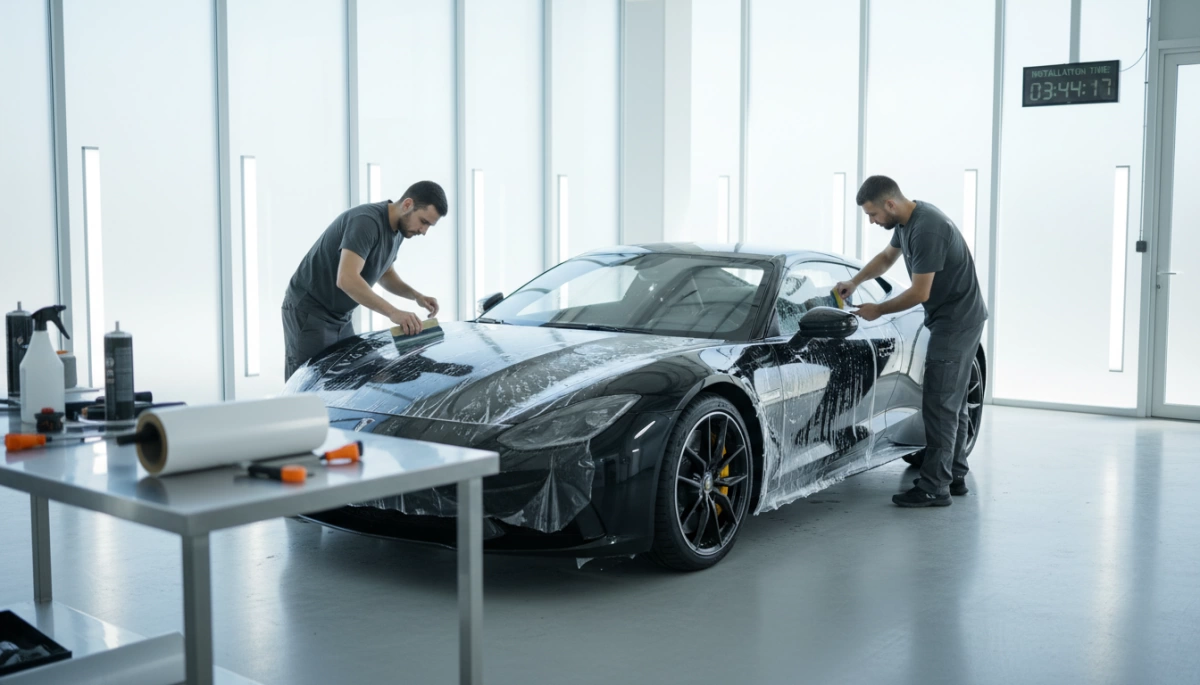
Initial inspection and planning
I always start with a full walk‑around of the car. I’m checking:
- Paint condition (swirls, chips, repaints)
- Panel alignment and gaps
- Previous coatings or waxes
Based on this, I decide which panels need extra prep, which patterns to use, and how to plan the PPF installation time so we’re not rushing any complex areas like bumpers or mirrors.
Wash, decontamination, and surface prep
Next is a deep clean. For a proper paint protection film installation:
- Pre‑wash and contact wash to remove dirt
- Iron and tar remover to clear bonded contamination
- Clay bar if needed for rough paint
This step makes sure the TPU paint protection film can sit on a perfectly clean surface, which directly affects how long the PPF lasts and how smooth it looks.
Paint correction and defect removal
If the paint has swirls, light scratches, or haze, I’ll do a light to moderate polish before applying PPF. Why:
- PPF locks in whatever is underneath
- Corrected paint gives a clearer, deeper gloss through the film
This adds time to the PPF application duration, but saves headaches later.
Pattern selection or film cutting
For most cars, I’ll use pre‑cut patterns from a plotter. For tricky areas or custom coverage, I’ll bulk cut from a roll:
- Pre‑cut = faster install, cleaner edges, less risk to paint
- Bulk = better stretch and coverage on complex shapes
If you’re a shop buying rolls, a quality custom brand TPU PPF film lets you control cost and fitment across sedans, SUVs, and sports cars.
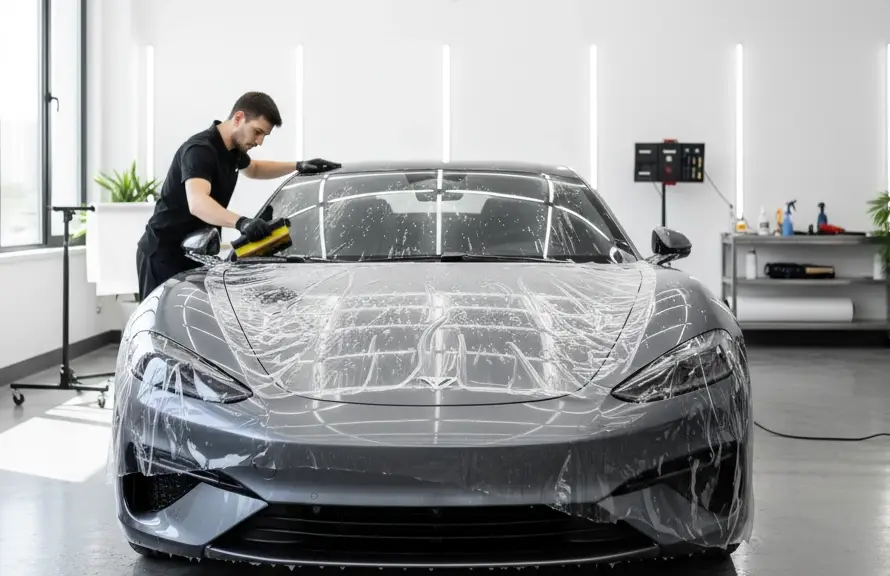
Film application and alignment
Now the clear bra installation starts:
- Slip solution sprayed on panel and film
- Film laid down and floated into position
- Edges and body lines aligned perfectly
This is where experience really matters. Rushing this is why cheap installs get lift lines, tension marks, and visible seams.
Squeegeeing, edge work, and trimming
Once aligned, I:
- Squeegee out slip solution and air pockets
- Wrap and tuck edges where possible
- Carefully trim excess film away from panel gaps and badges
This is slow, detailed work and a big reason a full car PPF timeline is counted in days, not hours.
Final inspection, touch‑ups, and heat sealing
To finish, I:
- Check every panel under strong lighting
- Push down any micro‑bubbles or edges
- Heat seal edges and high‑stretch zones so they stay down during PPF curing time
Done right, this process gives you a clean, long‑lasting rock chip protection film install that doesn’t need to be “fixed” later—saving you more time than a rushed job ever will.
PPF curing time and downtime
How long does PPF take to set and fully bond?
For most TPU paint protection films, surface bond happens fast, full cure takes longer:
- Initial set: 2–4 hours after installation
- Usable bond: ~24 hours (you can usually drive by then)
- Full cure: 7–14 days in normal conditions
High‑quality self‑healing TPU like our OEM‑grade films is engineered to bond cleanly during this window and stay flexible for years. If you want a quick refresher on what PPF is made to do, I break that down in this guide to what PPF is on a car and how it protects paint.
Typical PPF curing time in different weather
Curing speed is mainly about temperature and humidity:
- Hot / dry climate (25–35°C / 77–95°F):
- Initial set: same day
- Full cure: ~5–7 days
- Mild climate (15–25°C / 59–77°F):
- Initial set: same day
- Full cure: ~7–10 days
- Cold climate (<10°C / <50°F):
- Initial set: 1–2 days
- Full cure: 10–14+ days
If you’re in a cold or very humid region, expect the PPF curing time to be on the longer side and avoid outdoor overnight parking during the first few days if possible.
When you can drive the car after PPF
For most professional PPF installs:
- Drive home: usually same day or next morning, once the installer is done with heat sealing and final checks.
- Avoid for first 48 hours:
- High‑speed freeway runs with heavy bug splatter
- Gravel roads, construction zones, or touchless washes
I tell customers: normal city driving after 24 hours is fine, just skip harsh conditions while the film finishes bonding.
When it’s safe to wash after PPF installation
Water won’t “kill” PPF, but pressure and chemicals can move edges while the adhesive is still fresh:
- No washing: first 5–7 days (hand wash or car wash)
- After 7 days: gentle hand wash with:
- pH‑neutral shampoo
- Soft wash mitt
- Low to medium hose pressure
- Avoid for 2 weeks:
- Pressure washers close to edges
- Harsh degreasers, APCs, or solvents
- Automatic brush washes
Once fully cured, stick to a simple PPF maintenance routine: gentle wash, no harsh chemicals, and avoid aggressive scrubbing.
Common PPF curing issues: what’s normal vs not
During PPF drying time, some things are completely normal:
Normal in first 1–2 weeks:
- Small bubbles / moisture pockets:
- Light “silvering” or tiny trapped water pockets under the film
- These usually evaporate as the adhesive cures
- Slight haze or milkiness:
- Especially on thick or self‑healing films
- Clears up as moisture and install solution gas out
- Soft edges:
- Edges may feel a bit “soft” to the touch before full cure
NOT normal (call your installer):
- Big bubbles that grow or don’t shrink after a week
- Edges lifting or collecting dirt right away
- Creases, stretch marks, or fingers that don’t lay down
- Yellowing or contamination under the film from day one
A good professional PPF installer will usually schedule a free follow‑up check within 1–2 weeks to deal with any stubborn bubbles or edges before they lock in.
How to plan your schedule around PPF install time
When people ask how long does it take to PPF a car, what they really need is planning info: when to drop the car, when they’ll get it back, and when it’s safe to wash or drive normally. Here’s how I’d schedule it in real life.
What to ask your PPF installer about timing
Before you book, get clear answers to:
- How long will my specific coverage take?
Ask for a realistic time window for:- Partial front
- Full front
- Track package
- Full body PPF
- How many days will you need the car at the shop?
A quality full front PPF is usually 1 full day; full body PPF is often 2–4 days. - Do you keep the car overnight for curing and inspection?
Good shops often want the car overnight, especially for full fronts and full wraps. - What’s your policy on touch‑ups if bubbles/haze appear during curing?
Legit shops expect minor post‑install visits and build that into their workflow.
Also ask what film they’re using. A quality TPU paint protection film with a solid warranty, like a 7.5 mil, 10‑year film such as this professional-grade car PPF, is worth scheduling around.
Dropping off vs waiting at the shop
How long does it take to PPF a car at the shop vs your own time?
- Waiting at the shop is only realistic for:
- Small areas (mirrors, headlights, door edges)
- Very small partial front jobs
Even then, expect 2–4 hours minimum.
- Dropping off the car is better for:
- Full front
- Track packages
- Full body PPF
You save your own time by not sitting there, and the installer can work without rushing.
My rule:
- Anything beyond a very basic partial front = drop off and come back next day at minimum.
Planning around work, travel, or new car delivery
If you’re busy or getting a new ride, plan it like this:
- For daily drivers (busy work schedule)
- Drop off after work and pick up next evening (for full front)
- Use a second car or rideshare for 1–3 days (for full body PPF)
- Before a road trip
- Get PPF installed at least 3–5 days before you leave
- That gives time for curing and a quick checkup if needed
- New car delivery strategy
- Book your PPF slot before the car arrives
- Go from dealer → PPF shop the same day if possible
- This keeps the paint as clean and chip‑free as possible from day one
If you’re still comparing protection options or planning packages, this guide on choosing the right invisible car film vs other protective options is a good prep step before you lock in the schedule.
How long to leave the car at the shop after install
This is where PPF application duration and PPF curing time meet in real life:
- Small / partial areas:
- Install time: 1–3 hours
- Most shops: same‑day pickup
- Full front PPF:
- Install: 6–10 hours actual work
- Realistic: drop off morning, pick up next day
- Many shops want 1 night to monitor edges and early bubbles
- Track packages / extended coverage:
- Install: often 1.5–2 days
- Plan: 2–3 calendar days at the shop
- Full body PPF:
- Install: 2–4 full working days depending on vehicle size and complexity
- Plan: 3–5 days at the shop total, including curing and final inspection
Ask directly:
- “What day and time do you actually want me to drop off?”
- “What’s the earliest realistic pickup time if nothing goes wrong?”
- “Do you prefer I leave the car an extra day if you’re busy or humidity is high?”
If you plan around real install time + one safe curing night, you avoid rushing the installer, get cleaner results, and don’t blow up your own schedule.
Post‑installation care and time‑saving tips
Once the paint protection film is on, how you treat it in the first days has more impact than most people think. A few simple habits will protect your investment and keep you from wasting time on fixes later.
First 24–48 hours after PPF
In the first 1–2 days, the film is still settling and early PPF curing time really matters:
- Do not wash the car.
- Avoid high‑speed driving in heavy rain.
- Don’t use pressure washers or air blowers on edges.
- Minimize touching or pressing on the film, especially edges and corners.
- Expect light haze, small bubbles, or a “wet” look under the film – that’s normal during this stage.
If you see large bubbles that grow or don’t move over a couple of days, contact your professional PPF installer for a quick check.
First 1–4 weeks after PPF
During the first month, the PPF application duration technically ends, but the film is still fully bonding:
- Avoid automatic car washes and harsh brushes.
- Avoid strong chemicals, bug removers, or tar removers on the film.
- Keep the car out of direct sun for long periods if possible in the first week.
- If you get bugs, bird droppings, or tree sap, soak with mild soapy water and gently wipe as soon as possible.
This is also a good time to ask your installer which self‑healing PPF film they used and confirm the aftercare they recommend. If you’re still comparing film types, looking at a high‑gloss TPU PPF product like clear PPF with 7.5mil thickness gives you a baseline for durability and care.
Basic PPF washing and maintenance routine
You don’t need a complicated PPF maintenance schedule. Stick to a simple, repeatable routine:
- Wash every 1–2 weeks:
- pH‑neutral car shampoo
- Soft wash mitt and microfiber towels
- Two-bucket method (wash + rinse bucket)
- Dry gently:
- Soft microfiber drying towel
- Pat or drag dry – don’t scrub
- Decontaminate 2–4 times per year:
- Use PPF‑safe iron remover if needed (check label)
- Avoid clay bars unless your installer says it’s okay, and never use aggressive clay.
Habits that help PPF last longer (with zero extra effort)
You don’t need more time – just better habits:
- Park in shade or underground where possible.
- Rinse the front bumper and mirrors after long highway trips to remove bugs and road film.
- Avoid following trucks too closely to reduce rock chip impact.
- Skip cheap automatic car washes with stiff brushes.
- Inspect edges and high‑impact zones (hood, bumper, rocker panels) monthly for lifting.
These basic habits help your rock chip protection film and clear bra installation last closer to the realistic 7–10 year life of quality TPU PPF.
Products to use and products to avoid on PPF
Using the right products saves you time and stops you from damaging the film:
Safe to use on PPF (check labels):
- pH‑neutral car shampoos
- PPF‑safe spray sealants or PPF‑compatible ceramic toppers
- Microfiber wash mitts and towels
- Low‑pressure washers (keep distance, avoid direct hit on edges)
Avoid on PPF:
- Strong solvents, gasoline, or degreasers
- Abrasive polishes or compounds (they can kill the self‑healing layer)
- Magic erasers or scouring pads
- Wax with heavy cleaners or abrasives
- High‑pressure nozzles aimed at seams and edges
If you’re a shop owner or installer, using high‑quality, stable films from a trusted wholesale paint protection film supplier makes this aftercare much easier on your customers and reduces warranty callbacks. For bulk orders and consistent quality, I always base my care guides on premium TPU paint protection films designed for long‑term clarity and easy maintenance.
Is professional PPF installation worth the time?
If you care about the look and long‑term value of your car, professional paint protection film installation is usually worth the time. You’re trading a day or two in the shop for years of rock chip protection, easier washing, and better resale value. A good installer working with high‑quality TPU paint protection film gives you clean edges, minimal seams, and proper curing that DIY kits rarely match.
DIY PPF vs pro install: time, learning curve, and risk
DIY PPF sounds cheaper and faster, but in reality:
- Time cost: Expect a full weekend (or more) to learn, practice, and install even a partial PPF front end.
- Learning curve: You’ll need to figure out slip solutions, stretching, squeegee technique, and how to avoid silvering and fingers.
- Risk: One bad move and you crease the film, trap dust, or cut too deep near the paint. That means redoing panels and buying more film.
A pro installer already has the workflow, tools, and access to bulk rolls or pre‑cut PPF patterns. For shops, buying quality paint protection film rolls in bulk keeps each job more consistent and efficient.
How rushed or cheap installs cost more time later
If a shop promises a full car PPF timeline in “a few hours,” that’s a red flag. Rushed or ultra‑cheap installs often mean:
- Poor prep = edges lifting, contamination, and visible debris under the film
- Bad alignment = seams in the wrong place and exposed high‑impact areas
- Shortcuts on edges = early peeling, trapped moisture, and more warranty visits
You “save” time and money up front, then lose it later to fixes, removals, or repainting. A proper clear bra installation simply cannot be rushed.
Paint repair time vs doing PPF once
Compare timelines:
- No PPF: Rock chips → touch‑ups → resprays → days or weeks at the body shop, plus color‑match issues
- PPF once: 1–3 days for install, then quick washes and minimal paint work for years
For daily drivers, highway commuters, and performance cars, one solid PPF application is usually far cheaper in time and money than repeated paint repair.
How long quality PPF realistically protects your car
With a good film and proper install, self‑healing PPF film can realistically protect your car for 8–10 years:
- Premium TPU films (around 7–8 mil thickness) with a strong top coat hold up to UV, road rash, and bird droppings
- You get long‑term rock chip protection, stain resistance, and easier cleaning
- When it’s finally time to remove it, quality film comes off cleanly without damaging OEM paint
If you’re running a shop or thinking about offering PPF as a service, investing in a durable, 10‑year rated PPF film like a clear 7.5 mil option is what makes your installs last and keeps customers from coming back with issues, which saves everyone time in the long run.
Common questions about PPF install time
How long to PPF an SUV vs a sedan?
For a professional paint protection film installation, the vehicle size and shape matter more than just the badge:
- Sedan (full front PPF): ~1–1.5 days in the shop
- SUV / crossover (full front PPF): ~1.5–2 days
- Full body PPF sedan: ~2–3 days
- Full body PPF SUV: ~3–4+ days
Bigger panels, taller bodies, and more complex bumpers on SUVs simply add more PPF application duration. On highly sculpted cars or with thicker TPU films like our own high‑gloss TPU car wrap film, plan for the longer end of those ranges.
Can I get PPF done in one day?
For small or partial PPF (mirrors, headlights, door edges, partial front): sometimes yes.
For proper full front or full body PPF: realistically no, not if you want quality.
A real professional PPF installer needs time for:
- Wash and decontamination
- Paint inspection and prep
- Careful alignment and squeegee work
- Edge finishing and initial curing
Any shop promising a full car PPF timeline of “a few hours” is cutting corners somewhere—usually on prep, edges, or cleanliness.
Can I drive my car right after PPF?
Yes, you can usually drive the car the same day once the film is set and major moisture is squeegeed out. Just keep in mind:
- Avoid highways/rain for the first 12–24 hours if possible
- Don’t pick at edges or trapped moisture
- Expect minor bubbles or haze during early PPF curing time
The film continues to bond over the next 24–72 hours, depending on temperature and humidity.
Does PPF installation damage or cut into the paint?
Done right, PPF does not damage paint. Installers either:
- Use pre‑cut patterns, or
- Trim carefully on the panel with light pressure and proper technique
On OEM paint in good condition, PPF is non-destructive and removable later without hurting the clear coat. Damage usually only happens with untrained installers, rushed cutting, or extremely thin/fresh resprays.
How long does full car PPF really last?
Modern self‑healing TPU paint protection film typically lasts:
- 5–7 years in real-world conditions
- Up to 8–10 years with high‑end film and good maintenance
UV, climate, and how you wash matter more than the calendar. Quality film plus proper PPF maintenance is still cheaper than respraying rock‑chipped or sun‑damaged panels.
What if I don’t have time for full body PPF right now?
You don’t have to do everything at once. Smart options if your schedule or budget is tight:
- Start with a full front PPF (bumper, hood, fenders, mirrors)
- Add rocker panels / lower doors later
- Protect high‑impact zones first if you do a lot of highway or track driving
I always recommend treating PPF like insurance: protect the areas that actually get hit first. You can expand to a full body wrap when you have more time, and your early‑installed panels will still match if you stay with the same film series and installer.


 English
  Portuguese
  Spanish
  German
  French
  Hindi
Hindi