

You’ve likely heard that a ppf wrap for cars is the ultimate shield for your vehicle’s exterior…
But do you know why it costs significantly more than a standard vinyl wrap?
Or the critical differences between old-school Clear Bra and the new wave of Colored PPF?
As a manufacturer, I know that true protection isn’t just about covering the paint—it’s about the engineering behind the TPU material. There is a lot of noise in the aftermarket industry, and choosing the wrong film can actually damage your clear coat.
In this guide, we’re cutting through the marketing fluff. You’ll learn exactly how self-healing technology works, the real ROI on rock chip protection, and how to distinguish high-quality manufacturing from cheap alternatives.
Let’s dive in.
What is a PPF Wrap for Cars?
Tired of discovering new rock chips on your front bumper after every highway commute? A ppf wrap for cars (Paint Protection Film) is the definitive solution to preserving your vehicle’s pristine finish. We engineer these robust, transparent shields to act as a sacrificial barrier over your vehicle’s factory paint. Instead of your clear coat taking the damage from gravel, road debris, bug acids, and minor abrasions, the automotive paint protection film absorbs the impact. It is the ultimate invisible armor for daily drivers and exotic vehicles alike.
Understanding TPU Material Science
When evaluating film quality, the core material dictates performance. As an established PPF film OEM, we manufacture our films using premium TPU (Thermoplastic Polyurethane) rather than outdated, rigid PVC.
- Maximum Elasticity: TPU is incredibly flexible, allowing installers to stretch and mold the film around complex bumpers and mirrors without tearing.
- Molecular Memory: This TPU vs PVC material difference is what enables advanced self-healing technology; the polymers naturally flow back into their original state when exposed to heat, erasing swirl marks and light scratches.
- Anti-Yellowing Resistance: Aliphatic TPU structures physically block UV radiation, preventing the film from degrading, cracking, or turning yellow over time.
The Three Construction Layers
To understand why a quality PPF wrap for cars is so effective, you have to look at its engineered cross-section. We bond three distinct layers together to create a seamless defensive sheet:
| Layer Structure | Primary Function | Material Focus |
|---|---|---|
| Clear Topcoat | Repels water, prevents chemical staining, and houses the self-healing properties. | Hydrophobic polymer |
| Core Shield | Disperses kinetic energy from heavy impacts to provide rock chip protection. | High-grade TPU |
| Base Adhesive | Locks the film to the vehicle safely without damaging factory paint upon removal. | Acrylic pressure-sensitive adhesive |
Thickness vs. Standard Vinyl
If you are debating between a vinyl wrap vs PPF purely for defense, the deciding factor is physical mass.
- PPF Wrap Thickness: Engineered for durability, high-quality PPF clocks in at an 8mil / 10mil thickness. This dense structure is strictly built to absorb severe impacts that would otherwise chip your paint down to the bare metal.
- Standard Vinyl Thickness: Color-change vinyl wraps typically measure just 3mil to 4mil thick. While excellent for aesthetics, standard vinyl is easily punctured by gravel and offers negligible physical protection against road hazards.
PPF Wrap vs. Vinyl Wrap Differences
When our clients ask about the best solution for their vehicles, the conversation often starts with distinguishing between a standard vinyl wrap and a ppf wrap for cars. As a manufacturer producing both, we know that while they might look similar from a distance, the engineering behind them is distinct.
Purpose: Protection vs. Aesthetics
The core difference lies in the primary function. Vinyl wraps are predominantly about style and customization. If you want to change your vehicle’s color to a metallic silver using our silver car wrap vinyl film, you are choosing an aesthetic upgrade. Vinyl is thinner and designed to conform to complex curves for a cosmetic overhaul.
In contrast, a ppf wrap for cars is built for defense. We engineer these films using TPU (Thermoplastic Polyurethane), a material specifically chosen for its impact resistance. While vinyl changes the look, PPF acts as a sacrificial layer that absorbs rock chips, scratches, and road debris to keep the factory paint underneath pristine.
Durability and Lifespan Comparison
Because of the material differences—TPU vs PVC material—the lifespan varies significantly.
- Vinyl Wraps: Generally offer a shorter service life. They are excellent for temporary styling or advertising but are more susceptible to environmental wear over time.
- PPF Wraps: Designed for the long haul. Our TPU-based protection films are robust enough that we back specific lines with a 5-year warranty. They resist yellowing and cracking much better than standard PVC vinyl, making them a superior investment for long-term vehicle preservation.
Visual Finish and Texture
Historically, vinyl held the advantage in texture variety, offering unique finishes like our gold carbon fiber vinyl film car wrap which provides a distinct 2D look. However, modern manufacturing technology has allowed us to close that gap.
Today, we produce colored PPF that combines the best of both worlds: the deep, wet gloss of a high-end paint job and the protective capabilities of a clear bra. Whether you choose a glossy crystal finish or a color-changing film, high-quality PPF now offers an elegant aesthetic experience without compromising on protection.
Quick Comparison: PPF vs. Vinyl
| Feature | PPF Wrap (Paint Protection Film) | Vinyl Wrap |
|---|---|---|
| Primary Material | TPU (Thermoplastic Polyurethane) | PVC (Polyvinyl Chloride) |
| Main Goal | Impact protection & scratch resistance | Color change & styling |
| Thickness | Thicker (typically 6-10 mil) | Thinner (typically 3-4 mil) |
| Self-Healing | Yes (Heat-activated recovery) | No |
| Typical Lifespan | 5-10 Years | 3-5 Years |
Colored PPF Wrap Trends
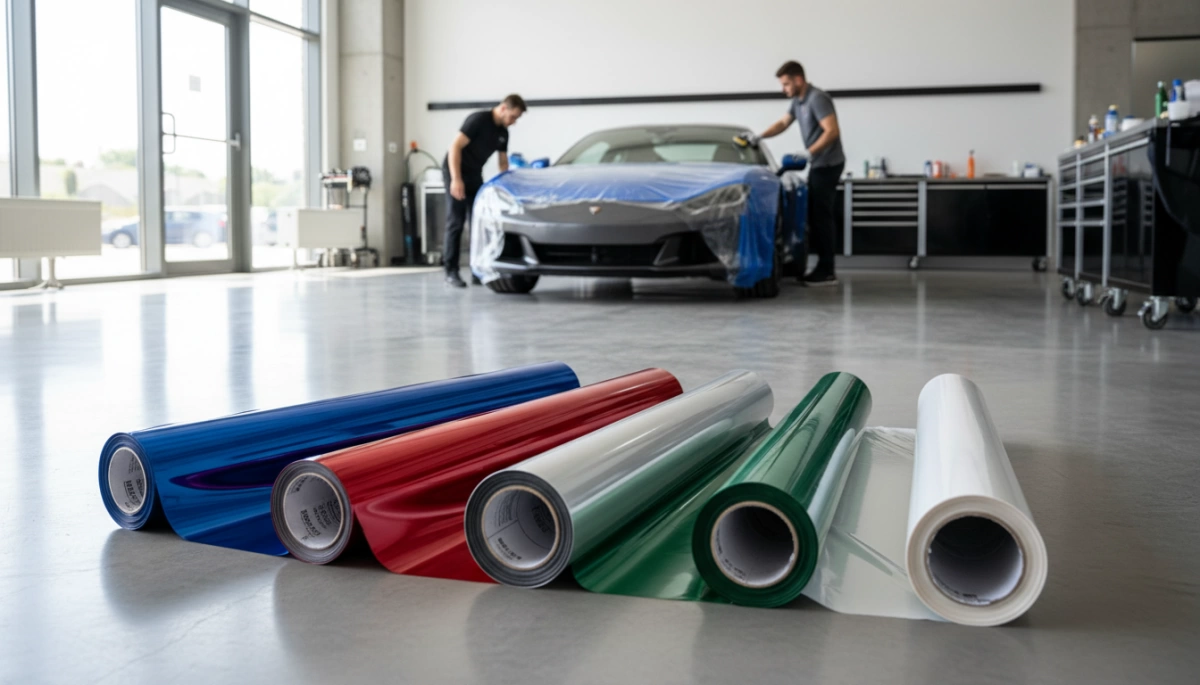
The automotive aftermarket is seeing a massive shift toward colored PPF wrap solutions. In the past, vehicle owners had to choose between the aesthetic change of a thin vinyl wrap or the robust protection of a clear bra. Today, we combine these needs into a single, advanced product. As a manufacturer, we see increasing demand for films that offer the heavy-duty impact resistance of TPU while providing the stunning visual finish of a custom paint job.
Hybrid Solution: Protection Meets Color
Colored Paint Protection Film represents the ultimate hybrid technology. Unlike standard PVC vinyl, which offers minimal defense against road debris, our colored PPF is engineered using Thermoplastic Polyurethane (TPU). This material provides the substantial thickness and durability required to stop rock chips and scratches, all while completely transforming the vehicle’s color.
For example, our Mimosa Red colored PPF utilizes wet TPU technology to deliver a deep, paint-like finish that is indistinguishable from a factory spray job. This dual-functionality means you no longer need to layer vinyl under clear film; you get high-level protection and style in one application.
Available Finishes: High Gloss, Crystal, and Color-Shifting
We manufacture a variety of surface textures designed to complement protection performance with an elegant aesthetic experience. Current trends favor finishes that mimic premium automotive paints or offer unique visual effects:
- High Gloss & Crystal: These films offer a “wet look” with extreme clarity, enhancing the depth of the color.
- Color-Shifting & Reflective: For a more aggressive look, options like our seven-color rainbow reflective films change appearance based on lighting angles.
- Textured Finishes: We also produce specialized options like 2D gold carbon fiber for sporty accents.
- Deep Colors: Rich hues, such as our Midnight Purple protection film, provide a custom look that resists fading better than traditional vinyl.
Benefits of Colored Paint Protection Film
Investing in a ppf wrap for cars rather than a standard color change wrap offers significant long-term advantages. The primary benefit is the self-healing technology inherent in our TPU material; fine scratches and swirl marks disappear with heat, keeping the “paint” looking pristine for years.
Comparison: Colored PPF vs. Standard Vinyl
| Feature | Colored PPF (TPU) | Standard Vinyl Wrap (PVC) |
|---|---|---|
| Material Base | Thermoplastic Polyurethane (TPU) | Polyvinyl Chloride (PVC) |
| Impact Protection | High (Stops rock chips) | Low (Cosmetic only) |
| Self-Healing | Yes (Heat activated) | No |
| Surface Finish | No orange peel, paint-like depth | Can have texture/orange peel |
| Durability | Excellent anti-yellowing & stain resistance | Prone to fading over time |
By choosing a colored PPF, you are securing a 5-year warranty on specific body protection films, ensuring that the investment in style is backed by industrial-grade durability.
Key Benefits of Full PPF Car Wraps
Investing in a ppf wrap for cars goes beyond simple aesthetics; it is about preserving the vehicle’s integrity through advanced material science. As a manufacturer, we engineer our films to serve as a comprehensive shield against daily road hazards while maintaining a showroom-quality finish.
Self-Healing Technology Explained
The core advantage of our TPU (Thermoplastic Polyurethane) films lies in their molecular structure. Unlike rigid PVC, our self-healing TPU is elastomeric. When the surface sustains minor abrasions—like swirl marks from washing or light scratches from bushes—the polymer chains are not permanently broken.
- Heat Activation: Exposure to heat (sunlight, hot water, or a heat gun) causes the polymers to realign.
- Result: The film literally “heals” itself, returning to its original smooth state without the need for buffing or polishing.
- Application: This technology is standard in our high-performance transparent TPU protection film, ensuring the vehicle remains flawless over time.
Hydrophobic Coating Properties
Modern PPF wraps are manufactured with a hydrophobic top coat that drastically changes how the surface interacts with liquids. This layer creates a low surface energy that repels water, oil, and road grime.
- Water Beading: Moisture beads up and rolls off immediately, carrying dirt particles with it.
- Stain Resistance: Prevents bird droppings, bug splatter, and tree sap from etching into the film.
- Ease of Maintenance: Reduces the frequency of car washes and eliminates the need for heavy scrubbing.
UV Resistance and Anti-Yellowing
One of the biggest concerns for vehicle owners is oxidation. Our films are engineered with UV inhibitors that block harmful ultraviolet rays. This serves a dual purpose: it protects the vehicle’s factory paint from fading and ensures the film itself resists yellowing over time. Whether you choose a high-gloss clear bra or one of our matte finish PPF options, the material remains color-stable even under harsh sun exposure.
Impact on Resale Value
A full PPF wrap is a direct investment in the vehicle’s future value. The film acts as a sacrificial layer, absorbing rock chips, road debris impacts, and environmental contaminants.
| Feature | Benefit for Resale |
|---|---|
| Paint Preservation | Factory paint remains in pristine, “like-new” condition underneath the wrap. |
| Damage Prevention | Eliminates the need for repainting panels, which can lower vehicle value. |
| Removability | The film can be professionally removed to reveal the original finish before selling. |
By maintaining the integrity of the OEM paintwork, our protection films help owners command a higher asking price when it comes time to sell or trade in the vehicle.
Paint Protection Film Cost Analysis
When evaluating the investment in a ppf wrap for cars, the final price tag is driven by material quality, coverage area, and installation complexity. As a factory-direct manufacturer, we see firsthand how raw material choices impact the bottom line.
Pricing Factors: Coverage and Labor
The cost structure for PPF installation generally breaks down into two main buckets:
- Material Grade: High-quality TPU (Thermoplastic Polyurethane) films command a higher price than standard PVC options due to their advanced self-healing and anti-yellowing properties.
- Coverage & Labor: A full-body wrap requires significantly more material (typically 15m rolls) and labor hours compared to a simple “bra” covering the front bumper and hood. Complex curves and air-release requirements on specific vehicles also increase labor time.
For businesses sourcing materials, buying directly from the source eliminates middleman markups. We provide a comprehensive range of paint protection films engineered for different budget levels and performance needs.
ROI: Wrap vs. Repainting
The return on investment for a quality PPF wrap is measurable in vehicle resale value. A high-end paint job can cost thousands and permanently alters the factory finish, often lowering a car’s market value. In contrast, paint protection film acts as a sacrificial layer. It absorbs rock chips, scratches, and UV damage, keeping the original OEM paint pristine underneath. With our specific TPU films carrying a 5-year warranty, the long-term protection often outweighs the initial installation cost.
Risks of Cheap Non-TPU Films
Cutting corners with low-grade, non-TPU films is a risky gamble. While the upfront cost is lower, these “economy” films often lack the chemical stability of premium TPU.
- Yellowing: Cheap adhesives and substrates degrade quickly under UV exposure, turning clear wraps yellow.
- Paint Damage: Poor quality adhesives can bond aggressively to the clear coat, potentially stripping paint during removal.
- Lack of Healing: Unlike our self-healing TPU, basic films do not recover from swirl marks or light scratches.
Sourcing from an experienced manufacturer is critical to avoiding these pitfalls. When choosing a reliable paint protection film factory, prioritize suppliers who use proven TPU materials and offer transparent warranty support.
Installation and Maintenance Guide
Proper application is just as critical as the manufacturing quality of the film itself. As a factory-direct supplier, we know that even the best ppf wrap for cars requires a meticulous approach to ensure the 5-year warranty holds up and the aesthetic finish remains flawless.
Paint Correction and Application Process
Before a single inch of TPU touches the vehicle, the surface must be pristine. If you trap debris or swirls under the film, they are there to stay. Our films are engineered for professional handling, but the substrate dictates the final look.
- Decontamination: We recommend a full clay bar treatment to remove embedded road grime and tar.
- Correction: Machine polishing is essential to remove existing scratches. Our high-gloss clear films amplify the paint underneath, so the base must be perfect.
- Application: Our films, available in standard 1.52m x 15m rolls, utilize wet application methods for precise positioning.
- Finishing: Professional installers use squeegees to remove fluid and activate the adhesive. For specific techniques on handling complex curves and edges, you can review our guide on car PPF installation.
Washing and Waxing Tips
Once the film is cured, maintenance is straightforward, but specific rules apply to maintain the anti-yellowing and self-healing properties inherent in our TPU material.
- Wait to Wash: Allow the film to cure for at least 7 days before the first wash to ensure edge adhesion.
- Gentle Cleaning: Use pH-neutral car shampoos. Avoid automatic car washes with stiff bristles that can mar the surface.
- Waxing: You can wax PPF, but avoid products containing heavy solvents (like kerosene or naphtha) or dyes. Stick to natural waxes or sealants designed for polyurethane to keep the gloss high.
Ceramic Coating Compatibility
Many of our wholesale clients ask if they can layer protection. The answer is yes. Applying a ceramic coating over a PPF wrap creates the ultimate barrier. The film handles the heavy lifting—stopping rock chips and scratches—while the coating adds extreme hydrophobicity and chemical resistance. This combination maximizes the lifespan of the film and makes cleaning significantly easier. For a deeper dive into how these technologies differ and complement each other, read our comparison of ceramic coating vs PPF.
Choosing a Reliable PPF Wrap for Cars Manufacturer
Finding the right ppf wrap for cars manufacturer makes or breaks the final result. You cannot just apply any clear film and expect it to hold up to everyday US highway driving. Quality starts at the source, and we always look strictly at the raw material specs before making a decision.
Checking Specs and TPU Grade
Always verify the TPU grade before buying. High-quality aliphatic TPU is non-negotiable if you want genuine anti-yellowing resistance and long-term durability.
- TPU vs PVC material: Never settle for cheap PVC pretending to be premium film. It degrades, hardens, and yellows incredibly fast.
- Optimal Thickness: Look for a true 8mil or 10mil thickness to guarantee serious rock chip protection.
- Core Tech: Ensure the film includes built-in self-healing technology and a reliable hydrophobic coating to make maintenance easier.
Warranty Standards (5-10 Years)
A trusted ppf wrap for cars supplier will confidently stand behind their product. Industry-standard warranties in the US market should run between 5 to 10 years. This coverage must protect against bubbling, cracking, peeling, and premature yellowing. If a company will not guarantee their film for at least five years, it is a massive red flag.
Factory Direct vs. Third-Party Sourcing
When stepping up to ppf film wholesale purchasing, your sourcing strategy directly impacts your bottom line and product consistency. We strongly advocate for factory-direct relationships.
- Factory Direct: Securing film directly from TPU film suppliers for custom brand PPF ensures strict quality control, lower costs, and consistent ppf film OEM standards. You know exactly what is going on the car.
- Third-Party: Buying through middlemen often means marked-up prices, older warehouse inventory, and a much harder time handling warranty claims. Cut out the middleman to protect your margins and your reputation.
Frequently Asked Questions About PPF Wraps for Cars
We get a lot of questions from customers trying to make the right call for their vehicles. Here are the straight answers to the most common questions regarding a ppf wrap for cars.
Is PPF worth the money for used cars?
Yes, absolutely. We always advise getting a professional paint correction first. Once the existing swirls and minor scratches are buffed out, applying a high-quality film locks in that restored finish. It stops future rock chips dead in their tracks and makes routine maintenance significantly easier.
Can you put PPF over vinyl wrap?
Definitely. When people weigh vinyl wrap vs PPF, they often realize they want both—the custom aesthetic of vinyl and the heavy-duty defense of PPF. Vinyl scratches easily and offers zero impact resistance. We regularly apply a clear TPU film directly over color vinyl wraps to shield the custom finish from road debris, UV fading, and stains.
How long does a PPF wrap actually last?
When you invest in true TPU material rather than outdated PVC, a quality clear bra installation will hold up for 5 to 10 years. Your local climate and how often you garage the car play a big role. If you want to understand the full timeline of the upgrade from drop-off to pickup, we have a detailed breakdown on how long it takes to properly PPF a car.
Does PPF damage factory paint upon removal?
Not at all. High-grade films use advanced adhesives designed for safe removal. As long as your vehicle has original factory paint, the film will peel off cleanly without tearing up the clear coat or leaving behind a sticky mess. If you want to dive deeper into the science behind these adhesives and materials, check out exactly what makes up a PPF wrap.


 English
  Portuguese
  Spanish
  German
  French
  Hindi
Hindi