


What Is Ceramic Coating?
Ceramic coating is a liquid nano coating that bonds with your car’s clear coat and cures into a thin, hard, glass-like shell.
Unlike wax or sealant that sits on top and washes off, a true nano ceramic car coating chemically attaches to the paint and can last years, not weeks.
Most pro coatings are based on SiO₂ (silica) or SiC (silicon carbide). Once cured, they create a dense, hydrophobic layer that resists chemicals, UV, and light marring far better than traditional wax.
How Ceramic Coating Works on Car Paint
Here’s the simple version of how ceramic coating vs paint protection film differs at the paint level:
- Surface prep – The paint is washed, decontaminated, and usually machine-polished (paint correction) so the coating can bond properly.
- Chemical bond – The ceramic coating fills microscopic pores in the clear coat and cross-links as it cures.
- Hard protective layer – After curing, it forms a thin, durable barrier that’s slick, glossy, and highly hydrophobic.
Think of it as adding a sacrificial, ultra-slick skin over your existing clear coat, not a thick physical shield like PPF.
Key Benefits of Ceramic Coating for Daily Drivers
For daily driven cars, SUVs, EVs, and pickups, a quality ceramic coating delivers very practical benefits:
- Hydrophobic properties – Water beads and sheets off easily, making washing faster and reducing water spots.
- Gloss enhancement – Deep, wet shine that makes the paint look freshly detailed, especially on darker colors.
- UV protection for car paint – Helps slow down oxidation and fading from sun exposure.
- Chemical resistance – Better protection against bird droppings, bugs, tree sap, and road film vs. bare paint.
- Easier maintenance – Dirt doesn’t stick as much, so regular washes take less effort and fewer harsh chemicals.
- Ceramic coating durability (years, not weeks) – Depending on product and care, you can realistically see 2–5 years from pro coatings.
For most owners who just want cleaner, glossier paint with less work, ceramic coating is the most cost-effective upgrade.
Limitations: Impact and Scratch Protection
This is where ceramic coating vs PPF (paint protection film) really separates:
- Not a rock chip shield – Ceramic is thin and hard, but it won’t stop stone chips the way a thick PPF (clear bra) can.
- Limited scratch resistance – It can resist light wash marring and micro-swirls, but it won’t prevent deep scratches or parking lot damage.
- No self-healing – Unlike self-healing paint protection film, a ceramic layer does not “heal” when heated. Once it’s scratched, it’s scratched.
- Still needs proper washing – Aggressive brushes, dirty wash mitts, and automatic car washes can still mark the surface.
If you expect ceramic coating to act like scratch resistant car film, you’ll be disappointed. It’s a chemical shield, not armor.
Best Use Cases Based on Driving Habits
Here’s when I strongly recommend ceramic coating vs PPF as your primary protection:
- City and suburban drivers
- Low to medium highway mileage
- More worried about dust, rain, bird droppings, and UV than stone chips
- Want easier washing and long-lasting gloss
- Garage-kept or carport-kept vehicles
- Weekend cars, performance cars, EVs like Tesla that owners wash often
- Focus on looks, slickness, and long-term shine
- Brand-new cars with good paint
- You want the best paint protection for cars without the higher PPF cost
- You’re okay with normal touch-up for the occasional rock chip
- Drivers on a budget vs full PPF
- Ceramic coating cost is usually far lower than full wrap PPF cost
- Ideal if you want “80% of the protection you actually notice day to day” at a much lower price point
If your main pain points are washing effort, gloss, and long-term cleanliness, ceramic coating is usually the smarter first step before looking at paint protection film.
What Is Paint Protection Film (PPF)?

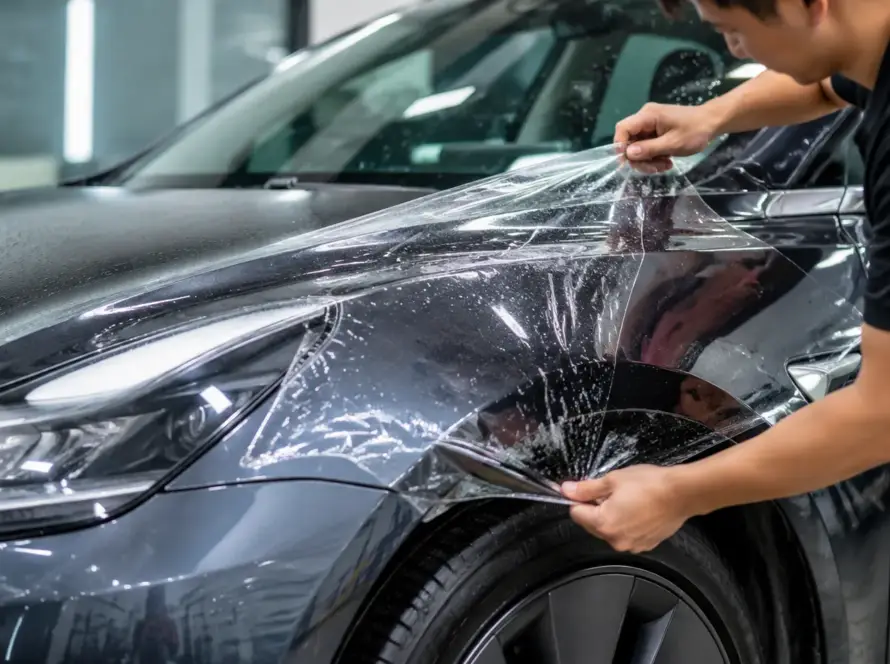
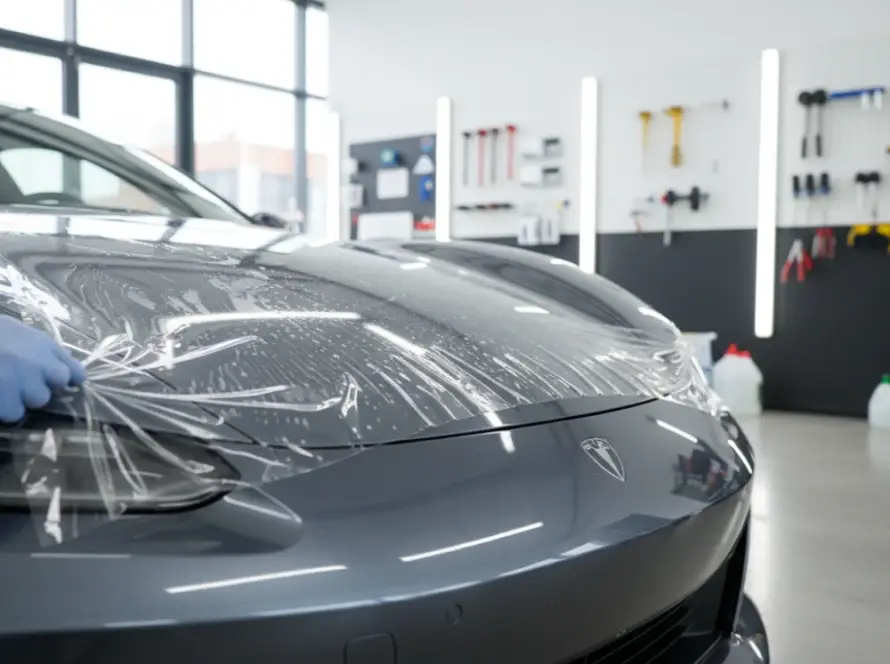
Paint Protection Film (PPF), also called clear bra, is a transparent, urethane film that’s applied on top of your car’s paint. It’s thicker than ceramic coating and is built for impact protection – this is what actually helps with rock chips, light scratches, and road debris.
Most quality PPF suppliers and manufacturers today use TPU (thermoplastic polyurethane), which gives the film flexibility, clarity, and strong resistance to impact and stains. If you’re comparing ceramic coating vs paint protection film for real-world damage, PPF is the one that physically absorbs hits.
How PPF Protects Against Chips and Scratches
PPF works like a sacrificial barrier:
- Thickness & impact resistance – Typical PPF thickness is around 7–10 mil, so it can absorb gravel, small stones, and sand blasts that would normally chip your clear coat.
- Scratch resistance – It takes the abuse from brushes, bags, and light contact. The paint underneath stays untouched.
- Elastic memory – The film can flex and deform slightly on impact, then settle back, instead of cracking like paint.
For anyone driving highways, construction zones, or rough roads, PPF is the most effective rock chip protection you can put on a car.
Self-Healing Technology in Modern PPF
Modern self-healing paint protection film has a special top coat that reacts to heat:
- Fine swirl marks and light scratches can disappear when exposed to warm water, the sun, or a heat gun.
- The top surface “reflows” at a microscopic level, smoothing out those light defects.
- You keep that “freshly detailed” look much longer, especially on black and dark colors.
Premium TPU films, like high-end color and clear PPF options with anti-scratch function, are designed exactly for this kind of self-healing and gloss retention, which you’ll see on products like a wet TPU color PPF with 5-year warranty and anti-scratch performance from a serious paint protection film factory and supplier.
Where PPF Makes the Most Sense on a Car
You don’t always need a full wrap. In most PPF vs ceramic coating setups, PPF is targeted to high-impact zones:
- Full front PPF coverage:
- Front bumper
- Hood (full or partial)
- Front fenders
- Headlights and mirror caps
This is the best paint protection for highway driving and daily commuters.
- High-contact areas:
- Door edges and door cups (from rings, nails)
- Rocker panels and lower doors (gravel, shoes, road rash)
- Rear bumper top (loading luggage, strollers, bikes)
- Special cases:
- Performance cars and EVs (Tesla, Porsche, BMW M, AMG, etc.) that see a lot of fast highway use
- Matte or satin finishes using matte paint protection film options to keep the factory texture safe
- Dark colors that easily show chips and swirls
If your main goal is physical chip and scratch protection, especially in front-end and lower body areas, PPF is the clear winner vs ceramic coating and should be your first layer of defense.
Ceramic Coating vs PPF: Direct Comparison
Ceramic coating vs PPF is not “better vs worse” – they do different jobs. Here’s the quick, real‑world breakdown.
Impact & Rock Chip Protection
- Ceramic coating:
- Microns thin, hard but brittle.
- Helps with light swirls, minor wash marring only.
- Zero real protection against stone chips, parking lot dings, sandblast on highways.
- PPF (Paint Protection Film):
- 6–8 mil thick TPU film (about 150–200 microns).
- Designed for rock chip protection, road rash, and light scrapes.
- Full-front or full-body wraps give serious defense for highway and long‑distance drivers.
| Feature | Ceramic Coating | PPF (Paint Protection Film) |
|---|---|---|
| Rock chip protection | Almost none | Strong (especially full-front PPF) |
| Scratch resistance (light) | Good vs light swirls | Very good vs real contact/scrapes |
| Thickness | Very thin (microns) | Thick shield (6–8 mil) |
Gloss, Shine & Visual Finish
- Ceramic coating:
- Boosts gloss, depth, and slickness, especially on dark colors.
- Ideal if you want that “wet look” and easy show‑car shine.
- PPF:
- Modern films are clear and glossy, but not as “liquid glass” as a strong coating.
- Available in matte and colored PPF too, like a purple paint protection film if you want style plus protection.
- You can still coat on top of PPF to increase gloss.
Hydrophobic Performance & Ease of Washing
- Ceramic coating:
- Strong hydrophobic properties – water beads, dirt sticks less.
- Makes washing faster, safer, and reduces the need for heavy scrubbing.
- PPF:
- Basic PPF is not very hydrophobic by itself.
- Many modern films or packages add a topcoat, or we apply ceramic coating over PPF.
- PPF + coating = best combo for easy washing and physical protection.
Longevity & Warranty
- Ceramic coating:
- Real-world durability: 2–5 years depending on product, prep, and maintenance.
- Warranties often require annual inspections and proper wash methods.
- PPF:
- Typical lifespan: 5–10 years (sometimes longer in mild climates).
- Often comes with clear PPF warranty on yellowing, cracking, and peeling.
- You can check realistic price and lifespan expectations from a manufacturer’s PPF coating price guide.
Environmental & Climate Performance
- Ceramic coating:
- Strong UV protection, reduces oxidation and fading.
- Helps against bird droppings, tree sap, and water spots (but does not make you “damage-proof”).
- PPF:
- Adds UV resistance plus physical shielding from sand, salt, gravel, and bugs.
- Better for harsh conditions:
- High‑speed highway use
- Harsh winters with road salt
- Hot, dusty regions where sandblasting is common
In short:
- Choose PPF if you care most about chip and scratch protection.
- Choose ceramic coating if you care most about gloss and easy washing.
- Combine both if you want maximum protection + best finish.
Pros and Cons of Ceramic Coating

Practical pros of ceramic coating for real-world use
For daily driving, a quality nano ceramic coating gives you real, noticeable advantages:
- Stronger UV and oxidation protection – Helps slow down clear coat fading and keeps the paint looking newer for longer, even in harsh sun.
- Easier washing, less dirt build-up – The hydrophobic layer makes water, mud, and road film slide off more easily, so you spend less time scrubbing.
- Better gloss and depth – Ceramic adds that “wet look” shine that basic wax can’t match and lasts far longer.
- Good chemical resistance – Offers extra defense against bird droppings, bug guts, tree sap, and light water spots if cleaned in a reasonable time.
- Decent swirl resistance – It’s harder for light wash marring and micro-scratches to bite directly into the clear coat.
- Longer protection cycles – Instead of waxing every 1–3 months, a pro ceramic coating can realistically last 2–5 years with basic care.
For most owners who drive a mix of city and highway, ceramic coating is a solid baseline paint protection that keeps the car cleaner, shinier, and easier to maintain.
Common drawbacks and myths about ceramic coating
Ceramic coating is great, but it’s not magic. I always set clear expectations:
- Myth: “Ceramic makes the car scratch-proof.”
Reality: It helps with light swirls and minor marring, but it will not stop rock chips or deeper scratches. For that, you need PPF (paint protection film / clear bra). - Myth: “You never have to wash the car again.”
Reality: You still need regular washing. Dirt sticks less and comes off faster, but it doesn’t make your car self-cleaning. - Myth: “One coating, lifetime protection.”
Reality: Even high-end coatings slowly wear down from washing, UV, and weather. Most real-world results are 2–5 years, depending on climate, mileage, and maintenance. - Drawback: Needs good prep and paint correction.
If the paint has swirls, scratches, or water spots, those need fixing before coating. Otherwise, you’ll just lock in defects. - Drawback: Cheap DIY kits can disappoint.
Low-end DIY ceramic can be tricky to apply evenly and doesn’t match the durability or smoothness of a proper pro install.
Used correctly and with the right expectations, ceramic coating is one of the best paint protection options for value and ease of upkeep, but it should never be sold as a bulletproof shield or a replacement for PPF when rock chip protection is the priority.
Pros and Cons of PPF (Paint Protection Film)
Real-world benefits of PPF for highway and city driving
For real daily use, PPF is hard to beat:
- Rock chip protection on highways
On fast roads, PPF is your best defense against stone chips, sand, and debris. A quality 7.5 mil clear PPF like this high-gloss TPU paint protection film absorbs most of the impact before it ever reaches your clear coat. - Door dings and shopping carts in the city
In tight parking, PPF helps reduce damage from minor door taps, bike handlebars, and light scrapes along bumpers and doors. - Self-healing swirl resistance
With heat (sun or warm water), light swirls and wash marks on modern self-healing paint protection film can fade or disappear, keeping high-use areas looking fresh. - Better daily practicality than bare clearcoat
Bugs, light road grime, and bird droppings are easier to remove from a slick PPF surface, and the OEM paint stays untouched underneath. - Ideal for high-impact zones
Full front PPF (hood, front bumper, fenders, mirrors) is especially useful for people doing commutes on ring roads, motorways, or long-distance driving where rock hits are constant.
Potential downsides and risks of poor PPF installation
PPF isn’t perfect, and bad installs can ruin the experience:
- Visible edges, seams, and stretch marks
Poor cutting and alignment can leave jagged edges, misaligned patterns, or fingers (lifted sections) that collect dirt and look terrible. - Trapped dust and bubbles
Low-quality studio conditions or rushed work often lead to contamination under the film, which you’ll see every time the sun hits the panel. - Knife cuts in the paint
Inexperienced installers who cut film directly on the car risk scoring the clearcoat or even the basecoat—this is one of the biggest hidden risks of cheap PPF jobs. - Peeling and lifting over time
Cheap film or aggressive edges around complex shapes (like bumpers and mirrors) can start peeling, especially with pressure washers. - Yellowing and haze
Low-grade films can yellow, especially on white cars, or turn slightly cloudy. That’s why I always stick to premium TPU PPF from a serious supplier, not generic vinyl. - Higher upfront cost vs ceramic coating
PPF typically costs more than ceramic coating, so if the install is bad, you’re not just annoyed—you’ve wasted a serious chunk of budget.
If you want strong impact protection and you drive a lot of highway or busy city routes, properly installed PPF from a professional PPF supplier / manufacturer / factory in China like ours is usually the most reliable long-term solution.
Cost Comparison: Ceramic Coating vs PPF in 2026
Typical price ranges for ceramic coating packages
Ceramic coating is usually cheaper upfront than PPF, especially for full-car protection.
| Ceramic Coating Package | What’s Included (Typical) | 2026 Price Range* |
|---|---|---|
| Entry / Basic | 1–2 year nano ceramic, light prep | $250–$500 |
| Standard | 3–5 year coating, single-stage polish | $600–$1,000 |
| Premium / Pro | 5–9 year coating, multi-stage paint correction | $1,000–$1,800+ |
*Prices vary by region, vehicle size, paint condition, and brand reputation.
Typical price ranges for PPF coverage options
PPF (clear bra) is more expensive but gives real impact and rock chip protection.
| PPF Coverage Option | Area Covered | 2026 Price Range* |
|---|---|---|
| Partial Front | Front bumper, ~1/3–1/2 hood, partial fenders | $700–$1,200 |
| Full Front | Bumper, full hood, full fenders, mirrors | $1,300–$2,500 |
| High-Impact Package | Full front + rocker panels / A-pillars | $1,800–$3,200 |
| Full Car Wrap | Entire painted body | $3,500–$7,000+ |
For a deeper breakdown of PPF cost structures and coverage choices, I often point customers to detailed guides like this car PPF cost overview, which mirrors what we see globally.
DIY vs professional installation cost considerations
Ceramic coating (DIY vs pro)
- DIY kits: $60–$200, but results depend heavily on prep and your skill.
- Pro install: Higher cost, but you get machine polishing, controlled environment, better bonding, and warranty.
- If your car is new and you care about resale, pro coating usually pays off.
PPF (DIY vs pro)
- DIY rolls: Cheaper on paper, but PPF is hard to install cleanly (stretching, edges, dust, knife marks).
- Professional PPF: Plotter-cut patterns, trained installers, shop warranty.
- A bad DIY PPF job can trap dirt, lift on edges, and even damage paint when removed, so for PPF I strongly recommend pro only.
Long-term value and resale impact of each option
Ceramic coating – value angle
- Saves time and products on washing (less scrubbing, fewer washes).
- Keeps gloss and depth, which helps private sale and trade-in value.
- Best ROI for daily drivers that don’t see heavy rock chip exposure.
PPF – value angle
- Prevents actual paint damage: rock chips, minor scuffs, light abrasions.
- Repainting panels is expensive and usually flagged on inspections; intact original paint is a big plus in mature used-car markets.
- Especially for high-value or high-mileage cars, PPF on the front end often beats repeated resprays in cost and keeps the car “accident-free” in buyers’ eyes.
- Premium PPF brands also back films with strong warranties and lifespan guarantees, which matters for exporters and dealers. You’ll see that in many PPF export and pricing guides used by installers and distributors.
Simple rule of thumb
- Lower budget / city driving / focus on shine → Ceramic coating.
- Long highway runs / new or high-value car / hate stone chips → At least a full-front PPF, optionally topped with ceramic.
Ceramic Coating Over PPF: Using Both Together
Why layering PPF and ceramic works well
PPF handles the hits, ceramic coating handles the day‑to‑day grime. When you stack them, you get:
- Impact + chip protection from PPF (the film takes the damage, not your paint)
- Gloss, slickness, and easy washing from ceramic on top of the film
- Better UV resistance and stain resistance (bird droppings, bugs, hard water)
- Longer‑lasting clean look – less washing, less scrubbing, less risk of swirl marks
A quality hydrophobic PPF, like a 7.5 mil TPU clear film with built‑in water beading such as this type of hydrophobic clear PPF wrap, plus a good ceramic coating, is basically a full-stack paint protection setup.
Recommended order and timing for PPF and ceramic
Always follow this order:
- Wash + decontaminate + paint correction (remove swirls/defects first)
- Install PPF on the zones you want protected (front, rockers, full body, etc.)
- Let PPF cure – usually 24–72 hours indoors or under cover
- Apply ceramic coating over PPF and over any exposed painted areas
Key points:
- Don’t ceramic coat before PPF – the film won’t bond as well.
- If the car is already ceramic coated, most pros will polish it off in the PPF areas first.
- For a new car, I always push customers to do PPF immediately, then ceramic within the first week if possible.
Who should consider a PPF + ceramic combo
This combo makes the most sense if:
- You daily drive on highways or gravel/poor roads and hate rock chips
- You own EVs or premium cars (Tesla, BMW, Mercedes, Lexus, Porsche, etc.) and care about resale
- You want maximum front‑end protection but still want the whole car to stay cleaner and glossier
- You keep cars 5+ years and want the paint to look “new car” when you sell
- You’re in regions with harsh sun, bugs, or winter salt, where bare clear coat gets hammered fast
For most global customers who want the best paint protection for cars, the smart play is:
- PPF on high‑impact zones (front bumper, hood, fenders, mirrors, rockers) using a clear, non‑yellowing TPU film like this transparent TPU PPF wrap.
- Ceramic coating over PPF + the rest of the paint for easy maintenance and consistent gloss across the whole car.
Maintenance Guide for Ceramic Coating
Keeping a ceramic-coated car easy to wash and glossy comes down to consistent, simple routine care. Here’s how I maintain coated cars for real-world use (daily drivers, highway cars, EVs, everything).
Best Washing Practices for Coated Cars
Stick to safe wash methods so you don’t scratch the coating or the clear coat below it:
- Wash by hand only
- Use pH-neutral car shampoo (no dish soap, no household cleaners).
- Two-bucket method: one for soapy water, one for rinsing the mitt.
- Soft microfiber wash mitt and drying towels only.
- Avoid swirl marks
- Always pre-rinse to remove loose dirt before touching the paint.
- Work top to bottom, never in circles—use straight lines.
- Don’t wash in direct sun if you can avoid it (reduces water spots).
- Touchless or contactless when possible
- Touchless pressure wash is fine if you keep the lance 30–40 cm away.
- Skip automatic brushes; they create swirls and can damage the coating.
- Boost hydrophobic properties
- Every 1–2 months, use a ceramic-safe spray sealant after washing to refresh slickness and water beading.
- Avoid waxes with heavy fillers or abrasives—they’re not needed on nano ceramic car coating.
How Often to Decontaminate and Inspect Ceramic Coating
Ceramic coating durability (in years) depends on simple checks and light maintenance:
- Quick visual check: every wash
- Look at how water beads and sheets off.
- If an area stops beading like the rest, it may be contaminated, not “dead.”
- Decontamination: every 3–6 months
- Use iron remover (fallout remover) on paint when the surface feels rough.
- Follow with a gentle clay towel/bar only if needed, using plenty of lubrication.
- Don’t overdo clay; too aggressive and too often can slowly weaken the coating.
- Deeper inspection: every 6–12 months
- Check for:
- High-traffic spots (front bumper, hood, rocker panels).
- Bird drop / bug stains.
- Water spot etching.
- If you see dull patches even after decon, a topper or partial re-coat in that area might be needed.
- Check for:
- Real-world rule of thumb
- Daily driver in harsh climate (snow, road salt, dust):
- Wash weekly, decon every 3–4 months, inspect thoroughly twice a year.
- Weekend car / garage kept:
- Wash every 2–3 weeks, decon every 6 months, yearly inspection is usually enough.
- Daily driver in harsh climate (snow, road salt, dust):
Keep the routine simple and consistent, and even an entry-level ceramic package will punch well above its price in gloss, ease of washing, and long-term paint protection.
Maintenance Guide for PPF
Keeping paint protection film in good shape isn’t hard, but you do need to treat it a bit differently from bare paint.
Safe washing and drying techniques for PPF
To avoid swirl marks, edge lifting, and stains on your PPF:
- Wait after install: No washing for 48–72 hours so the adhesive can fully cure.
- Use touchless or soft wash:
- pH‑neutral car shampoo
- Microfiber wash mitt only
- No automatic car washes with brushes
- Avoid harsh chemicals:
- Skip strong degreasers, heavy APCs, and petroleum-based products
- Use bug/tar remover labeled safe for PPF
- Rinse smart:
- Pre-rinse with low/high pressure at a safe distance (30–50 cm)
- Never aim the pressure washer directly at film edges
- Dry gently:
- Use clean microfiber drying towels or a blower
- Pat or drag lightly—don’t grind the towel into the film
If you’re combining PPF with styling (like a piano black car wrap on trims), match the washing method to the most sensitive surface. For example, a black piano gloss wrap film benefits from the same gentle routine.
How to handle edges, seams, and self-healing care
Edges and seams are the weak points of any PPF install—treat them carefully to prevent lifting or dirt build‑up.
Edges & seams:
- Don’t aim a pressure washer directly at an edge or corner
- Avoid picking, rubbing, or “checking” edges with your fingernails
- Clean seams with a soft detailing brush and soapy water if dirt builds up
- If you see a new edge lifting, get it professionally re-tacked early before it spreads
Self-healing care:
Most modern self-healing PPF will remove light swirls and fine marks with heat:
- Park in direct sunlight for a few hours
- Or pour warm (not boiling) water over the area
- Or use a controlled heat gun / hairdryer at a distance, constantly moving it
Deep scratches, impact gouges, or rock chips that cut through the film will not self-heal—those sections usually need replacing.
Keep this routine tight and your PPF will stay clear, glossy, and protective for years with minimal drama.
Which Is Better for You: Ceramic Coating or PPF?
Choose Based on Mileage & Driving Style
I always tell customers: don’t start with the product, start with how you drive.
Go mainly ceramic coating if:
- You drive low to medium mileage (under ~15,000 km / 10,000 miles per year).
- Most driving is city / suburban, light highway.
- You care most about gloss, easy washing, and UV protection.
- You park in garages, underground lots, or shaded areas.
- You’re okay with light chips and minor wear over time.
Go mainly PPF (Paint Protection Film) if:
- You drive high mileage or do long highway trips.
- You follow trucks often or use rough, chip-prone roads.
- You’re picky about stone chips and scratches.
- You plan to keep the car 5+ years and care about resale value.
- You own a sports car, EV, or premium SUV you want to keep

 English
  Portuguese
  Spanish
  German
  French
  Hindi
Hindi