

What is Paint Protection Film (PPF)?
The Physical Shield
Paint Protection Film, commonly known as PPF or “clear bra,” is a transparent, physical polyurethane film applied directly to your vehicle’s painted surfaces. Unlike liquid treatments that sit on top of the clear coat, PPF acts as a robust second skin. It provides a tangible barrier between your car’s factory finish and the outside world, designed to take the abuse so your paint doesn’t have to.
Key Capabilities: Impact Absorption
The primary job of PPF is impact resistance. Modern advancements in material science have moved the industry toward high-grade Wet TPU (Thermoplastic Polyurethane). This material is engineered to be flexible yet incredibly durable, allowing it to absorb and disperse the energy from road debris. When a rock hits a panel protected by TPU film, the material cushions the blow, preventing the stone from chipping the paint underneath.
The Self-Healing Factor
One of the most valuable features of premium TPU films is heat-activated self-healing technology. This isn’t magic; it’s molecular science. The top layer of high-quality PPF is elastomeric, meaning it can return to its natural shape after being disfigured.
- How it works: When the film sustains minor scratches or swirl marks from washing, exposure to heat (from the sun, warm water, or a heat gun) causes the polymers to realign.
- The result: Fine scratches disappear before your eyes, keeping the surface looking glossy and smooth without the need for polishing.
What is Ceramic Coating?
The Chemical Shield
When weighing a ppf car vs ceramic coating, understanding the nature of a coating is your first step. Unlike a physical plastic barrier, a ceramic coating acts as an invisible chemical shield. It is a liquid polymer applied directly to your vehicle’s exterior. Once applied, it chemically bonds with your factory clear coat to form a rigid, semi-permanent layer of protection. For anyone looking into top-tier car paint protection options, this chemical bond is what sets it apart from traditional waxes and sealants.
Core Defenses
A proper coating completely changes how your vehicle interacts with its environment. Here is what it actually does:
- Extreme Hydrophobicity: It acts as an incredibly slick hydrophobic car coating. Water beads up instantly and rolls off, which means grime, mud, and dirty rainwater struggle to stick to your paint.
- UV Resistance: The American sun is brutal on clear coats. The coating blocks UV rays to prevent premature fading and oxidation, a key factor in ceramic coating longevity.
- Chemical Resistance: It gives you a buffer against acidic contaminants that eat through factory paint, like bird droppings, harsh bug splatter, and sticky tree sap.
The Ultimate Gloss Factor
Auto detailing paint protection isn’t just about utility; it’s about the final look. A high-grade ceramic coating amplifies the depth and clarity of your paint. It locks in a permanent, glass-like shine, ensuring your car looks freshly waxed every time you pull it out of the garage. If you are trying to figure out which protective finish matches your driving style, exploring the differences between ceramic coating vs PPF will point you in the right direction.
Head-to-Head Comparison: PPF vs. Ceramic Coating
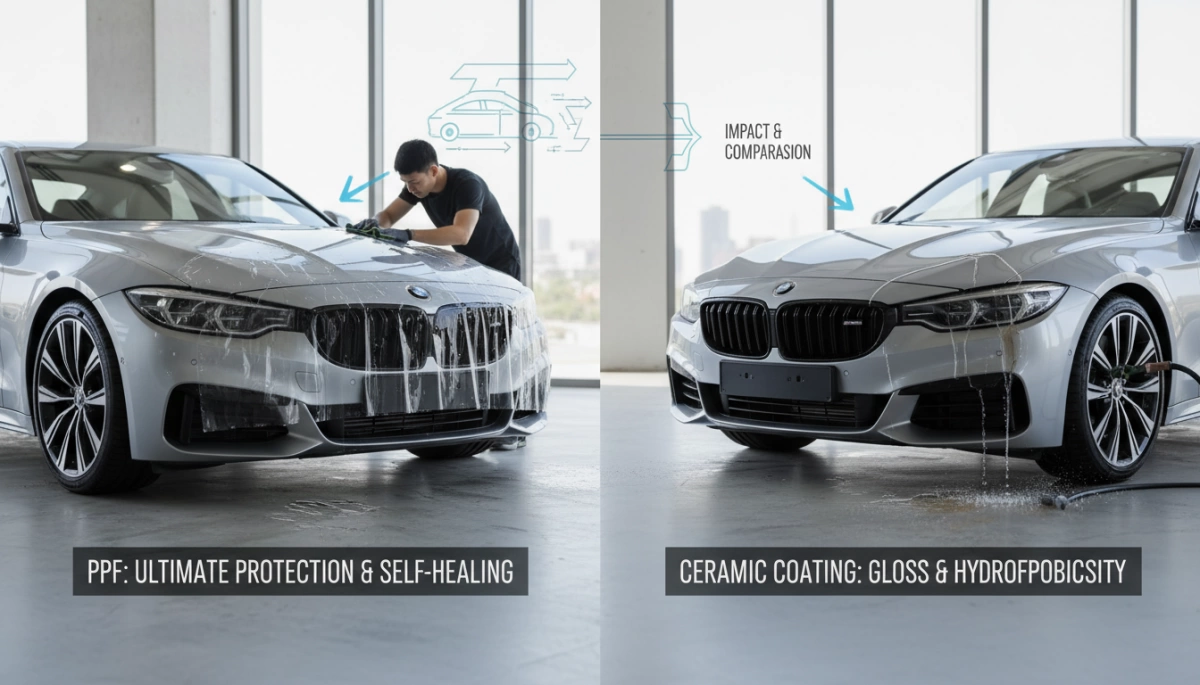
Impact Resistance: The Rock Chip Factor
This is the single biggest differentiator between the two technologies. If your primary goal is preventing rock chips, scratches, and physical damage from road debris, Paint Protection Film (PPF) is the only viable answer.
A ceramic coating is a liquid polymer that hardens into a microscopic layer. While it is excellent for chemical resistance, it is simply too thin to stop a flying rock at highway speeds. The impact will shatter the coating and chip the paint immediately. In contrast, our transparent TPU car wrap films provide a robust, physical barrier—typically 6.5 to 7.5 mil thick—that absorbs the energy of the impact. Whether it’s gravel, sandblasting, or parking lot door dings, the film takes the hit so your factory clear coat doesn’t have to.
Maintenance and Cleaning
When it comes to daily maintenance, the experience differs significantly. Ceramic coatings are renowned for their extreme hydrophobicity; they create a slick surface where dirt and grime struggle to stick, making the car incredibly easy to wash.
PPF protects the paint from etching and stains, but it generally requires a more standard washing routine compared to the “self-cleaning” effect of a dedicated ceramic coating. However, high-quality PPF does offer significant stain resistance against bird droppings and tree sap.
Comparison at a Glance:
| Feature | Paint Protection Film (PPF) | Ceramic Coating |
|---|---|---|
| Primary Function | Physical Protection (Impact Absorption) | Chemical Protection (Gloss & Slickness) |
| Rock Chip Defense | Excellent (Absorbs impact energy) | None (Too thin to stop rocks) |
| Scratch Healing | Yes (Self-healing TPU via heat) | No (Can be scratched) |
| Hydrophobicity | Moderate (Depends on topcoat) | Extreme (Water beading) |
| Thickness | Thick (~6-8 mil physical film) | Microscopic (<1 micron liquid layer) |
For professional installers and car owners, understanding this distinction is vital. You choose comprehensive paint protection film solutions when you need armor against the road, whereas coatings are chosen primarily for ease of cleaning and aesthetic gloss.
The Ultimate Solution: Can You Use Both?
In the professional detailing world, the debate of “PPF car vs ceramic coating” often ends with a simple answer: use both. For car owners seeking maximum defense without compromise, the “Hybrid Approach” is the industry-standard recommendation. This strategy leverages the unique strengths of each product to create a comprehensive shield for the vehicle.
The most effective method involves applying our high-grade hydrophobic clear PPF to the high-impact areas that face the brunt of road debris. These critical zones typically include:
- Front Bumper
- Hood
- Fenders
- Side Mirrors
By securing these areas with thick, self-healing TPU film, you establish a physical barrier against rock chips that a liquid coating simply cannot stop. Once the heavy-duty protection is in place, a ceramic coating is applied to the rest of the vehicle’s paintwork. Crucially, ceramic coating can also be layered on top of the PPF. This ensures the entire car benefits from uniform gloss and extreme water-beading properties, making maintenance washes significantly easier while ensuring the paint and film underneath remain pristine. It is not about choosing one over the other; it is about layering technologies for the ultimate finish.
Which is Right for You? PPF Car vs Ceramic Coating
I always tell customers that deciding between these options comes down to your daily driving habits and parking situation. Here is the bottom line on the ppf car vs ceramic coating debate.
Best Car Paint Protection Based on Your Needs
- Choose Paint Protection Film (PPF) if: You commute daily on the highway, do track days, or are terrified of rock chips and deep scratches. It is the ultimate physical barrier. If you want premium defense with a unique custom look, applying a matte TPU PPF wrap gives you aggressive styling while stopping road debris dead in its tracks.
- Choose Ceramic Coating if: You want a low-maintenance, high-gloss finish. If your vehicle is garage-kept, rarely exposed to heavy road debris, and you just want an easy washing routine, this is your go-to auto detailing paint protection option.
Quick Decision Guide
| Your Driving Profile | Recommended Protection | Primary Benefit |
|---|---|---|
| Heavy highway miles, track use | PPF (Clear Bra) | True impact resistance |
| Weekend cruiser, garage-kept | Ceramic Coating | Deep gloss, hydrophobic |
Why Sourcing Quality PPF Matters for Long-Term Protection
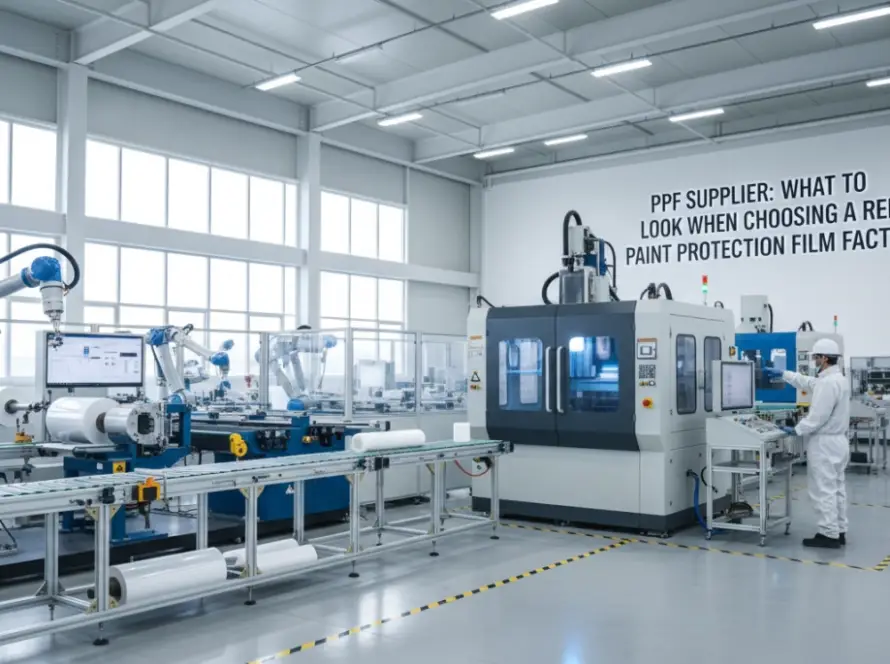
When investing in paint protection, the source of the material dictates the longevity of the installation. At Carlise New Material, we leverage over 16 years of integrated manufacturing experience to produce films that truly last. We don’t just distribute; we engineer our products from the ground up in our own factory, ensuring that every roll meets rigorous professional standards.
Factory-Direct Technology & Materials
Quality control starts with the raw ingredients. We utilize premium Wet TPU and PET materials designed to withstand harsh road conditions without degrading. Our manufacturing process ensures that every custom brand PPF supply meets strict standards for UV and IR rejection. This technology is crucial for preventing the “yellowing” effect often seen in cheaper, lower-quality alternatives.
Key Material Specifications:
- Core Material: High-grade Wet TPU (Thermoplastic Polyurethane)
- Standard Dimensions: 1.52m x 15m rolls, optimized for full vehicle coverage
- Defensive Properties: Advanced anti-yellowing, anti-scratch, and self-healing capabilities
Reliability for Professionals
Whether you are a professional installer or a wholesale distributor, consistency is non-negotiable. We stand behind our manufacturing with a robust 5-year warranty. This commitment ensures that when you choose our high-performance Wet TPU films, you are getting a durable physical shield that maintains its clarity and gloss for the long haul.


 English
  Portuguese
  Spanish
  German
  French
  Hindi
Hindi