

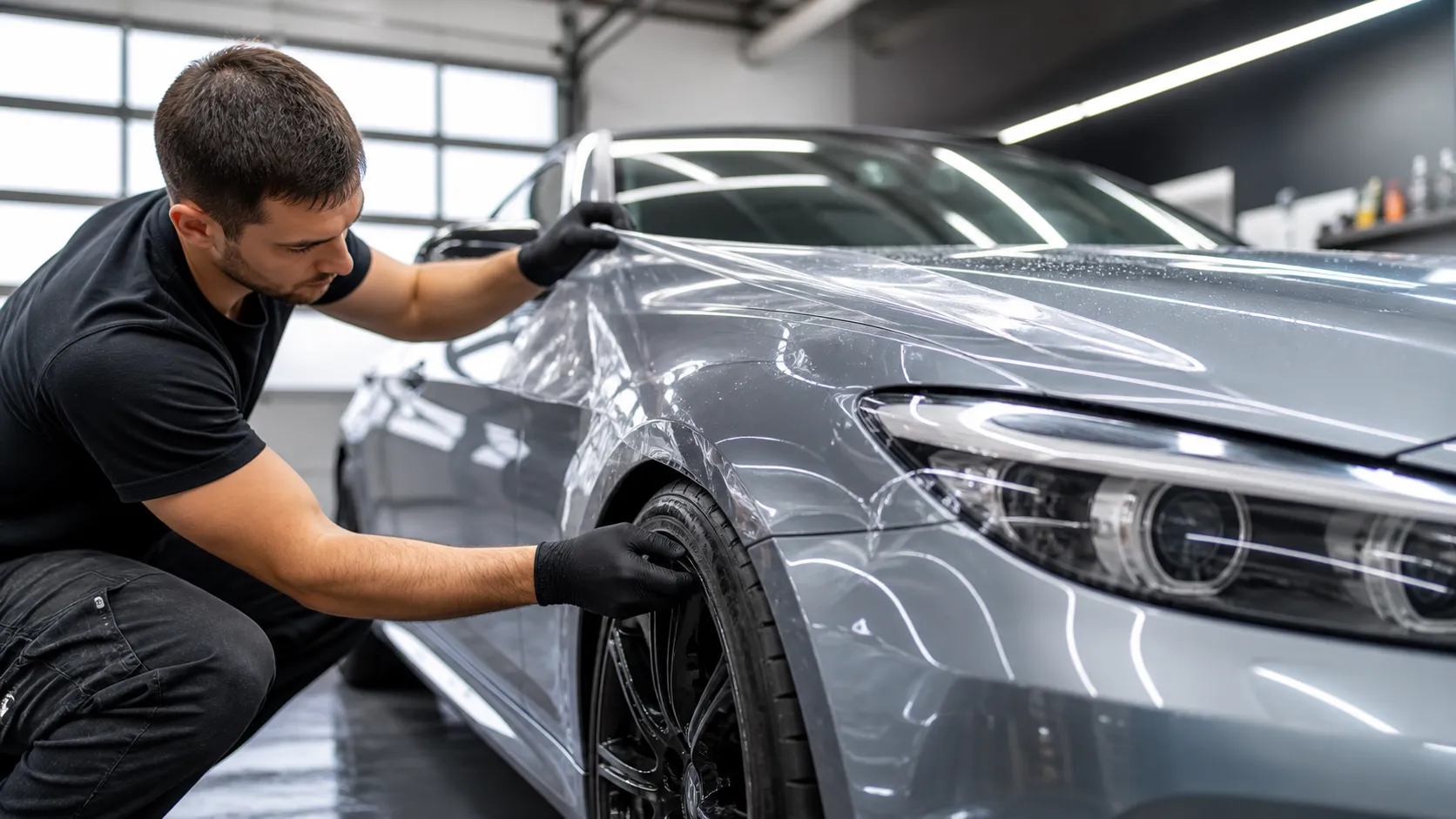
The Science of Shielding: How Modern PPF Works
Modern paint protection film (PPF) is engineered to safeguard your vehicle’s finish by combining cutting-edge materials and advanced technologies. The core of this innovation lies in Thermoplastic Polyurethane (TPU), a flexible yet durable polymer that has evolved from traditional PVC and PET films to offer superior clarity, elasticity, and longevity.
Premium PPF features a multi-layer structure designed for maximum defense and aesthetics:
- Topcoat: A hydrophobic, anti-stain layer that repels water, oils, and dirt while maintaining gloss.
- Self-healing layer: Utilizes heat-activated polymers that smooth out minor scratches and swirl marks, restoring the film’s flawless appearance.
- Impact-absorbing TPU base: Provides resistance against stone chips, scratches, and abrasions.
- Adhesive layer: Specialized pressure-sensitive glue that bonds securely without damaging the vehicle’s original paint.
This complex build not only protects against everyday hazards but also offers anti-yellowing properties and UV/IR rejection, ensuring long-term clarity and color stability. The self-healing technology is particularly noteworthy, allowing minor damages to disappear as the film’s top surface regenerates with exposure to heat, whether from sunlight or a warm cloth, maintaining a pristine finish over years of exposure.
By utilizing this sophisticated layering and TPU material, modern PPF achieves an unmatched combination of protective strength and visual appeal for your car.
PPF vs. Ceramic Coatings vs. Vinyl Wraps: What’s the Real Difference?
When protecting your car’s paint, understanding the differences between Paint Protection Film (PPF), ceramic coatings, and vinyl wraps is key. Each offers unique benefits in protection, aesthetics, longevity, and cost.
FeaturePaint Protection Film (PPF)Ceramic CoatingsVinyl WrapsProtectionThick TPU layer shields from scratches, stone chips, and stainsForms a hard, hydrophobic surface, repelling dirt and minor scratchesProvides surface protection but less resistant to impactsAestheticsClear or colored options, including color-shift films for styleGlossy or matte finish, enhances existing paint depthWide design flexibility with full color customizationLongevityTypically lasts 5+ years with self-healing and anti-yellowingLasts 2–5 years depending on maintenanceGenerally 3–7 years, prone to fading or peelingCostHigher upfront due to material quality and installation complexityModerate cost, easier DIY options availableUsually lower cost, but may require replacement more often
The synergy of combining PPF and ceramic coatings is a powerful approach. Applying a ceramic coating over a PPF layer enhances gloss, adds chemical resistance, and extends the lifespan of both products. This combo offers the highest level of defense plus an elevated finish, ideal for high-end or frequently driven vehicles.
For more insights into how PPF compares with ceramic coatings in real-world use, the detailed analysis on our page about PPF vs. Ceramic Coatings breaks down the technical and practical differences.
Colored PPF: The Intersection of Aesthetics and Absolute Defense
High-performance colored PPF has emerged as a game-changer, combining superior paint protection with eye-catching style. Unlike traditional clear films, colored PPF uses advanced TPU materials infused with vibrant pigments and color-shifting effects, offering both dynamic looks and robust defense against scratches, stains, and UV damage.
Rise of High-Performance Colored PPF
Colored TPU films deliver a unique blend of protection and customization. The films feature:
- Durable color stability resisting fading and yellowing over years
- Self-healing surface preserving flawless appearance
- UV and IR rejection maintaining paint vibrancy while reducing heat buildup
This new generation of colored PPF raises the bar for automotive aesthetics without sacrificing protection.
Customization Options with Colored TPU
Manufacturers offer a wide spectrum of colors such as Ferrari Red, Venice Purple, and Black Crystal Blue. These films can:
- Transform vehicle exteriors with stunning color shifts and finishes
- Be tailored to specific vehicle models for perfect coverage
- Enhance or radically change factory paint tones while providing full-body protection
You can explore high-quality, factory-direct options like the premium colored PPF film collection to match your style with assurance.
Longevity Advantage Over Traditional Vinyl Wraps
FeatureColored TPU PPFTraditional Vinyl WrapMaterial DurabilityHigh wear and tear resistanceProne to cracking and peelingSelf-Healing AbilityYes, scratches fade over timeNoUV & Heat ProtectionBuilt-in anti-yellowing and heat rejectionLimited UV resistanceSurface FinishGlossy, matte, and color-shift options availableGenerally matte or gloss with limited effectsWarrantyTypically 5 yearsUsually 1-3 years
Colored PPF offers longer-lasting, flawless protection with richer aesthetics, outperforming vinyl wraps in overall durability and appearance retention. This makes it the smarter choice for drivers seeking both style and peace of mind. For more on these options, the colored PPF wrap collection provides detailed insights.
Is PPF Worth It? A Realistic Cost vs. ROI Analysis
Investing in paint protection film (PPF) for your car is often seen as a smart move, especially for new and luxury vehicles. The upfront cost varies depending on coverage area, material quality, and installation complexity, but understanding these factors helps weigh the real value.
Coverage OptionsTypical Price Range*DescriptionPartial front bumper$400 – $700Basic protection for vulnerable impact zonesFull front-end coverage$1,000 – $1,800Covers hood, fenders, mirrors, bumpers for complete front protectionFull vehicle wrap$4,000 – $7,000+Maximum protection for entire car bodywork
- Prices vary by region, film type, and installer.
Key cost factors include:
– Film material (premium TPU self-healing films command higher prices)
– Custom pre-cut kits versus bulk rolls
– Installation skills and warranty offered
– Vehicle size and model complexity
While the initial outlay can seem steep, PPF delivers long-term benefits:
- Preserves paint condition by preventing chips, scratches, and fading
- Reduces future repainting and repair costs, which can run well into thousands of dollars
- Maintains resale value by keeping the exterior looking near-new
- Enhances vehicle aesthetics with options like colored or matte finishes
For luxury and high-performance cars, the ROI often justifies the investment, as even minor scratches or damages significantly affect value and appearance. PPF’s 5-year warranty on premium films further extends peace of mind, securing protection well beyond typical ceramic coating lifespans.
For realistic breakdowns of protection costs by vehicle model and type, exploring detailed guides on PPF car protection cost can provide tailored insights to fit both budget and coverage needs.
Avoiding the Pitfalls: How to Spot Bad PPF vs. Premium Installation
When it comes to paint protection film for cars, quality truly makes the difference between a durable shield and a false sense of security. Spotting subpar PPF early can save you from costly repairs and disappointing results.
Common Quality Issues to Watch For
- Yellowing and Discoloration: Low-quality films often yellow after exposure to sunlight and heat.
- Edge Lifting and Peeling: Poor installation or weak adhesive leads to edges lifting prematurely.
- Bubbling or Wrinkling: Inadequate surface prep or inferior film flexibility causes air pockets.
- Loss of Clarity: A cloudy or hazy finish signals inferior material or old stock film.
- Weak Scratch Resistance: Film that scars easily loses its protective edge too soon.
Material Quality Differences: TPU vs. PVC/PET
FeatureThermoplastic Polyurethane (TPU)PVC/PET FilmsSelf-Healing AbilityExcellent, minor scratches vanishVery limited or noneYellowing ResistanceHigh, designed with anti-yellowingProne to discolorationFlexibilitySuperior, adapts to complex curvesStiff, difficult on tight areasUV and Heat ProtectionStrong UV/IR blocking capabilitiesLower protection, more brittleLongevityDesigned for 5+ years warrantyTypically shorter lifespan
TPU-based films are the clear first choice for premium protection, combining durability with flexibility and outstanding self-healing technology.
Choosing Reliable Manufacturers and Installers
- Verified Factory Source: Choose companies offering direct factory supply with transparent manufacturing data. Integrated TPU film manufacturers with OEM and ODM capabilities deliver consistent quality.
- Experience & Reputation: Over a decade and a half of specialized production experience is a key indicator of reliability.
- Installation Expertise: Skilled installers properly prepare surfaces, use professional tools, and understand film handling to avoid bubbles, wrinkles, or misalignments.
- Warranty & Support: Trust providers offering strong product warranties and clear post-installation guidance.
Selecting a trusted supplier and expert installer ensures the PPF lives up to its promise of lasting protection with top-notch aesthetics. For professional-grade TPU films and details on what distinguishes premium paint protection film, explore offerings directly from a reputable TPU film supplier specialized in custom brand PPF.
Behind the Film: The B2B Factory Advantage (For Detailers & Distributors)
Sourcing PPF cars film directly from OEM/ODM manufacturers ensures unmatched product quality and competitive pricing. Factory-direct wholesale rolls enable detailers and distributors to access premium Thermoplastic Polyurethane (TPU) films with consistent specifications and guaranteed performance. This direct supply chain cuts out middlemen, reducing costs and delivering faster turnaround times for bulk orders.
Wholesale rolls typically come in standard sizes like 1.52m by 15m, ideal for large-volume applications or custom pre-cut kits. Beyond cost savings, factory manufacturers offer custom formulations tailored to varied climates—whether it’s extreme UV exposure, high humidity, or cold conditions—ensuring the paint protection film performs optimally across global markets.
B2B Factory-Direct BenefitsDetailsGenuine OEM/ODM QualityConsistent material specs, vetted productionWholesale PricingLower cost per square meter compared to retailLarge Roll SizesEnables flexible project scope and reduces wasteCustom Climate FormulationsUV rejection, anti-yellowing, & self-healing tuned to environmentTechnical Support & OEM ServicesAccess to expert guidance and tailored PPF solutions
For professional installers and large-scale distributors, partnering with a factory-direct source secures a reliable supply of high-performance, self-healing paint protection films. This ensures the most advanced scratch resistance, anti-yellowing technology, and true color-changing options are available without compromise. More insights on premium film types can be found in related resources on high-performance paint protection films.
Post-Installation Care & Maintenance Essentials
Proper care after PPF installation is vital to maintain its protective qualities and appearance. During the initial curing phase, avoid moisture exposure by keeping the vehicle dry for at least 48 hours. This ensures the adhesive fully bonds without interference from water or humidity.
When washing your car, use gentle techniques and pH-neutral, non-abrasive cleaning products designed for delicate surfaces. Avoid automatic car washes with harsh brushes or high-pressure water jets that can lift or damage the film. Hand-washing with soft microfiber cloths is the safest method.
To maximize longevity, steer clear of abrasive compounds, strong solvents, or waxes containing dyes or fillers that can degrade the film or reduce its self-healing properties. Also, avoid prolonged exposure to extreme heat or chemicals that can accelerate yellowing or film breakdown.
Following these care protocols preserves the premium PPF’s scratch resistance, anti-yellowing performance, and UV protection, ensuring your car’s finish stays flawless longer. For additional vehicle protection layers, consider complementary options such as high-performance automotive window tint films from trusted sources like automotive window tint film wholesale.
FAQs About PPF for Cars
Premium paint protection film (PPF) typically lasts between 5 to 10 years when properly installed and maintained, supported by warranties often covering 5 years against yellowing or peeling. Thanks to advanced self-healing technology, minor scratches on modern TPU-based PPF can often disappear with just heat exposure from the sun or warm water, keeping your car looking flawless longer.
When comparing PPF to ceramic coatings, PPF offers superior physical protection against stone chips, scratches, and stains, while ceramic coatings primarily provide chemical resistance and hydrophobic properties. Many car owners combine both for layered defense and enhanced aesthetics—PPF handles impact damage, while ceramic coatings add shine and easier cleaning. For a detailed comparison, see this ceramic coating vs. PPF explanation.
High-quality PPF films developed from TPU are engineered to resist yellowing, maintaining clarity over years under sunlight. Lower-grade films made from PVC or PET might discolor sooner, so choosing premium materials and certified installers is key to long-lasting protection.
The cost of applying full front PPF varies depending on film quality, vehicle size, and installer rates. Factory-direct PPF rolls and pre-cut kits provide flexible options to fit different budgets. For detailed pricing insights, referencing a PPF cost guide helps clarify expectations and coverage levels.
Together, these facts underline why PPF remains a top choice for protecting modern cars, blending advanced technology with long-term value.

 English
  Portuguese
  Spanish
  German
  French
  Hindi
Hindi