

What Is Paint Protection Film (PPF) And Why Use It On Your Car?
When you ask “How Much Is PPF for a Car ?”, what you really want to know is: what am I paying for, and is it worth it? To answer that, you need to know what paint protection film actually does.
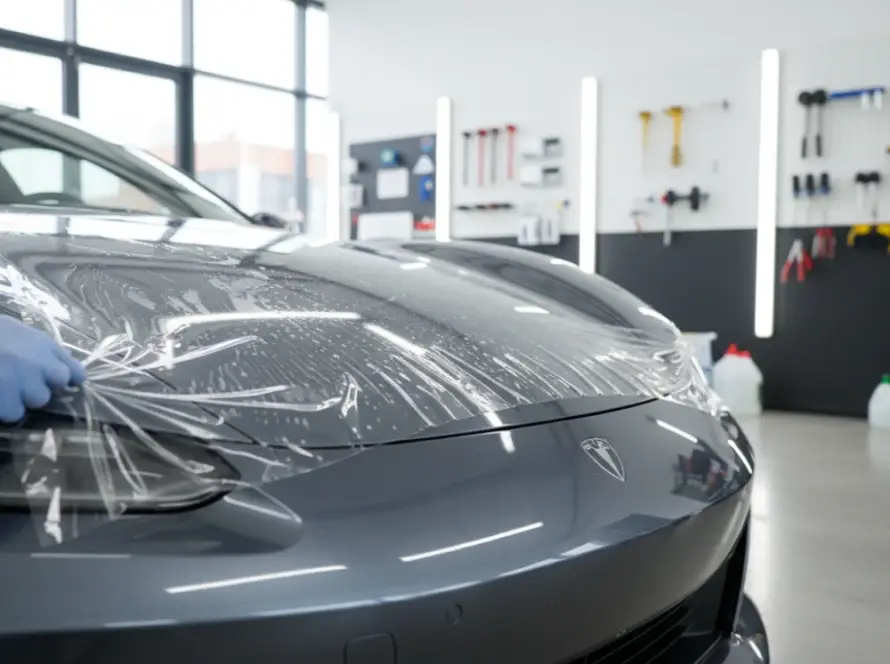
Paint Protection Film (PPF) is a clear, self‑healing polyurethane film applied over your car’s paint. It’s often called clear bra or rock chip protection film. I use it to create a nearly invisible, impact‑resistant barrier between your paint and the real world.
You use PPF on your car if you want to:
- Keep factory paint looking new for as long as possible
- Avoid constant touch‑ups from rock chips and road rash
- Protect higher‑value vehicles from expensive repaint work
How PPF Works To Protect Car Paint
PPF is engineered to absorb impact and minor damage before it reaches your paint.
Here’s how it works in real life:
- Impact absorption:
Small stones, sand, and debris hit the film first. The film takes the damage, not your paint. - Self‑healing topcoat:
Quality self healing paint protection film has a special top layer that softens with heat (sun, hot water, warm air) and heals light swirls and scratches on its own. - UV and stain resistance:
The film helps filter UV rays, slowing down paint fade and oxidation. It also resists bug splatter, bird droppings, tree sap, and light chemical stains, so they’re easier to remove.
The result: the clear coat under the film stays thicker, cleaner, and more original for years.
Key Benefits: Rock Chip, Scratch, And UV Protection
When I talk about average PPF cost for car, I always tie it back to what you’re actually protecting against:
1. Rock chip protection
- Front bumper, hood, mirror caps, rocker panels – all high‑impact areas
- PPF is thick enough (typically 8–10 mil) to stop most small rock chips that would otherwise leave white spots or exposed primer
2. Scratch and swirl resistance
- Reduces wash‑induced swirls and light scratches
- Self‑healing PPF makes minor marks disappear with heat
- Perfect for daily drivers, SUVs, and trucks that see automatic washes or tight parking
3. UV and weather defense
- Helps block UV that fades paint over time
- Acts as a sacrificial layer against road salt, tar, and pollutants
- Keeps darker colors (black, blue, red) looking richer for longer
Paying PPF installation cost up front often beats paying for PPF vs repaint cost later when chips and clear coat failure add up.
PPF vs Ceramic Coating And Wax For Daily Drivers
If you’re comparing PPF vs ceramic coating price or wondering which is better for a daily driver, here’s the straight talk:
PPF (Paint Protection Film)
- Main job: Physical protection (impacts, chips, scratches)
- Best for: Front end, high‑impact areas, full car on high‑value or luxury cars
- Look: Nearly invisible, can be glossy or matte
- Cost: Higher upfront (especially full front or full car PPF price)
Ceramic Coating
- Main job: Gloss, slickness, easier washing, some chemical resistance
- Does NOT stop rock chips or deeper scratches
- Works great on top of PPF for added hydrophobic effect
Traditional Wax/Sealants
- Main job: Shine and short‑term protection
- Cheap, but needs frequent reapplication
- Zero impact protection compared to PPF
For daily drivers, I usually recommend:
- PPF on high impact areas (front bumper, partial or full hood, mirrors)
- Ceramic coating on the rest of the paint and on top of PPF for gloss and easy maintenance
That way, what you pay for PPF packages and coverage options is going directly into real physical protection, not just shine.
How much is PPF for a car? (By coverage package)
When people ask “how much is PPF for a car?”, what they really want is a realistic price range by coverage. Here’s a simple breakdown based on typical shop pricing in the US/EU markets.
Average PPF cost by coverage package
Actual pricing will vary by city, film brand, and car size, but these ballparks are what most professional shops I work with are charging:
- Partial front PPF: $600–$1,200
- Full front PPF: $1,200–$2,500
- Track / high‑impact package: $2,000–$3,500
- Full car PPF (standard cars): $3,500–$6,000+
- Full car PPF (luxury/SUV): $5,000–$8,000+
- Full car PPF (exotic / supercar): $7,000–$12,000+
If you want a deeper range breakdown by coverage, I’ve detailed it in our car PPF cost guide.
How much is PPF for partial front coverage?
A partial front PPF package usually covers:
- ~⅓–½ of the hood
- Partial front fenders
- Front bumper (sometimes optional)
- Mirror caps (in some packages)
Typical price:
- Sedan / hatchback: $600–$900
- SUV / truck: $700–$1,200
This is the most budget‑friendly option if you mainly want rock chip protection film on the areas that see the most impact, but don’t care about full panel coverage.
Full front PPF cost range and what it includes
Full front PPF is the sweet spot for most daily drivers and new cars.
It usually includes:
- Full hood (one piece, no line across)
- Full front fenders
- Front bumper
- Mirror caps
- Optional: A-pillars and front section of the roof
Typical price:
- Compact / mid‑size car: $1,200–$2,000
- SUV / truck: $1,500–$2,500
This level gives a big jump in rock chip and scratch protection, and it blends visually much better than a partial front. For a new or leased vehicle, full front PPF is usually the best “value vs protection” package.
Track package and enhanced PPF coverage pricing
A track package or high‑impact area PPF package adds more coverage where debris hits hardest. Depending on the shop, this usually includes:
- Full front (hood, fenders, bumper, mirrors)
- Rocker panels / side skirts
- Rear bumper impact area (behind wheels)
- Sometimes A-pillars and roof edge
Typical price:
- Standard cars: $2,000–$3,000
- SUV / performance cars: $2,500–$3,500
If you drive a lot of highway, spirited canyon roads, or do track days, this is a solid option. You pay more up front but usually save on repaint and touch‑up costs over the life of the car.
Full car PPF cost: standard, luxury, and exotic
Going full car PPF is the premium route, but it’s also the only way to fully lock in the paint.
What it usually includes:
- Every painted panel: hood, fenders, bumpers, doors, roof, quarters, hatch/trunk
- Many shops also wrap edges and remove some trim/badges for a cleaner install
Typical full car PPF price:
- Standard sedan / hatchback: $3,500–$6,000+
- Large SUV / pickup / luxury car: $5,000–$8,000+
- Exotic / supercar / complex bodywork: $7,000–$12,000+
The big jumps in cost are mostly from:
- Surface area (bigger car = more film)
- Complex body lines and panels
- Risk and time on high‑value vehicles
If you’re comparing full car PPF price vs repaint cost, a quality respray on a modern car can easily match or exceed these numbers, and it still won’t have the self‑healing protection of a good PPF.
For a quick explanation of what’s actually being installed, you can check our what is PPF on a car guide.
Typical add‑ons: headlights, door cups, edges, trunk area
Most shops also offer smaller PPF add‑ons that can be bundled into any package:
- Headlights / fog lights: $100–$250
- Door cups (behind handles): $50–$120
- Door edge guards: $60–$150
- Rear trunk loading area / bumper top: $80–$200
- A-pillars & partial roof strip: $150–$300
These small pieces add a lot of real‑world protection for not much extra cost, especially if they’re installed together with a main package (shared prep and labor).
If you’re a shop or installer, your retail pricing will depend heavily on PPF roll cost and film brand. Buying wholesale paint protection film or working directly with OEM/ODM manufacturers like us at KalisePPF is usually how installers keep PPF installation cost near you competitive while still maintaining healthy margins.
Key factors that affect how much PPF costs for a car
When people ask “how much is PPF for a car?”, the honest answer is: it depends on a few core factors. Here’s what really moves the price up or down.
1. Vehicle size and body style impact on PPF price
Bigger car = more film + more time = higher cost.
- Sedans / coupes – lowest material use, usually the cheapest.
- SUVs and crossovers – more surface area, higher average PPF cost.
- Trucks, vans, off-road vehicles – large panels, tall bodies, more film.
- Sports / exotic cars – smaller, but complex and high‑risk, so labor is higher.
Most shops price by square footage and template availability, so a compact hatchback clear bra will sit at the low end, and a full‑size SUV PPF price lands much higher.
2. Complex body lines and panel shapes = more labor cost
The more aggressive and sculpted the car, the more you pay in labor.
- Deep curves, vents, flared fenders, aggressive bumpers
- Large single‑piece bumpers vs. simple flat panels
- Need for bulk install instead of simple pre‑cut kits
A flat front bumper can be wrapped quickly. A front end with sharp angles and vents may take double the time. That’s why exotic car PPF installation and some performance SUVs command premium pricing.
3. Film quality, thickness, and brand price differences
PPF material is not all the same. PPF material cost has a big impact on your quote:
- Entry-level films – thinner, basic clarity, shorter warranty.
- Mid-range films – good self‑healing paint protection film, solid clarity.
- Premium films – top clarity, strong self‑healing, stain resistance, long warranty, hydrophobic topcoat.
Top brands like XPEL, 3M, SunTek, LLumar, STEK usually cost more per roll but give better consistency, optical clarity, and longer durability. If you’re comparing quotes, always ask what brand and thickness (usually 7–10 mil) is being used. For shops, working directly with an OEM/ODM PPF manufacturer like KalisePPF or other wholesale TPU film suppliers can lower material cost and keep customer pricing competitive.
4. Installer skill, certification, and shop location
You’re not just paying for film. You’re paying for the hands and the environment:
- Certified or highly experienced installers usually charge more.
- Clean, climate‑controlled shops with good lighting have higher overhead.
- Big metro areas generally have higher PPF labor cost than smaller cities.
- Reputable shops price to cover warranty support and aftercare.
A cheap quote often means either lower quality film, rushed installs, or a shop that won’t be around when you have a warranty issue.
5. Extra prep work, paint correction, and ceramic topcoat fees
The cleaner and smoother the paint, the better your paint protection film will look and last.
You’ll pay more if your car needs:
- Deep wash / decontamination (tar, iron, and bug removal)
- Paint correction to fix swirls, scratches, and sanding marks
- Edge wrapping and custom trimming instead of basic kit installs
- Ceramic coating on top of PPF for easier washing and extra gloss
Many shops bundle these in a PPF package, while others itemize them. If you see a very low PPF installation cost, check what prep work is actually included. For a deeper breakdown of how film quality and coating add‑ons influence price, you can look at this detailed PPF and coating price guide.
PPF brands and how they change the final price
When people ask “how much is PPF for a car?”, the brand you choose is one of the biggest price drivers. You’re not just paying for material; you’re paying for clarity, durability, self‑healing performance, and warranty support.
Price differences between XPEL, 3M, SunTek, LLumar, STEK
In most markets, brands roughly break down like this:
- XPEL & 3M – Usually at the top of the price range. Strong brand recognition, long warranties, and big marketing budgets that installers pass on in the final price.
- SunTek & LLumar – Often mid–high priced, good clarity and gloss, popular with established shops.
- STEK – Known for effect films (fashion colors, patterns) and strong hydrophobic properties; pricing is often similar to or above XPEL for specialty films.
For the same coverage (say, full front), switching from a budget film to a top‑tier brand can easily add 20–40% to the final PPF installation cost.
Warranty length, clarity, and durability vs cost
You mainly pay more for:
- Longer warranty – 5 years vs 10+ years dramatically changes price.
- Optical clarity – Premium films look “invisible” and don’t yellow as fast.
- Self‑healing & hydrophobic – Better scratch recovery and water behavior cost more.
- Stain & UV resistance – Higher resistance = higher material cost.
If you’re keeping the car 3–4 years, a mid‑range film often makes more financial sense. If you plan to keep it 7–10 years, paying more upfront for a long warranty film is usually cheaper than repainting or re‑wrapping later.
Budget vs premium PPF options for different owners
- Budget PPF – Daily drivers, older cars, work trucks, people mainly worried about rock chips and road rash. Shorter warranty, still solid protection.
- Mid‑range PPF – New compact cars, SUVs, and most “normal” family cars. Good balance of cost vs clarity vs warranty.
- Premium PPF – Luxury and exotic cars, performance builds, and long‑term owners. Maximum clarity, gloss, self‑healing, and long warranty.
Choosing the right level keeps the average PPF cost for your car realistic, without overpaying for performance you don’t need.
KalisePPF and wholesale options for installers
On the supply side, I focus on giving installers a smarter way to buy. With KalisePPF, we run a wholesale, OEM/ODM‑friendly model:
- Installers can buy bulk PPF rolls at aggressive pricing, which lowers both PPF material cost and the final PPF price per square foot.
- We offer different finishes (high‑gloss, matte, color PPF) so shops can build budget or premium packages using one supplier. For example, our clear TPU PPF car wrap is designed for installers who want high clarity and self‑healing but still need room for healthy margins (transparent TPU clear PPF car wrap).
By buying direct OEM/ODM from KalisePPF instead of only relying on legacy brands, shops can keep their PPF packages and coverage options competitive while still delivering protection that stands up in real‑world use.
Is PPF Worth It For Your Car?
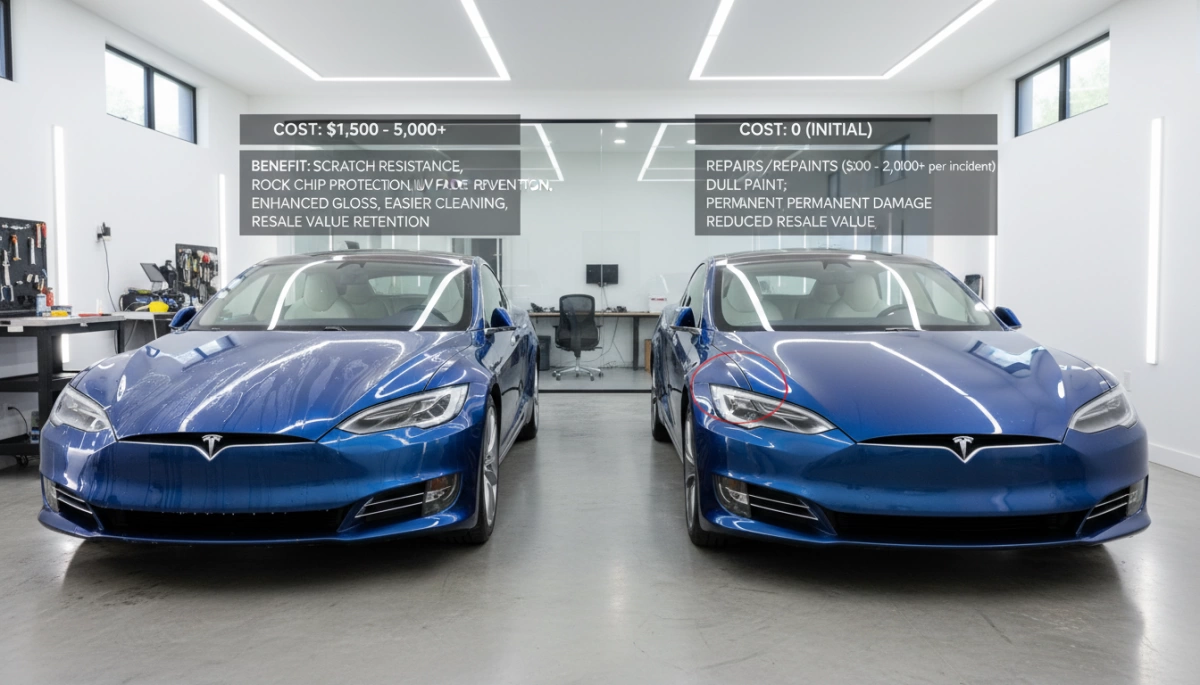
Cost vs benefit of PPF vs repainting or touch‑ups
If you daily drive your car, paint protection film (PPF) is usually cheaper in the long run than constant touch‑ups or a respray.
- A quality full front PPF job might cost $1,200–$2,500+, but a proper front-end repaint can easily run $1,500–$4,000 and will never be as durable as film.
- PPF absorbs rock chips, sandblasting, and light scratches that would otherwise damage your clear coat every single day.
- Instead of paying for repeated rock chip repair, bumper repaints, and polishing, you pay once for PPF and keep the original factory paint, which always holds the best value.
How PPF affects resale value and trade‑in offers
Good PPF directly helps resale value:
- Dealers and private buyers will pay more for a car with original, clean paint and visible protection.
- A car with PPF on high‑impact areas often gets better trade‑in offers, because the buyer knows they don’t need to fix the front bumper or hood.
- On higher‑end vehicles, a well-documented PPF installation can easily add hundreds to thousands in resale value and speed up the sale.
When full car PPF makes sense (and when it doesn’t)
Full car PPF is worth it if:
- You drive a new or high-value car (luxury, performance, exotic).
- You plan to keep it 5+ years and want the paint looking nearly new.
- You do highway, long-distance, or spirited driving where rock chips are constant.
It may not make sense if:
- The car is older, high mileage, or already has paint damage.
- You only do short city commutes and don’t care much about cosmetics.
In those cases, partial front PPF or just protecting high-impact areas is usually the smarter spend.
How to pick the right coverage based on how you drive
Match your PPF coverage to your real-world use:
- City / light use, budget-conscious
- Coverage: Partial front (bumper, 1/3–1/2 hood, mirrors).
- Goal: Stop the worst of the chips without overspending.
- Daily driver with highway miles
- Coverage: Full front (full hood, fenders, bumper, mirrors, headlights).
- Goal: Keep the entire front free from chips and road rash.
- Performance, off‑road, or long-term keeper
- Coverage: Full car PPF or full front + high-impact zones (rockers, A-pillars, rear bumper top).
- Goal: Preserve paint everywhere, maximize resale, and make washing easier.
If you’re an installer or shop owner and want to keep customer pricing competitive, ordering bulk PPF rolls from an OEM/ODM supplier like my own KalisePPF is what makes those coverage options more affordable. For example, our 10‑year clear PPF film is designed for long-term durability and value-focused installs, which directly helps end customers get more protection for the money.
Wholesale and bulk PPF pricing for shops
If you’re running a detailing shop, your profit on PPF starts with how smart you buy film.
How much installers pay per foot or per roll of PPF
- Wholesale PPF roll price (standard 60″ width, clear film):
- Entry / budget films: $250–$400 per 50–60 ft roll
- Mid-tier professional films: $400–$650 per roll
- Premium / self-healing, hydrophobic films: $650–$1,000+ per roll
- PPF price per square foot at wholesale usually lands around:
- Budget: $1.20–$1.80 / ft²
- Mid-tier: $1.80–$2.50 / ft²
- Premium: $2.50–$4.00+ / ft²
Your actual cost per car depends on how efficient your patterns and layouts are, and how much waste you generate.
Profit margins on PPF installs for detailers and shops
Most professional shops aim for:
- Material cost: ~15–30% of the job price
- Labor + overhead: ~30–45%
- Net profit margin on PPF installs: often 25–40% per car when priced correctly
On a $2,000 full front PPF job:
- Material might cost $250–$450
- Labor and overhead take another chunk
- That still leaves solid room for profit if your workflow is dialed in
Why bulk PPF lowers car PPF pricing for customers
Buying PPF in bulk rolls instead of small cuts or retail packs lets you:
- Lock in better per-foot pricing from the manufacturer
- Reduce shipping and packaging costs
- Standardize your workflow and cut install time
- Pass on more competitive clear bra pricing to your customers while keeping margins healthy
When you’re efficient on both the material and labor side, you can price aggressively without racing to the bottom.
Working with OEM/ODM PPF manufacturers like KalisePPF
Working directly with an OEM/ODM PPF manufacturer is how serious shops protect their margins long term. With partners like KalisePPF, you can:
- Order custom bulk PPF rolls (thickness, gloss level, color, finish)
- Build your own-branded PPF line with consistent quality
- Gain access to factory-direct pricing for higher profit per install
- Offer niche options like colored PPF films (for example, a bold option like this Gemstone Red PPF film) to stand out in your market
If you’re doing regular PPF volume, moving to OEM/ODM bulk supply isn’t just about saving a few dollars per foot—it’s about owning your brand, controlling quality, and staying profitable while keeping your car PPF pricing attractive for local customers.
How to get an accurate PPF quote for your car
When you ask “how much is PPF for a car?”, the quality of your quote depends on the info you share and the questions you ask. If you want realistic PPF installation cost numbers (not just marketing prices), don’t skip these steps.
What info to share for a real PPF quote
When you contact a shop for PPF pricing (phone, WhatsApp, or email), always send:
- Car model & year – e.g. 2026 Tesla Model Y, 2020 BMW 3 Series
- Body style & size – coupe, sedan, SUV, truck, van (this affects material and labor)
- Color – light colors hide swirls, dark colors show defects and may need more prep
- Mileage & condition – new, used, repainted, any rock chips or scratches
- Coverage you want – partial front, full front, track package, or full car PPF
- Usage – daily driver, highway commuter, weekend car, track use
- Location – city/region, as PPF labor cost shifts a lot by market
The more detail you give, the closer your PPF cost estimate will be to the final invoice.
How to compare PPF quotes and packages the right way
Don’t just compare the final PPF price. Compare the full package:
- Brand and thickness – e.g. 8 mil self-healing film vs cheaper thin film
- Panels included – clear bra coverage maps vary a lot between shops
- Warranty – years of coverage, what’s actually included (yellowing, peeling, cracking)
- Prep work included – wash, decontamination, light paint correction or none at all
- Edges – are they wrapped/hidden or cut short?
- Extras – door cups, headlights, trunk ledge, roof edge, rocker panels, etc.
Two quotes can look “the same” but be totally different in protection and durability. A shop using a high-clarity, 10‑year clear film like a 7.5 mil TPU PPF with long warranty will naturally charge more than someone using a no‑name, thin film.
Red flags when a PPF price is too cheap
If a PPF quote looks way lower than the others in your area, be careful. Watch for:
- No clear PPF brand listed (just “premium film”, “nano film”, etc.)
- Very short or vague warranty (“up to 5 years” with no written details)
- No mention of decontamination or polishing before film
- “Same day” full car PPF promises (proper installs take time)
- No photos or portfolio of previous installs
- Cash-only, no invoice, no business details
Cheap PPF installation often means cheap film, rushed work, and problems like lifting edges, seams in visible areas, or early yellowing.
Questions to ask before booking a PPF installation
Use these questions to filter serious pros from amateurs:
- What brand and thickness of PPF are you using?
- Is the film self-healing and hydrophobic, or do you add a top coat?
- Do you use pre-cut patterns, bulk install, or a mix?
- How many days do you need with my car for this coverage?
- What prep work is included in the price?
- How are edges handled—wrapped where possible or left short?
- Is your warranty written, and is it from you or the film manufacturer?
- Can I see recent cars you’ve done similar to mine?
Get the answers in writing (message or email) so you know exactly what you’re paying for. That’s how you make sure you’re not just asking “how much is PPF for a car” but actually getting proper protection and value for money.
Common questions about how much PPF is for a car
How much does full car PPF usually cost?
For most cars, full car PPF price usually falls in this range (USD):
- Compact / sedan: $3,500 – $6,000+
- SUVs / trucks: $4,000 – $7,500+
- Luxury / performance: $5,000 – $9,000+
- Exotics / supercars: $7,000 – $12,000+
The final paint protection film cost depends mainly on coverage, film brand, and installer skill.
Why is there such a big range in PPF pricing?
The average PPF cost for a car swings a lot because of:
- Vehicle size & shape – bigger cars and complex panels = more film, more time
- Film quality & brand – premium self-healing or hydrophobic PPF costs more
- Installer experience – certified pros charge more but usually deliver cleaner work
- Location – big cities and high-rent areas = higher PPF installation cost
- Extras – paint correction, removal of old film, ceramic topcoat, custom wraps
Cheap “clear bra pricing” almost always means corners were cut on material, prep, or labor.
Can DIY PPF really save money long term?
If you’re very handy, DIY PPF kits or bulk film can reduce PPF labor cost, but:
- You’ll still pay PPF price per square foot for quality film
- Mistakes (lift lines, bubbles, dust) are very visible and hard to fix
- Bad installs can trap dirt, damage paint, or peel early
- No pro workmanship warranty
DIY can save on the invoice, but over the long term, most owners get better value from a solid professional PPF installer.
How long does PPF last before it needs to be replaced?
Good self-healing paint protection film typically lasts:
- 5–7 years for budget films
- 8–10+ years for top-tier brands with strong UV resistance
Lifespan depends on:
- Sun exposure and climate
- Washing habits and chemicals used
- Film thickness and quality
Look for brands offering clear, hydrophobic PPF film with a solid written warranty. For example, high-gloss 7.5 mil films like this type of clear PPF high gloss option are built specifically for long-term durability.
Is PPF better value than ceramic coating for you?
It depends how you use the car:
PPF is better value if:
- You daily drive on highways or gravel roads
- You want real rock chip protection film on high-impact areas
- You plan to keep the car 5+ years and care about resale
Ceramic coating is better value if:
- You mainly want easy washing and gloss
- You don’t face much road debris or harsh conditions
- You want lower upfront cost vs full car PPF price
Many owners combine both: PPF on high-impact areas (front, rockers, trunk lip) and a coating on top for easier maintenance.

 English
  Portuguese
  Spanish
  German
  French
  Hindi
Hindi