

Ever wondered why car PPF cost varies so wildly and whether it’s really worth your hard-earned cash? If you’ve just bought a new ride or want to shield your investment from scratches, chips, and fading, understanding what drives PPF pricing in 2025 is key. From compact sedans to luxury SUVs, the numbers can jump from $1,000 to $8,000+, but smart shopping—especially factory-direct deals from brands like CarlisePPF—can slash these costs without cutting corners on quality. Let’s cut through the noise and get straight to the facts so you can protect your car and your wallet.
What Influences Car PPF Cost?
If you’ve started calling around for quotes, you’ve probably noticed one thing fast: car PPF cost is all over the place. One shop says $900, another says $2,500 for “the same” package. So what’s going on?
Let me walk you through the main factors that actually drive paint protection film pricing, so you know what you’re paying for and where you can save money without hurting quality.
Vehicle Size and Type Impact on Car PPF Cost
First, the obvious one: the bigger the car, the higher the PPF cost.
More surface area = more film + more labor. Shops price by coverage area, even if they don’t say it out loud.
Typical impact by vehicle type:
- Compact / small sedan – lowest PPF material and labor cost
- Mid-size sedan / small crossover – moderate increase
- SUVs / minivans – more panels, more curves, more time
- Trucks – big front ends, bed sides, and often higher working height
- Sports cars / exotics – smaller overall, but with complex curves and high-risk panels
You’ll often see the same “package name” cost:
- $900–$1,200 for a small sedan
- $1,200–$1,700+ for a large SUV or truck
Shops aren’t just charging extra for fun—the material cost per square foot and the time your car sits in their bay are what push your car PPF cost up.
PPF Film Quality, Brand, and Price per Square Foot
Next major factor: what film is actually going on your car.
PPF isn’t all the same. There’s:
- Entry-level film – basic clear protection, usually 5–7 mil thick, shorter warranty
- Premium self-healing film – heals light swirls with heat, better clarity and gloss
- Stealth / matte PPF – gives a satin look, often priced higher
- Specialty or colored PPF – for custom looks, highest material cost
Behind the scenes, most installers are paying different wholesale prices per roll. That translates into different price-per-square-foot on your quote.
Typical material cost differences:
- Basic film: lower cost per sq ft → lower package price
- Top-tier, self-healing, stain-resistant films with 8–10 year warranties: higher cost per sq ft → higher package price
In my business, I go factory-direct for premium PPF films so I can:
- Keep material cost per square foot under control
- Offer better film at the same or lower price than shops buying through multiple middlemen
That’s one of the biggest hidden reasons quotes can vary so much.
Car PPF Coverage Level: Partial vs Full Body Pricing Differences
Your coverage choice is where car PPF cost really moves.
Common coverage options:
- Partial front (clear bra):
- Bumper, partial hood, partial fenders, mirrors
- Great for budget protection
- Lowest cost, usually under half of a full-front package
- Full front:
- Bumper, full hood, full fenders, mirrors, sometimes headlights
- The most popular “sweet spot” for daily drivers and highway commuters
- High-impact zones:
- Rocker panels, A-pillars, roof edge, rear bumper top, door edges
- Add-on pricing per panel or bundle
- Full body wrap:
- Every painted panel on the car
- Maximum protection and resale value
- Premium price because of the massive material and labor time
The jump from:
- Partial front → Full front = noticeable cost increase, but big bump in protection and aesthetics
- Full front → Full body = large cost increase, mostly for enthusiasts, luxury and exotic owners, or people who keep cars long-term
If you’re trying to manage car PPF cost, coverage level is the easiest lever to adjust without going to cheap film or poor installation.
Installation Complexity, Labor Rates, and Regional Price Gaps
Even with the same film and coverage, two shops can quote very different numbers. Why?
Because PPF installation is labor-intensive and skill-dependent.
What affects labor cost:
- Panel complexity:
- Deep curves, vents, sharp angles, tight edges
- Aggressive bumpers, big grilles, sculpted hoods (especially on sports cars and modern SUVs)
- Pattern vs custom bulk install:
- Pre-cut patterns are faster but may not wrap edges as deeply
- Bulk, hand-trimmed installs take more time and skill, but look cleaner and protect more
- Installer skill and experience:
- High-end shops charge more, but you’re paying for fewer seams, less lifting, and fewer visible edges
- Regional labor rates:
- Urban, high cost-of-living areas: expect higher hourly rates
- Smaller cities or rural areas: lower rates, but make sure the shop has good experience
Also, some vehicles are notorious for being difficult:
- Complex bumpers on performance cars
- Large, high vehicles that take longer to tape, prep, and wrap
- Older cars with repainted panels or unknown paint quality
All of that adds up directly in your PPF pricing guide, even if it’s not itemized on the invoice.
Extra Prep and Add-On Services That Increase Car PPF Cost
A clean, smooth surface is critical for good PPF adhesion. That’s why many quotes will include or recommend prep work, which also affects car PPF cost.
Common add-ons:
- Wash and decontamination:
- Foam wash, iron remover, clay bar
- Sometimes included, sometimes billed as a “PPF prep” fee
- Paint correction before PPF:
- One-step polish to remove light swirls and defects
- Makes the paint look perfect under the film
- Can add a few hundred dollars depending on condition
- Headlight and fog light film:
- Often priced as add-ons
- Ceramic coating on top of PPF:
- Makes washing easier and keeps film cleaner
- Adds protection but definitely adds cost
- Window tint or detailing packages:
- Bundles can raise the total bill, but usually at a discount compared to buying each service separately
Be clear on what’s included versus optional. A “cheap” quote might skip critical prep, while a more expensive quote may include:
- Proper decontamination
- Light polish if needed
- Edge-wrapping where possible
That’s how you avoid bubbles, lifting, and edges showing prematurely.
Table: Key Car PPF Cost Factors and Savings Tips
Here’s a simple breakdown of what drives car PPF cost and where you can save smart:
- Factor: Vehicle size & type
- How it affects cost:
- Bigger vehicles = more film + more labor
- Sports cars and exotics = higher complexity, more time
- Smart savings:
- If you drive a big SUV or truck, focus on high-impact areas instead of full body to stay on budget
- How it affects cost:
- Factor: Film quality & brand
- How it affects cost:
- Premium self-healing films and matte/stealth PPF cost more per square foot
- Longer warranties and better clarity usually cost more
- Smart savings:
- Choose reputable mid- to high-tier film from factory-direct sources (like mine) to get premium quality without heavy brand markup
- How it affects cost:
- Factor: Coverage level
- How it affects cost:
- Partial front < full front < full body
- Each added panel adds material and labor
- Smart savings:
- Start with full front and high-impact zones instead of jumping straight to full body if you’re price-sensitive
- How it affects cost:
- Factor: Installation complexity & labor rates
- How it affects cost:
- More complex panels and bulk installs take more time
- City shops usually charge more than rural areas
- Smart savings:
- Get quotes from 2–3 reputable installers, compare not just price but install method, film used, and warranty
- How it affects cost:
- Factor: Prep work & add-ons
- How it affects cost:
- Paint correction, ceramic coating, and extra panels increase total price
- Necessary on neglected paint, optional on brand-new cars in good shape
- Smart savings:
- On a new car, ask if you really need full correction or just light prep
- Bundle PPF with tint or coatings if you were going to buy them anyway to get package pricing
- How it affects cost:
When you understand these factors, you can control your car PPF cost instead of feeling like you’re at the mercy of whatever number a shop throws out. The goal is simple: get the right coverage, with the right film, installed properly—without paying for stuff you don’t actually need.
Average Car PPF Cost in 2025
When people ask me about car PPF cost in 2025, I usually break it down by coverage level and vehicle type. Prices always vary by shop and city, but these ranges are what most U.S. owners are seeing right now.
Typical partial front-end car PPF cost range
A “partial front” or “clear bra” is still the most popular starter package. It usually covers:
- Front bumper
- Partial hood
- Partial front fenders
- Mirror caps
Average 2025 pricing in the U.S.:
- Compact / midsize sedan: $600–$900
- Small SUV / crossover: $750–$1,050
- Full-size SUV / truck: $850–$1,200
- Sports / performance cars: $900–$1,400 (more curves, more labor)
Shops using premium, self-healing TPU films and computer-cut patterns will sit at the higher end of those ranges, but you get better clarity and longer life.
Car PPF cost for high‑impact zones and daily drivers
If you daily your car on highways, you’ll want more than just a partial front. High‑impact zones usually include:
- Full front (full hood, full fenders, bumper, mirrors, headlights)
- Rocker panels and lower doors
- Rear bumper top (loading area)
- Behind wheel arches
Average 2025 high‑impact area pricing:
- Daily‑driven sedans: $1,200–$1,800
- Crossovers / small SUVs: $1,400–$2,000
- Trucks / full‑size SUVs: $1,600–$2,300
- Sports cars: $1,800–$2,600+
For commuters doing a lot of freeway miles or living in states with heavy road salt and construction, this level of coverage is usually the best bang for the buck.
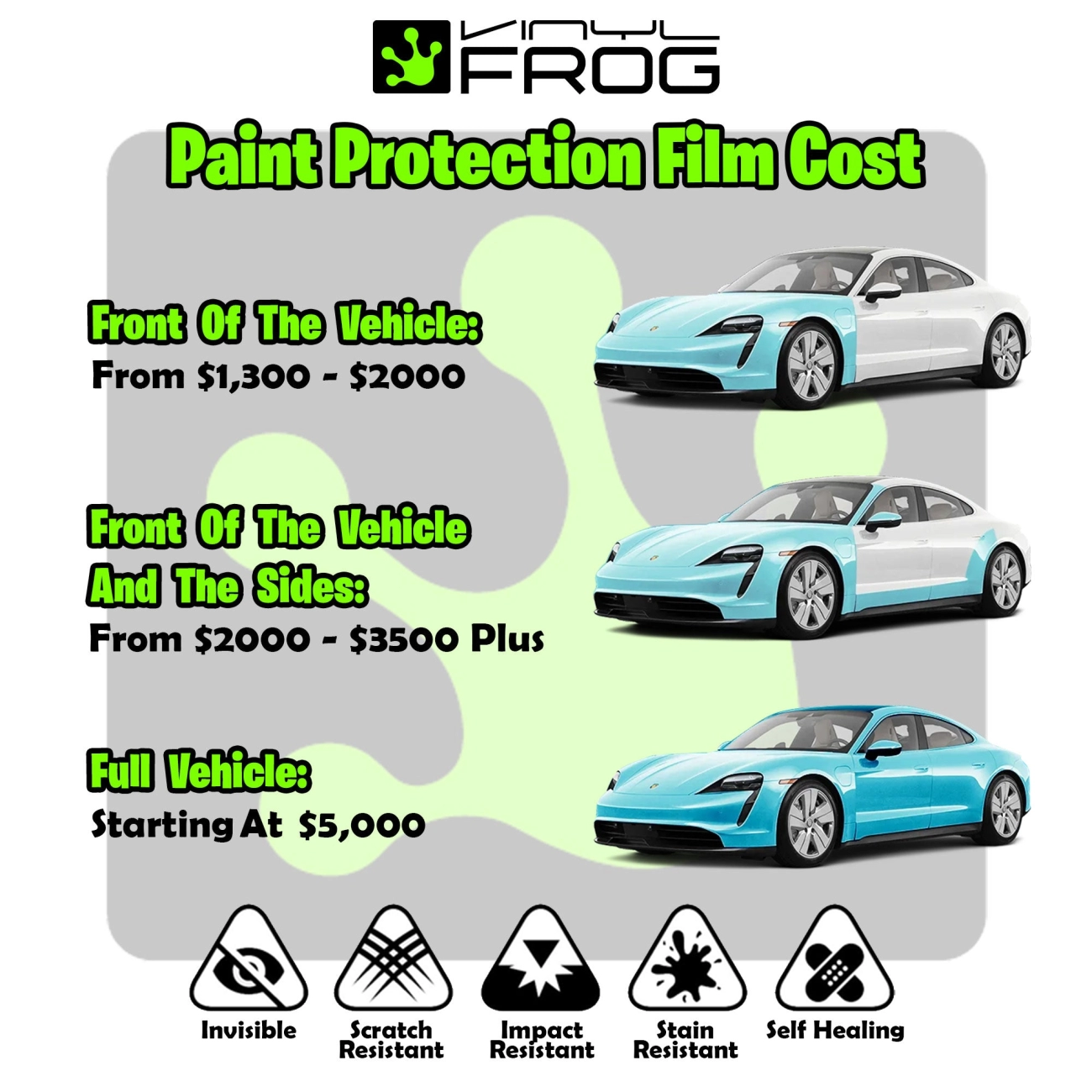
Full body PPF wrap pricing for different vehicles
Full body PPF is the premium option and protects all painted panels. This is what I usually see in 2025:
- Compact / midsize sedans: $3,500–$5,000
- Crossovers / small SUVs: $3,800–$5,500
- Full‑size SUVs / trucks: $4,200–$6,500
- Luxury / exotic / sports cars: $5,000–$9,000+
Two biggest price drivers:
- Film quality (standard vs top‑tier self‑healing, hydrophobic PPF)
- Labor time (panel complexity, disassembly, and custom wrapping of edges)
If you want something more custom, like a stealth or satin look, a high‑quality matte PPF such as an American‑made matte PPF wrap for cars will usually add 10–20% over a basic clear gloss film.
Car PPF cost by vehicle class: sedans, SUVs, trucks, sports cars
Here’s a simple 2025 snapshot for typical clear PPF pricing in the U.S.:
- Sedans
- Partial front: $600–$900
- Full front / high‑impact: $1,200–$1,800
- Full body: $3,500–$5,000
- SUVs / Crossovers
- Partial front: $750–$1,050
- Full front / high‑impact: $1,400–$2,000
- Full body: $3,800–$5,500
- Trucks
- Partial front: $850–$1,200
- Full front / high‑impact: $1,600–$2,300
- Full body: $4,200–$6,500
- Sports & luxury cars
- Partial front: $900–$1,400
- Full front / high‑impact: $1,800–$2,600+
- Full body: $5,000–$9,000+
Sports and exotics cost more because of tight curves, aggressive bumpers, and higher expectations on finish quality.
2025 market trends affecting car PPF cost
Why are car paint protection film costs where they are in 2025? A few key trends:
- Material upgrades: More shops are moving to thicker, self‑healing TPU and hydrophobic top coats, which cost more per square foot but last longer.
- Labor and training: Skilled PPF installers command higher labor rates, especially in big metro areas.
- Demand from EV and luxury owners: Tesla, Rivian, BMW, Mercedes, and Porsche owners are driving demand for full front and full body packages, which keeps pricing firm.
- Regional differences:
- Big cities (CA, NY, FL, TX metro areas): often 10–25% higher than national averages
- Smaller towns: often at or slightly below the low end of the ranges
- Direct‑from‑factory films: Working with factory‑direct films and wholesale PPF helps some shops keep pricing more competitive, especially for full wraps and fleet vehicles.
If you’re targeting value, a clear, high‑quality TPU film like a premium transparent PPF car wrap can give you strong protection and gloss without paying the very top of the market.
Visual pricing comparison of PPF coverage packages
Here’s an easy way to “see” the price jump by coverage level for a typical midsize sedan in 2025:
- Basic protection
- Partial front: $600–$900
- Good for: light driving, budget‑focused owners who mainly want bumper protection
- Balanced protection
- Full front + rocker panels: $1,200–$1,800
- Good for: daily drivers, highway commuters, long‑term owners
- Maximum protection
- Full body PPF wrap: $3,500–$5,000
- Good for: new or expensive cars, leased vehicles you want spotless at turn‑in, and owners planning to keep the car 5–10+ years
If you’re trying to keep cost in check, choose the coverage that matches how and where you drive instead of jumping straight to a full wrap.
Is Car PPF Worth the Cost?
Short‑term savings vs rock chip and paint repair
When I look at car PPF cost, I always compare it to what real damage actually costs in the U.S.:
- Repainting a front bumper: $500–$1,200
- Repainting a hood or fender from rock chips: $700–$1,500
- Fixing deep scratches from road debris: $300+ per panel
By contrast, a quality partial front-end PPF (clear bra) package on most daily drivers usually falls around:
- $900–$1,500 for a sedan or small SUV
- $1,200–$1,800 for larger SUVs, trucks, and luxury models
If you do regular highway driving, commute long miles, or live where roads are rough and salted, it doesn’t take many repairs before the car paint protection film cost is cheaper than paying for rock chip repair and repainting. One good respray you avoid can basically pay for the film on high‑impact areas.
Long‑term ROI for resale value and paint life
PPF is a long game play. Good film with a proper install easily lasts 7–10 years, especially when you use a proven, factory-direct film.
Here’s where the PPF return on investment shows up:
- Your original paint stays intact, which used‑car buyers and dealers prefer.
- You avoid “mismatched” panels from repainting, which hurt trade‑in value.
- A clean, chip‑free front end can realistically add hundreds to over $1,000 in resale value on popular models, performance cars, and well‑kept trucks.
On newer vehicles, especially higher‑end or sports cars, spending on PPF up front often beats the cost of full car PPF alternatives later, like correcting and repainting multiple panels.
Non‑financial benefits that justify car PPF cost
There’s more to it than dollars:
- Peace of mind: You’re not wincing every time a rock hits your hood.
- Better daily experience: Self‑healing PPF keeps swirls and fine scratches from car washes to a minimum.
- Cleaner look longer: Road grime, bug guts, and light stains come off easier on quality film.
- Consistent gloss: The car keeps that “new car” shine longer with far less effort.
For many owners, especially those who really care about how their car looks, these non‑financial benefits are a big part of why car PPF cost feels justified.
When PPF is not worth the cost (and what to do instead)
You don’t always need PPF, and I’m honest about that:
PPF may not be worth it if:
- Your vehicle is older, already has noticeable paint damage, or is close to end of life.
- You barely drive (e.g., 3,000–5,000 miles/year) and the car is garaged.
- You’re on a tight budget and a repaint later won’t bother you.
- You only plan to keep the car for a short lease term and don’t care about minor wear.
In those cases, I’d look at:
- Ceramic coating: Cheaper than full PPF; helps with gloss and ease of cleaning, but doesn’t stop rock chips.
- Targeted clear bra: Just high‑impact zones (front bumper, partial hood, mirrors).
- Basic protection: Regular wax or sealant, mud flaps, and careful washing.
This is where a ppf vs ceramic coating cost comparison matters: ceramic is great for shine, but it does not replace physical rock chip protection.
Quick comparison: PPF vs no PPF vs ceramic
| Option | Upfront Cost (typical) | Rock Chip Protection | Gloss & Ease of Cleaning | Best For |
|---|---|---|---|---|
| High‑impact PPF clear bra | $$–$$$ | Strong | Very good | Daily drivers, commuters, highway use |
| Full body PPF wrap | $$$$ | Maximum | Very good | Luxury, sports cars, high-end trucks |
| Ceramic coating only | $$ | Minimal | Excellent | Low‑risk use, focus on shine & maintenance |
| No PPF, just wax/sealant | $ | Minimal | Good (short-term) | Budget-focused, older vehicles |
Real‑world style example: saving money with wholesale PPF
Because I manufacture and sell factory-direct PPF at wholesale pricing, I see the numbers from both sides: shops and car owners.
Example scenario:
- 2025 mid‑size SUV, new, driven 15,000+ miles/year, mostly highway.
- Owner installs a partial front-end PPF using a premium 8 mil, self‑healing film.
- Retail installed price: around $1,200–$1,600, depending on local PPF installation labor rates and region.
Without PPF, in 3–4 years this owner is likely staring at:
- A chipped, sandblasted front bumper and hood.
- One repaint on the bumper and possible touch‑ups on the hood: $900–$1,800+ total, sometimes more on higher‑end vehicles.
Because I supply premium paint protection film factory‑direct to installers, the wholesale PPF film cost per square foot stays lower, and a good shop can pass some of that savings to you. That’s how many customers end up paying less but still getting a high‑end film with a solid warranty.
If you’re comparing value, look for shops using factory-direct paint protection film with a long warranty, like our 10‑year clear PPF in the premium car paint protection film category. That combination of long life, strong self‑healing, and lower material markup is what makes car PPF cost make sense over the long haul for most U.S. drivers who want to keep their vehicles looking new.
How to Budget for Car PPF Cost
Step‑by‑Step: Plan Your Car PPF Budget
Use this simple flow to avoid surprises:
- Decide your coverage
- High‑impact only (bumper, hood, mirrors)
- Partial front end
- Full front end
- Full body wrap
Write down your must‑have vs nice‑to‑have areas.
- Know your local price range
- Call or request 3–5 quotes from reputable shops.
- Ask for itemized pricing: film brand, coverage, labor, paint correction, add‑ons.
- Compare against your vehicle type (sedan, SUV, truck, sports car).
- Set a realistic budget band
- Decide your top number you’re willing to spend.
- Prioritize film quality + installer skill over add‑ons.
- Match timing to cash flow
- If your budget is tight, start with high‑impact zones now, expand coverage later.
- Plan around tax refunds, bonuses, or other cash events.
- Lock in the details in writing
- Final quote
- Film brand and series
- Coverage map (what panels are protected)
- Warranty terms
If you want to compare film types before you budget, check a full PPF export and pricing guide in the factory-direct PPF export guides.
Financing Options to Manage Car PPF Cost
If you don’t want to drop all the cash at once, you’ve got options:
- 0% or low‑interest shop financing
- Many detail/PPF shops partner with financing platforms.
- Ask for total cost with fees, not just monthly payment.
- Credit card with rewards
- Use a card with cash back or points if you’ll pay it off in a few months.
- Avoid long-term balances; PPF should not cost you big interest.
- Bundle with vehicle purchase
- Some dealers roll PPF into your auto loan.
- Make sure the markup vs going to a specialized PPF shop is worth it.
- Split coverage over time
- Do front end now, sides and rear later.
- Protects you immediately while spreading cost.
Ways to Cut Car PPF Cost Without Cutting Quality
You can save money without going cheap:
- Focus on impact zones
- Front bumper, hood leading edge, fenders, mirror caps, rocker panels.
- Big protection, smaller bill.
- Skip unnecessary extras
- Avoid upsells you don’t care about: windshield films, niche trim pieces, etc.
- Put your budget into better film + better installer instead.
- Choose value film, not the most hyped brand
- Many factory-direct premium PPFs offer strong self‑healing and clarity without the ultra‑premium markup.
- Ask the shop why they chose a specific brand and what failure rates they see.
- Bundle services
- Some shops discount PPF + ceramic coating or PPF + tint packages.
- Compare package price vs buying each service separately.
- Be flexible with scheduling
- Slow days or weekday slots can sometimes get you a small discount.
Ongoing PPF Maintenance Costs to Expect
PPF isn’t set‑and‑forget. Budget for basic care:
- Washing
- Hand wash or touchless wash: $10–$40/month depending on how often you clean.
- Use pH‑neutral soap and soft towels.
- Detail sprays / sealants
- PPF‑safe sealants or toppers: $20–$60 every few months.
- Optional ceramic coating on PPF
- One‑time install, then basic maintenance.
- Makes washing easier but adds to upfront cost.
- Repairs
- Impact damage on a panel may require panel re‑wrap.
- Plan a small “buffer” in your car care budget each year.
- Inspections
- Quick checkups at your installer are usually free and help catch issues early.
Checklist: Questions to Ask Before You Pay for Car PPF
Use this list so you don’t miss anything:
- Film & warranty
- What brand and series of PPF are you using?
- Is it self‑healing? How long is the warranty, and what does it cover?
- Is the film from a factory-direct supplier or a rebranded product?
- Coverage & process
- Which exact panels are covered?
- Do you use pre‑cut patterns or bulk install?
- Is paint correction included if needed? At what extra cost?
- Price & payment
- Can I see an itemized quote (film, labor, extras, tax)?
- Any financing or package discounts available?
- Installer quality
- How many years have you been installing PPF?
- Can I see before/after photos or local customer cars?
- What happens if there are bubbles, lifting, or defects after install?
- Aftercare
- What products should I use or avoid on this film?
- How often should I come back for an inspection?
When you’re comparing shops, it also helps to look at product pages for different films—like a TPU chameleon PPF wrap on a factory-direct premium PPF product page—to understand what features and performance you’re actually paying for.
Choosing the Right Brand to Lower Car PPF Cost
When you’re trying to keep car PPF cost under control, the brand you choose matters just as much as the installer. The goal is simple: maximize protection, minimize waste and markups.
How Factory‑Direct PPF Cuts Your Car PPF Cost
Buying or sourcing from a factory‑direct PPF brand removes a lot of middlemen markups that usually show up on your invoice.
Here’s how factory‑direct helps lower overall car paint protection film cost:
- Lower material cost per square foot – You’re not paying extra distributors on top of the film price. That gives your installer more room to offer better ppf pricing on partial front ends and full wraps.
- Consistent quality – Good factory‑direct lines control the full production process, so thickness, clarity, and adhesive performance stay consistent. That means fewer installation issues (and less rework that ends up built into pricing).
- Wholesale and bulk options – For shops and serious DIYers, wholesale PPF film cost can drop the material price significantly, especially on full body wrap protection projects.
- Transparent specs and warranties – Direct brands clearly list mil thickness, warranty length, and performance claims, so you can see what you’re paying for.
If you’re an installer or shop owner, working with a factory‑level supplier of clear PPF such as a dedicated high‑gloss 7.5 mil PPF film manufacturer can help you keep costs down while still offering premium coverage packages.
Key Features to Compare for Real PPF Value
To actually lower your car PPF cost without getting junk film, compare brands on features that impact both price and long‑term performance:
- Thickness & self‑healing
- Standard: 7–8 mil is common for rock chip protection film.
- Look for self‑healing PPF pricing that’s reasonable, not inflated just for the buzzword.
- Clarity & gloss
- Good PPF should stay clear, not yellow quickly.
- High‑gloss clear bra cost is worth it if you care about a “wet paint” look.
- Stain & UV resistance
- Protection against bug guts, bird droppings, and road grime helps your paint and film last longer.
- Adhesive quality
- Strong enough to stay put, gentle enough not to destroy OEM paint when removed.
- Warranty & support
- Look for solid warranties (often up to 10 years) and clear claim processes. A film like a 10‑year clear PPF with 7.5 mil thickness shows the brand is confident in its durability.
- Install friendliness
- Some films stretch and conform better, which cuts labor time and ppf installation labor rates.
When you line up brands, don’t just ask “how cheap is it?” Ask, “How much real-world protection per dollar am I getting?”
Real Savings & Feedback From Premium PPF Users
From what I see with U.S. customers and shops, here’s where premium but factory‑direct style PPF brands save money over time:
- Fewer failures – Less peeling, lifting, or yellowing means you’re not paying to re‑do panels.
- Better coverage options – Clean, accurate patterns reduce waste film and cut install hours, lowering the partial front end PPF price and full car PPF cost.
- Higher resale value – Buyers notice clean, chip‑free paint protected by a trusted PPF brand. That often pays back way more than the original car PPF cost.
- Happy daily drivers – Owners driving in states with rough roads, snow, and gravel (think Colorado, Michigan, Northeast) consistently report fewer chips and resprays.
Professional installers also tend to stick with brands that:
- Install fast with fewer bubbles and stretch marks.
- Have reliable supply and consistent rolls.
- Offer fair factory direct PPF pricing so they can stay competitive on SUV PPF cost and sports car PPF cost.
How to Get Quotes & Catalogs to Compare Car PPF Cost
To really dial in your budget, you want numbers on paper from more than one source. Do this:
- Ask local shops what brands they use
- Get line‑item quotes: material, labor, paint correction before PPF cost, and any add‑ons (ceramic on top, tint bundles, etc.).
- Compare clear bra cost for cars across at least 3 installers.
- Request PPF catalogs from manufacturers or distributors
- Look for:
- Thickness (mil rating)
- Warranty length
- Available widths and roll sizes
- Any bulk or wholesale PPF film cost breaks
- If you’re a shop, ask directly about factory direct PPF pricing and minimum order quantities.
- Look for:
- Match coverage options to your budget
- Get pricing for:
- Partial front (bumper, hood strip, mirrors)
- Full front (hood, fenders, bumper, mirrors)
- High‑impact areas (rockers, rear bumper top, A‑pillars)
- Full body
- Compare each package across brands, not just within one shop.
- Get pricing for:
- Ask specific value questions
- “What makes this film more expensive than Brand X?”
- “What’s the real‑world life of this film in my climate?”
- “What’s covered under the PPF warranty and what isn’t?”
When you line up catalogs, coverage packages, and labor quotes side by side, it’s much easier to pick a brand that keeps your car PPF cost in check while still giving you serious protection and long‑term value.



 English
  Portuguese
  Spanish
  German
  French
  Hindi
Hindi