


What Is Paint Protection Film (PPF) and Why Invest in It?
If you’re wondering how much it is to PPF a car, the first step is knowing what you’re actually paying for.
Paint Protection Film (PPF)—often called clear bra—is a transparent, high‑performance polyurethane film that’s applied to your car’s painted surfaces. It acts like an invisible shield between your paint and the road.
How PPF Works as a Clear Shield
PPF is a multi‑layer, clear film that:
- Absorbs impact from rock chips, sand, and road debris
- Self‑heals light swirls and scratches when exposed to heat (on self‑healing PPF)
- Clings tightly to the paint using safe adhesives, without damaging OEM paint
- Stays nearly invisible on the car when installed correctly
You keep your factory paint; PPF simply sits on top as a sacrificial layer.
Key Benefits for Daily Drivers and Highway Commuters
If you drive daily, especially on highways, you know how quickly the front end gets hammered. PPF installation price makes sense when you consider:
- Far fewer rock chips and sandblasting on the front bumper and hood
- Less bug etching and minor scratches from parking, road grime, and washing
- Easier cleaning thanks to smooth, slick PPF surfaces (even more so with hydrophobic PPF)
You end up with a car that looks newer, longer—without babying it.
Protection From Rock Chips, Scratches, and Debris
Modern self‑healing PPF film is designed to take abuse so your paint doesn’t:
- Rock chips: PPF absorbs the impact and prevents paint from breaking
- Fine scratches: Swirls from washing or light contact can self‑heal with heat
- Road debris: Gravel, salt, and small debris hit the film, not your clear coat
This is the core reason vehicle paint protection price is often cheaper than constant paint repair.
UV, Fade, and Oxidation Protection
PPF also adds strong UV protection:
- Slows paint fading and oxidation from sun exposure
- Helps dark and vibrant colors (black, red, blue) stay deep and glossy
- Reduces the chalky, dull look that comes with years of unprotected exposure
In strong sun climates, this alone can justify paint protection film cost over the long term.
Resale Value on Newer and Higher‑End Cars
If you drive a newer, higher‑end, or in‑demand model, PPF for cars can directly support your resale value:
- Original factory paint in good condition is worth more than a respray
- Buyers of luxury, performance, and EV models actively look for full front PPF or full car PPF
- A documented PPF warranty coverage and clean paint help you sell faster and negotiate less
In many cases, the full car PPF cost is partially recovered when you sell or trade.
When PPF Makes Sense for How Long You Keep a Car
PPF is an investment. It makes the most sense when:
- You plan to keep the car 3–5+ years
- You drive high highway mileage or in harsh conditions (gravel, winter, hot sun)
- You want to avoid repainting bumpers and hoods every few years
If you flip cars every 12 months, a cheaper solution like ceramic coating alone may be enough. If you keep them, rock chip protection film pays off.
Who Benefits Most From PPF
While any car can benefit from PPF in 2026, some owners get outsized value:
- Luxury and premium cars (BMW, Mercedes, Audi, Lexus, etc.)
- Exotic and supercars (Lamborghini, Ferrari, McLaren)
- EVs and Teslas, where original paint can be soft and costly to fix
- Performance and track cars, constantly exposed to rubber, debris, and high‑speed chips
If your car is a serious financial asset or a long‑term keeper, investing in professional PPF installation is one of the smartest ways to protect it before you ever ask, “How much is it to PPF a car?”
Main Factors That Affect How Much It Is to PPF a Car
When people ask “how much is it to PPF a car,” there isn’t one fixed number. PPF installation price changes a lot based on a few key factors:
1. Vehicle size and shape
- Bigger car = more film + more hours.
- Compact / small hatch: lowest paint protection film cost
- Sedans: moderate
- SUVs / crossovers: higher
- Trucks / large SUVs / vans: highest
- Wide panels, tall sides, and big bumpers all push full car PPF cost up because we simply use more material and time.
2. Body lines and complexity
Design matters as much as size:
- Aggressive bumpers, flared fenders, deep vents, sharp curves = more trimming, stretching, and alignment.
- Sports cars, exotics, and some EVs have complex panels that increase clear bra cost because they demand slower, more precise work.
3. Film quality level
Different films, different price points:
- Standard TPU PPF: solid basic rock chip protection at the lowest cost.
- Self‑healing PPF film: uses heat to remove light swirls; costs more but looks better longer.
- Hydrophobic premium PPF: adds slick, ceramic‑like topcoat, better stain resistance, and high clarity, so it’s the most expensive.
Higher‑end films with stronger yellowing resistance and longer warranties will always raise your vehicle paint protection price, but they cut down on long‑term issues.
4. Brand and warranty
- Well‑known PPF brands with 8–12 year warranties and proven anti‑yellowing chemistry cost more than generic film.
- You’re paying for:
- Lab testing (UV, chemical, impact)
- Better adhesive and topcoat
- Stronger PPF warranty coverage if something fails
If you’re a shop buying film in bulk, choosing a reliable factory and understanding PPF coating price and warranty structure is critical to staying profitable.
5. Coverage level
The amount of the car you wrap is one of the biggest cost drivers:
- Partial front PPF (hood strip, partial fenders, mirrors, bumper) = entry‑level pricing
- Full front PPF (full hood, full fenders, mirrors, bumper) = higher, but best value for daily drivers
- Track / high‑impact packages (rockers, A‑pillars, rear splash) = extra add‑on
- Full car PPF = highest cost but maximum protection and resale value
The more panels, the more film, cuts, and install time. Your PPF pricing guide should always start with “what needs protection” rather than just a random number.
6. Labor rates and location
Professional PPF installation isn’t billed only on film cost:
- Shops in big cities or high‑rent areas usually have higher PPF labor rates.
- Clean rooms, plotters, software subscriptions, and insurance all affect what installers must charge.
- The same full front PPF price can be 20–40% different between regions.
7. Installer skill and shop reputation
Two shops using the same film can charge very different prices:
- Highly trained installers with years of experience, clean facilities, and strong portfolios will charge more—and they should.
- You’re paying for:
- Fewer seams and stretch marks
- Better edges and alignment
- Lower risk of cutting into paint
- Support if anything goes wrong
Cheap clear bra installation cost often means shortcuts: hand‑cutting on paint, dirty bays, rushed work, or no after‑sales support.
8. Extra prep and paint correction
PPF locks in whatever is underneath, good or bad. Extra prep can add a lot to the final invoice:
- Decontamination: iron remover, clay bar, deep wash
- Paint correction: polishing to remove swirls and light scratches
- Badge / emblem removal and re‑install
- Old film or adhesive removal
If your car is brand new and in good shape, prep is light. If it’s used, swirled, or has old film, prep is a much bigger part of your paint protection film cost.
For shops or distributors, understanding all these variables is also crucial when you buy PPF rolls or work with a wholesale paint protection film supplier or factory. Your material price, warranty support, and film quality directly decide what you can fairly charge and how competitive your PPF installation price will be in your local market.
PPF Coverage Options and Average Cost Ranges in 2026
When people ask “how much is it to PPF a car?”, what they’re really asking is: how much coverage do I need and what does each option cost? Here’s the short, honest breakdown for 2026.
Common PPF Coverage Packages (Who They’re For)
- Partial Front PPF (Entry Level)
- For: Budget‑minded owners, older cars, leases.
- Goal: Stop the worst rock chips on the nose without a big bill.
- Full Front PPF (Most Popular)
- For: Daily drivers, new cars, EVs, family cars.
- Goal: Protect all main impact areas on the front.
- Track / Highway Package
- For: Spirited drivers, long‑distance commuters, track days.
- Goal: Extra protection along the sides where debris and rubber hits.
- Full Car PPF
- For: Luxury, exotics, high‑end EVs, long‑term keepers.
- Goal: Max protection + best resale and long‑term finish.
- Custom / Add‑On Areas
- For: Anyone with problem zones (wide hips, low rockers, big fenders).
- Goal: Targeted protection where your car gets hammered most.
Partial Front PPF Cost & Coverage
Typical panels:
- Front bumper
- Partial hood (18–24″ strip)
- Partial front fenders
- Mirror caps
Average 2026 pricing (pro install):
- Compact / Sedan: $400–$700
- SUV / Truck: $500–$800
Good if you drive mostly in the city and just want basic rock chip protection film up front.
Full Front PPF Price Range (Best Value for Daily Drivers)
Typical panels:
- Full hood
- Full front fenders
- Front bumper
- Mirror caps
- Headlights (often included)
Average 2026 pricing:
- Compact / Sedan: $1,100–$1,800
- SUV / Truck: $1,300–$2,100
This is the sweet spot for most owners asking about full front PPF price—strong protection without paying for the whole car.
Track Package PPF Pricing (Highway & Spirited Driving)
Typical panels:
- Full front package
- Rocker panels & lower doors
- Rear bumper impact areas (behind wheels)
- Sometimes A‑pillars and roof leading edge
Average 2026 pricing:
- Compact / Sedan: $1,600–$2,400
- SUV / Truck: $1,900–$2,800
Great if you do lots of highway, mountain runs, or track days and want more than a basic clear bra.
Full Car PPF Cost (Complete Exterior Coverage)
Typical panels:
- Every painted exterior panel (doors, quarters, bumpers, pillars, roof, hatch, etc.)
- Often includes headlights; glass is usually separate
Average 2026 pricing (quality self‑healing PPF film):
- Compact / Sedan: $3,500–$6,000+
- SUV / Truck: $4,500–$7,500+
- Exotics / Complex bodies: $6,000–$10,000+
Full wrap is where full car PPF cost climbs, but so does long‑term value and paint preservation.
If you’re a shop owner and want to control margin, buying premium TPU PPF by the roll can cut your material cost significantly; see options like clear PPF car wrap transparent TPU rolls from manufacturers such as Carlisep PPF.
Custom PPF Areas & Add‑Ons
Common add‑ons:
- Rocker panels / lower doors: $200–$500
- Roof leading edge / A‑pillars: $150–$350
- Trunk loading area / rear bumper top: $100–$250
- Headlights / fogs: $100–$250
- Roof / carbon roof: $300–$700
Custom work is ideal when you know exactly where your car gets abused (wide hips, flared arches, etc.).
How Coverage Changes Total Cost, Protection, and Value
- More coverage = higher upfront PPF installation price, but:
- Fewer repaints and panel resprays long term
- Better resale value, especially on newer and high‑end cars
- Less stress about parking, highway runs, and daily use
- Less coverage = lower cost, but:
- You’re protecting only the most obvious impact zones
- You may still see chips on unprotected areas over time
For a quick snapshot of paint protection film cost in 2026, here’s a simple guide.
2026 PPF Pricing Guide by Coverage (Average Ranges)
| Coverage Package | Typical Panels Covered | Average Cost (Compact/Sedan) | Average Cost (SUV/Truck) |
|---|---|---|---|
| Partial Front PPF | Bumper, partial hood, partial fenders, mirrors | $400–$700 | $500–$800 |
| Full Front PPF | Full hood, full fenders, bumper, mirrors, headlights | $1,100–$1,800 | $1,300–$2,100 |
| Track / Highway Package | Full front + rockers, lower doors, rear impact zones | $1,600–$2,400 | $1,900–$2,800 |
| Full Car PPF | All painted exterior panels | $3,500–$6,000+ | $4,500–$7,500+ |
| Custom Add‑Ons | Rockers, roof edge, trunk lip, headlights, etc. | $100–$700/area | $100–$700/area |
If you’re comparing PPF wrap materials for your own shop or bulk installs, look at professional‑grade paint protection film options with solid warranties and wholesale roll pricing, like the paint protection film PPF range.
How Much Is It to PPF a Car by Vehicle Type and Use Case?
When people ask “how much is it to PPF a car?”, the honest answer is: it depends heavily on the vehicle type, coverage, and how you use the car. Here’s a simple breakdown you can actually use when planning your budget for paint protection film.
Compact & Midsize Sedan PPF Cost
For compact and midsize sedans, PPF installation price is usually the most budget‑friendly:
- Partial front PPF: ~$400–$900
- Full front PPF: ~$900–$1,800
- Full car PPF cost: ~$3,000–$5,000
These cars are often daily drivers, so a full front clear bra is the sweet spot for rock chip protection without overspending.
SUVs, Crossovers & Pickup Truck PPF Pricing
Larger vehicles mean more surface area and more labor:
- Partial front: ~$500–$1,100
- Full front: ~$1,200–$2,200
- Full car: ~$4,000–$6,500+
SUVs and trucks sit higher and see more road debris, so I usually recommend at least full front + rocker panels for a solid vehicle paint protection price-to-value ratio.
Sports Cars & Coupes PPF Cost
Sports cars and coupes often have aggressive curves and complex bumpers, which bumps up clear bra cost:
- Partial front: ~$600–$1,200
- Full front: ~$1,500–$2,800
- Full car: ~$4,500–$7,000+
If you drive hard or do spirited highway runs, a track package PPF (full front, rockers, low doors, rear impact areas) is usually the best protection-per-dollar.
Exotics, Supercars & Complex Bodywork
Exotics, supercars, and wide-body builds are in a different league:
- Full front: ~$2,500–$4,000+
- Full car: ~$6,000–$10,000+
You’re paying for complex patterns, disassembly, and high-risk work. On these cars, full car PPF with premium self‑healing, hydrophobic PPF is standard because repainting is insanely expensive and hurts resale.
EVs & Teslas: Special PPF Considerations
EVs (especially Teslas) have large, smooth panels and soft paint, so rock chip protection film makes a big difference:
- Partial front: ~$500–$1,000
- Full front: ~$1,200–$2,200
- Full car: ~$4,000–$6,000+
Many EV owners go full front + doors + rear bumper, since highway commuting and long-distance driving are common. A high‑clarity premium TPU PPF works well on the big, flat panels EVs are known for.
If you’re a shop owner or installer and need consistent quality film for this kind of work, using a stable, high‑gloss PPF wrap for cars like our American TPU matte and gloss series keeps material cost predictable while letting you price installs competitively.
Budget Examples by Use Case
To make the PPF pricing guide practical, here are realistic scenarios:
- Daily driver (commuter):
- Compact/sedan full front: ~$1,000–$1,500
- SUV full front + rockers: ~$1,500–$2,300
- Weekend car / fun car:
- Sports coupe track package: ~$2,000–$3,000
- Sports coupe full car: ~$4,500–$6,000
- Track / spirited driving car:
- Full front + rockers + rear impact areas: ~$2,200–$3,500
- Full car (for high-end builds): $5,000+
Basic Protection vs Full Car PPF: What’s Realistic?
When you’re asking “how much is it to PPF a car?” you’re really choosing between minimal coverage and maximum peace of mind:
- Basic protection (budget-friendly):
- Partial front (bumper + part hood/fenders + mirrors)
- Ideal if you just want rock chip protection on a normal daily driver
- Balanced protection (most common):
- Full front + rockers or lower doors
- Great for highway commuters, EV owners, and performance cars
- Full car protection (premium):
- Every painted panel wrapped
- Best for exotics, new high-end cars, and owners planning to keep the car for 5–10 years
From a business side, I always structure my PPF installation price tiers so customers can see the jump in protection clearly as they move from partial PPF pricing to track package PPF cost to full car coverage. That transparency builds trust and makes it easier for you to pick what fits your budget and how you actually use your car.
Professional PPF Installation vs DIY Kits: What’s Really Worth It?
When people ask how much is it to PPF a car, the next question is almost always: Should I pay a pro, or just buy a DIY kit? Let’s break it down fast and clean.
Professional PPF Installation Cost (2026)
Typical professional PPF installation price ranges (USD):
| Coverage | Compact / Sedan | SUV / Truck |
|---|---|---|
| Partial Front | $500 – $1,000 | $700 – $1,200 |
| Full Front | $1,100 – $2,000 | $1,300 – $2,300 |
| Track Package | $1,600 – $2,800 | $1,800 – $3,200 |
| Full Car PPF Cost | $3,500 – $7,500+ | $4,000 – $8,500+ |
Pricing shifts with:
- Vehicle size and complexity
- Film grade (standard vs self-healing, hydrophobic PPF)
- Shop labor rates and local market
Shops like mine typically use pre-cut software patterns, plotters, and high-clarity films similar to premium 7.5 mil TPU PPF with a 10-year warranty to keep edges clean and safe.
What You Get With a Pro Install
When you pay pro clear bra cost, you’re buying more than film:
- Digital patterns & plotter cuts – No knife on your paint, perfect panel shapes.
- Clean, controlled bay – Dust-controlled lighting, correct temps, proper curing.
- Professional prep – Wash, iron removal, clay, light polish if needed.
- Even stretch & alignment – No fingers, no tension lines.
- Warranty & support – Material + labor warranty, fix issues if something lifts.
Benefits:
- Better finish quality (no visible edges, fewer seams)
- Real PPF warranty coverage (often 8–12 years on premium TPU PPF)
- Peace of mind on high-value, luxury, EV, and performance cars
DIY PPF Kit Cost and What’s Included
Typical DIY PPF kit cost (2026):
| DIY Option | Price Range (USD) |
|---|---|
| Pre-cut partial front kit | $150 – $400 |
| Pre-cut full front kit | $300 – $700 |
| Full car bulk roll (no cuts) | $400 – $1,200+ |
| Tools & install kit | $30 – $80 |
Most DIY kits include:
- Pre-cut film (or a bulk roll)
- Basic squeegee + slip solution bottle
- Simple instructions or QR video
Pros and Cons of DIY PPF
DIY Pros:
- Lowest vehicle paint protection price upfront
- Good for rock chip protection film on a budget
- You control the schedule and can do it in stages
DIY Cons:
- Steep learning curve, especially on bumpers and mirrors
- No labor warranty, limited or no film warranty if installed wrong
- Risk of wasting film and still ending up at a pro shop
Common DIY Problems
Typical DIY issues I see when people come to fix their cars later:
- Bubbles and trapped water/soap
- Stretch marks from over-pulling the film
- Edges lifting around headlights, badges, panel gaps
- Dust and hair trapped under the film in a normal garage
- Visible seams and misaligned patterns
These don’t just look bad; they can shorten PPF lifespan and void warranties.
When DIY Makes Sense vs Pro Install
DIY can make sense if:
- You’re working on a cheap daily or older car
- You only want simple flat areas (hood, roof, rocker panels)
- You’re patient, handy, and okay with “good enough,” not perfect
Stick with a professional PPF installer when:
- The car is new, expensive, or special (Tesla, EVs, luxury, sports, exotics)
- You want a full front or full car PPF with clean, hidden edges
- You care about resale value and long-term appearance
- You want full material + labor warranty and support
How to Decide: Budget vs Car Value vs Risk
Use this quick decision grid:
| Situation | Recommended Option |
|---|---|
| $5k–$15k car, basic daily | DIY on simple panels or partial pro |
| $20k–$40k commuter / family car | Pro full front or key areas |
| $40k–$80k luxury / EV / sports | Pro full front or track package |
| $80k+ exotic / supercar | Pro only, ideally full car |
If repairing a rock-chipped bumper costs $600–$1,200 and repaint never matches OEM perfectly, paying $1,100–$2,000 for a pro full front PPF is often cheaper over the years than doing it twice.
If you run a shop or want to cut your own patterns at scale, ordering bulk premium TPU PPF rolls (like our Ferrari-red or Nardo-grey style films similar to this TPU PPF wrap) can drive your per-car cost way down—but that’s for installers, not first-time DIY owners.
Bottom line:
- For high-value cars, professional PPF installation is the smart play.
- For tight budgets and lower-value cars, a careful DIY on flat panels can be “good enough” if you accept the learning curve and risk.
Is PPF Worth the Cost Long Term?
If you’re asking how much is it to PPF a car, the real question is: does it pay you back over time? In most cases, yes.
PPF vs Repainting or Bumper Repair
Modern paint jobs and plastic bumpers aren’t cheap:
- Repainting a front bumper: $500–$1,500+
- Fixing heavy rock chips / blended repaint: $800–$2,000+
- Full front repaint on a premium car: $2,000–$4,000+
A quality full front PPF install usually runs in that same range, but it prevents the damage instead of fixing it after the fact. One bad season of highway driving or winter roads can easily chew through unprotected paint.
PPF Lifespan and Cost Per Year
Good TPU paint protection film typically lasts:
- 7–10 years for modern, premium films
- With proper wash habits and no harsh chemicals
If you spend $1,800 on a full front install that realistically lasts 8 years, that’s:
- About $225 per year
- Or under $20 per month for rock chip protection and UV defense
Premium films like our 7.5 mil clear PPF with a 10‑year warranty spread the cost even thinner over time.
Resale Value: Where PPF Really Pays Off
PPF makes the biggest financial sense on:
- Newer luxury cars (BMW, Mercedes, Lexus, Audi)
- EVs and Teslas (buyers expect clean, original paint)
- Sports cars and performance models (GTI, M, AMG, RS, GR, Type R, etc.)
Clean original paint, especially on the front end, almost always:
- Makes the car easier to sell
- Justifies a higher asking price
- Gives buyers more confidence that the car was cared for
You may not get every dollar of PPF back at resale, but you lose far less than if you had to repaint rock‑chipped panels.
PPF vs Ceramic Coating vs Wax
- PPF (paint protection film)
- Physical barrier against rock chips, light impacts, scratches, and road rash
- Great for high‑impact zones (front, rockers, rear bumper)
- Ceramic coating
- No impact protection
- Boosts gloss, adds hydrophobic behavior, makes washing easier
- Best used on top of PPF or on the rest of the car
- Wax / sealant
- Short‑term shine and water beading
- Very limited protection, needs frequent reapplication
For a straight protection comparison, PPF wins by a mile. If you want a deeper breakdown, I’ve compared the two here in detail in a PPF vs ceramic coating guide.
When PPF Is Overkill vs a Smart Investment
PPF might be overkill if:
- You drive very little and mostly in slow city traffic
- You plan to sell or lease‑swap the car in 1–2 years
- It’s an older, lower‑value vehicle you don’t mind touching up or repainting cheaply
PPF is a smart investment if:
- You keep cars 5–10 years
- You do a lot of highway, rural, or winter driving
- You own a premium, performance, or EV where paint quality matters
- You’re in regions with gravel roads, construction zones, or heavy salted roads
How Driving Habits and Climate Change the Math
Your cost‑benefit shifts a lot based on where and how you drive:
- Highway commuters: Constant rock chips – PPF typically saves money vs repeated repairs
- Mountain / rural drivers: Gravel, sand, and debris make PPF almost mandatory
- Hot, sunny climates: PPF slows down UV fade and oxidation, especially on dark colors
- Snow belt drivers: Sand, salt, and cinders eat paint – PPF shields the most vulnerable areas
Real‑World Savings Examples
- A daily‑driven Tesla Model Y doing 20,000 km+ per year with no PPF can have a peppered front bumper in 2–3 years, often needing a repaint.
- A sports sedan with a full front PPF can go 5–7 years with nothing more than normal wash marks—film takes the abuse instead of the paint.
- A high‑end SUV with PPF on front + rockers avoids those white “road rash” spots you typically see behind the wheels, which are expensive to correct and repaint.
Bottom line: if you actually use your car—especially on highways—PPF usually costs less long term than letting the paint get hammered and paying for repairs or accepting a lower resale price.
How to Choose the Right PPF Film (Paint Protection Film)
When people ask how much is it to PPF a car, the film you choose is a big part of that price. Cheap film can cost you more later, so I always tell customers to look at features first, price second.
Key Features to Look For in PPF
Focus on these core specs when comparing paint protection film cost:
- Self-healing layer (heat-activated, 7–10+ mil TPU)
- Film thickness: 7–8 mil (standard), 8–10+ mil (high-impact areas)
- Optical clarity: no orange peel, minimal distortion
- Hydrophobic top coat: water beading, easier washing
- Stain resistance: bug guts, tar, bird droppings don’t etch quickly
- UV stability: reduced yellowing, fading, or hazing
Budget vs Mid-Range vs Premium TPU PPF
Here’s a quick breakdown of typical PPF installation price levels:
| Level | Typical Use | Pros | Cons |
|---|---|---|---|
| Budget | Older cars, lease returns | Low upfront clear bra cost | Less clarity, weaker self-healing, shorter warranty |
| Mid-range | Daily drivers, family cars | Good balance of price & protection | Not as slick or glossy as top-tier films |
| Premium TPU | Luxury, EV, performance, exotics | Best clarity, self-healing, hydrophobic | Higher full car PPF cost, needs pro install |
For shops, premium TPU rolls from a reliable TPU film supplier matter even more, especially if you’re doing OEM/ODM or private label PPF. If you’re developing your own brand, look at bulk options like custom brand TPU paint protection film so your installers have consistent material to work with.
Why Clarity and Gloss Matter (Especially on Dark Colors)
On black, blue, and dark grey cars, cheap film is very easy to spot:
- Low-end film shows orange peel and waviness
- You’ll see edges and seams more clearly
- Swirls and micro-scratches are more visible if it doesn’t self-heal well
If you care about looks, spend a bit more on a film with high gloss and strong optical clarity. On white or silver, you can “get away” with slightly cheaper film, but I still prefer clear, non-hazy TPU.
Stain Resistance and Yellowing Over Time
This is where cheap film usually fails after a few years:
- Stain resistance: good films resist bugs, tar, and road grime; they clean off without ghost marks
- Yellowing resistance: modern high-quality TPU PPF stays much cleaner-looking if:
- It has a strong UV-resistant top coat
- It’s from a brand that tests in harsh sun and polluted environments (US, EU, Middle East, SEA, etc.)
If you’re in a hot or sunny climate, do not cut corners here. The cost to remove and replace yellowed PPF is higher than choosing a better film up front.
If you want style + protection, there are also colored PPF films (for example, gloss and wet-look options like colored TPU PPF film), which can change the car’s look and still work as rock chip protection film.
PPF Warranties: What They Actually Cover
Most premium PPF brands now offer 5–12 year warranties. But read the details:
Common coverage:
- Yellowing
- Cracking
- Peeling
- Blistering
- Adhesive failure
Not covered:
- Rock chips that penetrate the film
- Accidents or body damage
- Bad washing, polishing, or cutting the film
- Poor installation from untrained shops
The warranty is only as good as both the brand and the installer. If the installer cuts corners, even the best film won’t last.
How to Compare PPF Brands Before You Commit
Use this checklist before you choose a film or shop:
- Ask for a sample: check clarity, thickness, and top coat slickness
- Check real cars: look at 6–12 month old installs in person, not just photos
- Ask about film type: TPU (not PVC), self-healing, hydrophobic
- Confirm warranty in writing: length, coverage, who handles claims
- Search real-world reviews: look for comments about yellowing, edge lifting, and stain resistance
- Ask shops what they use and why: good installers can explain film differences without overselling
If you’re a shop or distributor, compare PPF roll price vs performance carefully. Saving a bit per roll but dealing with warranty claims, yellowing, or unhappy customers will eat your margins fast. For bulk PPF orders, I always push for stable TPU, consistent gloss, and reliable OEM/ODM support over the rock-bottom roll price.
Choosing the right PPF film up front makes your PPF installation price a smarter investment, protects your car longer, and keeps it looking clean instead of dull or yellow a few years down the line.
How to Pick the Right PPF Installer
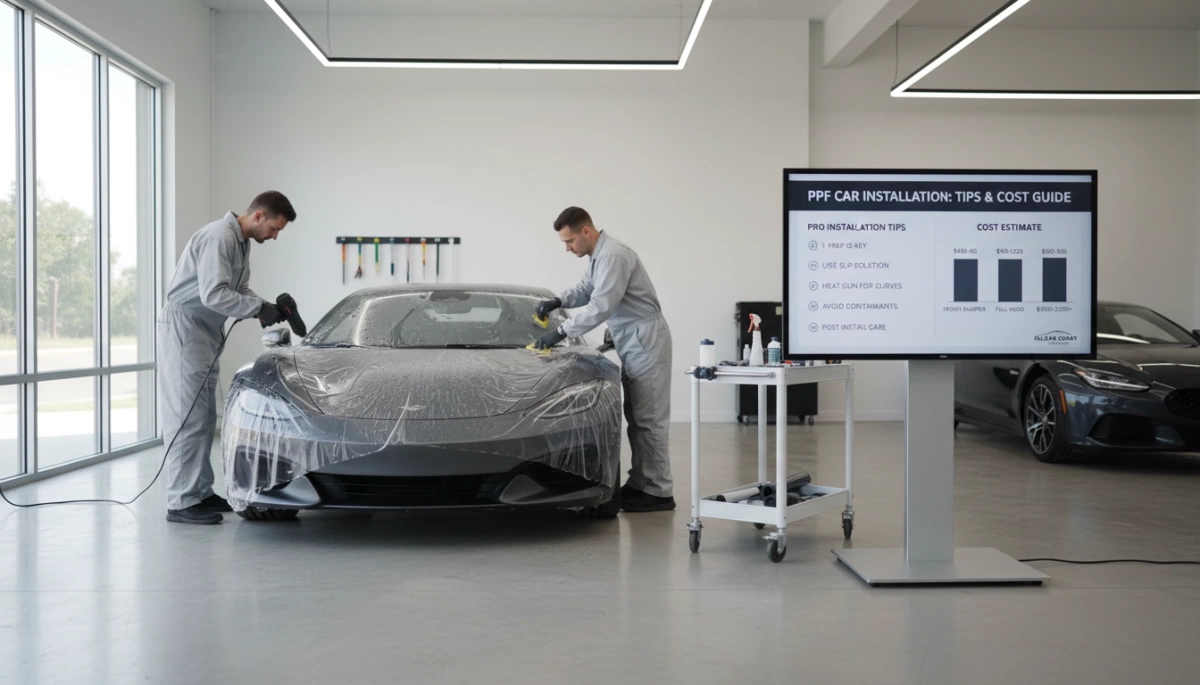
Choosing the right installer is just as important as choosing the film. A cheap PPF installation price with bad work will cost you more to fix later.
What to Look For in a Quality PPF Shop
Look for a shop that is:
- Specialized in paint protection film (PPF), not just wraps or tint
- Using name‑brand TPU self‑healing PPF with a written warranty
- Working in a clean, closed bay (dust kills clear bra finish)
- Using software‑cut patterns and plotters, not just hand‑cutting on paint
- Willing to show you previous work in person and online
If you want to understand film quality before you pick a shop, compare how different premium films are built in guides like this breakdown of the best PPF film types and features.
Questions to Ask Before You Book
Before you commit to any PPF installation price, ask:
- What PPF brand and series do you use? Is it self‑healing and hydrophobic?
- What warranty do I get (years, peeling, yellowing, cracking)?
- How many years have you been installing PPF, and how many cars per week?
- Do you remove badges, trim, and handles when needed, or cut around them?
- Is paint correction or decontamination included in the quote?
- Can I see a written estimate listing film, coverage, and prep?
Why Experience With Your Car Model Matters
PPF on a Tesla, Porsche, or big SUV is not the same job. You want an installer who:
- Has done your exact model multiple times
- Knows the tight curves, stretch‑prone areas, and badge locations
- Has pre‑made patterns for your vehicle in their software
This cuts down on seams, stretch marks, and edge lifting, and keeps the full car PPF cost predictable.
How to Read Reviews and Photos the Right Way
Don’t just look at star ratings. Go deeper:
- Read reviews that mention PPF specifically, not just tint or wrap
- Look for notes on after‑sales support, warranty claims, and fixes
- Check portfolio photos up close: edges, corners, mirrors, and bumpers
- See if they post before/after and in‑progress shots in good lighting
A serious shop will also be able to explain the basics of what PPF is and how it’s installed, similar to clear introductions like this guide on what PPF wrap actually is and how it protects paint.
Red Flags That an Installer Cuts Corners
Walk away if you see:
- Super low clear bra cost vs other shops in your area
- No mention of dust control or a clean bay
- Reluctance to show brand of film or warranty details
- Heavy knife cutting directly on the paint everywhere
- “Same‑day full car PPF” promises with rock‑bottom pricing
Cheap PPF for cars usually means rushed work, low‑grade film, or both.
Why Some Shops Charge More
Higher prices are often paying for:
- Better film (premium TPU, self‑healing, hydrophobic PPF)
- Experienced installers who can handle difficult bumpers and exotics
- More prep time (wash, clay, paint correction, panel removal)
- A strong warranty and real support if something goes wrong
You’re not just paying for film rolls; you’re paying for labor skill, time, and risk.
How to Compare Multiple PPF Quotes Without Confusion
When you compare PPF installation price quotes:
- Get every quote in writing, with:
- Film brand and series
- Coverage areas (full front, rockers, mirrors, etc.)
- Prep work included
- Warranty details
- Make sure you’re comparing the same coverage level (partial front vs full front vs full car PPF cost)
- Don’t choose based on price alone—balance shop reputation, film quality, and warranty against the vehicle paint protection price.
If you treat this like a long‑term investment in your car, picking the right PPF installer becomes a lot clearer—and the extra money for a good shop usually pays you back in fewer issues, better finish, and stronger resale value.
Maintenance Tips to Protect Your PPF Investment
If you’ve spent the money, you want your paint protection film to last and stay clear. Here’s how I tell customers to look after their PPF so they get the most value for what they paid.
How to wash a car with PPF safely
Treat PPF like delicate clear coat—gentle but consistent care wins.
Best tools:
- pH‑neutral car shampoo
- Two buckets (wash + rinse)
- Soft microfiber wash mitt
- Separate microfiber towels for drying
- Low‑pressure hose or pressure washer with a safe distance
Safe wash routine:
- Rinse thoroughly to remove loose grit.
- Foam or pre‑soak if possible to soften dirt.
- Wash top to bottom with light pressure, rinsing the mitt often.
- Rinse well; don’t let shampoo dry on the surface.
- Dry with clean microfiber towels using blotting or light glides.
Avoid degreasers and household soaps—they strip protection and can dry out the film.
What to avoid on PPF
If you want your PPF to stay clear and avoid edge lifting, skip:
- Automatic brush car washes – they cause micro‑scratches and can catch edges.
- Harsh chemicals – strong APCs, high‑pH cleaners, bug removers, or tar removers used aggressively.
- Dirty wash tools – old sponges, gritty towels, or anything dropped on the ground.
- Bad drying habits – air drying (water spots) and rubbing hard with cheap towels.
Stick to gentle, pH-neutral products and quality microfiber. That’s the cheapest insurance you can buy.
When and why to add ceramic coating on top of PPF
Ceramic coating on top of PPF is common now and worth it for most people.
Why it helps:
- Adds slick, hydrophobic behavior so the car stays cleaner longer.
- Makes washing and drying faster—less dirt sticks to the film.
- Adds extra chemical and stain resistance on top of your PPF.
- Helps maintain gloss and clarity, especially on darker colors.
If you’re using a hydrophobic PPF like a 7.5 mil clear hydrophobic PPF wrap, you already get strong water beading, and a coating simply boosts that effect and extends maintenance intervals.
I usually recommend coating:
- Right after install (after film has fully cured), or
- Within the first 3–6 months for cars washed frequently or driven in harsh climates.
Basic care schedule to keep PPF clear and glossy
You don’t need anything crazy. A simple schedule works worldwide:
- Weekly or biweekly: Proper hand wash with pH‑neutral soap.
- Monthly: Quick detailer or PPF‑safe spray sealant for extra slickness.
- Every 6–12 months: Decontamination wash with PPF‑safe iron remover if needed (no clay unless very light and very lubricated).
- Annually: Visual inspection of edges, high‑impact areas, and front end.
Keep the car garaged or under shade where possible to reduce UV load and environmental fallout.
How to spot early PPF issues
Catching issues early often means cheap fixes instead of full replacement. Look for:
- Lifting edges or corners – especially around mirrors, bumpers, and handles.
- Visible contamination under the film – dark specs or lines that weren’t there before.
- Stains or discoloration – bug guts, bird droppings, or hard water spots etched in.
- Surface damage – deep scratches in the film that don’t self‑heal with heat.
Check the front bumper, hood edge, rocker panels, and behind wheels first—these are the high‑impact zones.
When PPF can be repaired vs when it needs replacement
Not every problem means ripping everything off.
Usually repairable:
- Small edge lifts caught early (installer can clean and re‑tack).
- Minor surface marks that self‑heal with warm water or sun exposure.
- Localized damage on a single panel (the film on that panel can be replaced).
Usually needs replacement:
- Film is torn, deeply gouged, or punctured.
- Heavy staining or etching that won’t clean off.
- Widespread lifting, contamination under large areas, or old PPF past its lifespan.
From a cost point of view, replacing one damaged PPF panel is far cheaper than repainting and then re‑protecting that panel. If you’re running a shop and buying film by the roll for this type of repair work, keeping a consistent, high‑quality TPU in stock is key so the finish matches the rest of the car.
Maintain your PPF like this, and you stretch your investment over years, keep your paint protection film cost per year low, and protect the resale value of the car.
Common Questions About How Much It Is to PPF a Car
Typical cost to fully PPF a sedan vs an SUV
For professional installation in 2026, here’s what most shops charge for full-car PPF:
- Compact / midsize sedan: $3,500–$6,000+
- Compact / midsize SUV or crossover: $4,000–$7,000+
- Full-size SUV / truck: $4,500–$8,000+
The same film on an SUV simply costs more because there’s more surface area, more seams, and more labor. Complex bumpers and big fenders add hours to the install, which pushes up the final paint protection film cost.
How long PPF really lasts
With quality TPU film and proper care, PPF usually lasts 7–10 years before it needs to be replaced. In harsh sun, desert, or heavy winter-salt areas, you might see the realistic lifespan closer to 5–7 years.
Key factors that affect PPF lifespan:
- Film quality (cheap films fail early)
- Wash habits and chemicals used
- Climate, UV exposure, and road conditions
- How often the car lives outdoors
Does modern PPF still yellow?
Modern, high-end self-healing PPF film is far more resistant to yellowing and staining than older clear bra products. Premium TPU films use:
- UV-resistant top coats
- Better adhesive systems
- Improved stain resistance (against bugs, tar, bird droppings)
Cheap or no-name film can still yellow, especially on white cars. That’s why I tell shops and detailers to avoid “mystery” bulk rolls just because the price looks good.
Bundling PPF with ceramic coating
Yes, you can and should bundle PPF + ceramic coating if you want easier maintenance:
- Ceramic on top of PPF makes it slick, easier to wash, and more hydrophobic.
- Most shops offer package deals when you do both at once, since the car is already prep’d.
- Expect to save a few hundred dollars compared with doing PPF and ceramic as separate visits.
Just remember: PPF stops impact damage, ceramic only helps with gloss, UV, and cleaning. They’re not interchangeable.
Typical PPF warranty coverage
Premium PPF brands and serious installers usually offer:
- 10-year material warranty against yellowing, cracking, peeling, and bubbling
- Installer warranty (often 1–3 years) on workmanship like edges, lifting, or seams
Always read the fine print so you know:
- What’s covered (material vs labor)
- What voids the warranty (harsh chemicals, body repairs, neglect)
- Whether you must maintain service records or regular inspections
How long a PPF install takes
Professional PPF installation time depends on coverage:
- Partial front: ~4–6 hours
- Full front: 1 day
- Full car: 2–5 days, depending on vehicle size and complexity
If the shop is doing paint correction, deep decontamination, or badge removal, add more time. A rushed clear bra installation is usually a bad one.
What to expect at drop-off, installation, and pick-up
Here’s how I structure it in my own operation, and most quality shops are similar:
Drop-off day
- We inspect the paint together, note existing damage, and confirm the PPF coverage package and price.
- You sign off on the work order and we give you a timeline and pick-up window.
During installation
- The car is washed, decontaminated, and lightly polished where needed.
- Pre-cut patterns are plotted from software for your specific model, keeping knives off the paint.
- Film is installed in a clean bay, squeegeed, and left to set.
Pick-up day
- We walk you around the car and show you seams, edges, and any natural stretch lines.
- You get care instructions, warranty paperwork, and a list of what to avoid for the first 7 days (no pressure washing, no picking edges, minimal touching).
If you’re also planning window tint down the road, the same logic on pricing, prep, and shop quality applies; guides like this breakdown of how much to tint car windows can give you a similar cost framework for planning your overall protection budget.

 English
  Portuguese
  Spanish
  German
  French
  Hindi
Hindi